Cliff Robertson

  • Underworld U.S.A. (1961)

    Underworld U.S.A. (1961)

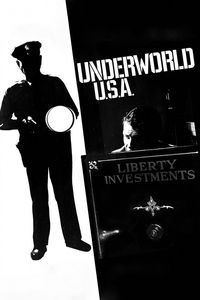
    (On Cable TV, May 2021) There is a roughshod straightforwardness to Underworld U.S.A. that makes it almost irresistible. Within moments — bang, bang, bang, we’re introduced to the hero, the tragic murder of his father and the beginning of his revenge odyssey. Under writer-director-producer Samuel Fuller’s efficient low-budget aesthetics, the sets are nearly as sparse and efficient as the script, and the narrative announces the more violent 1960s by going a little bit further than the muted violence of traditional noir films. As a roaring revenge story, it’s not meant to be complicated, and Cliff Robertson is a solid anchor for a film surprisingly so self-assured in what it’s going for. Even if 1961 is early to call it a neo-noir, Underworld U.S.A. is clearly put together with an awareness of genre clichés and a willingness to play with them. It’s a vigorous, muscular crime film, and part of its charm is to be found in its stripped-down nature, both narrative and visual.

  • Gidget (1959)

    Gidget (1959)

    (On Cable TV, January 2021) The 1950s can arguably be called the decade during which the teenager was solidified as an explicit life stage between childhood and adulthood. Hollywood, to no one’s surprise, was instrumental in charting and even creating the social construct: By 1959, after all, the oldest baby boomers were hitting 14 and aspiring to be older, the Southern Californian lifestyle was sweeping the nation’s collective imagination and the studios were desperately trying to keep young audiences in theatres given the threat from television. So here comes Gidget, one of the first movies to document the SoCal surf lifestyle. Featuring Sandra Dee as the titular “Girl Midget—Gidget” (despite not being that short compared to the other characters), the film still reads as a timeless example of a “What are these young ones doing?” bout of mild paranoia. Cliff Robertson shows up as a much older beach bum trying to hide away from Korea war PTSD, and becomes the object of the teenage protagonist’s affection—leading to one of the film’s least pleasant subplots, although to its credit the film does have the good sense of avoiding the teenager hooking up with the thirtysomething guy. Still, compared to many of its inheritors, Gidget is somewhat more serious-minded in its portrait of the American teenager—there’s some authentic coming-of-age here, and the film is not quite as mindless as the subsequent Beach Party series of movies. While Gidget is best experienced as a blast from the early years of American adolescence, it’s still likable on its own terms, early surfboards, 1950s hairstyles and all.

  • The Honey Pot (1967)

    The Honey Pot (1967)

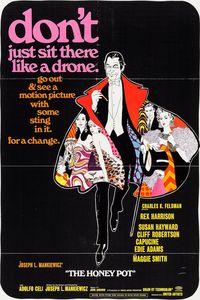
    (On Cable TV, January 2021) I’m rarely disappointed by a Joseph L. Mankiewicz film, and The Honey Pot is no exception. It’s clearly a latter-day work by a filmmaker who understands the business inside and out, so deftly does it play with conventions and delivers something that escapes pure formula. It constantly (but smoothly) shifts tone and rhythm in ways that would seem doomed in theory, but works out well on-screen. It starts with a lengthy sequence during which an out-of-work actor is hired by a rich man for a special kind of acting job. Then things change as three past flames arrive, and murder interrupts everyone’s plans. Mankiewicz changes protagonist, plays with voice-overs (all the way to giving a voice to a dead character), messes with story structure and can’t help but include some really good quotable material in the middle of it all. If you think that you’ve got a handle on the story, you’ll keep changing your mind. Rex Harrison turns in a good performance as an aged playboy calling back his most significant past flames, while Cliff Robertson isn’t bad as the one we’re supposed to cheer for (well, maybe)—there’s a Jason Bateman-like quality to his performance that would almost justify a remake. If The Honey Pot has a flaw, it’s that it’s very obviously a film that relies on being different—the behaviour of the characters is clearly manipulated by the demands of the script, the overly cute references to other material or the artificial conventions of romantic comedies. The last few minutes of the film rely on a wrinkle of inheritance law that clearly belongs to legal fiction. But, somehow, it works. Even the damp dark depressing setting of overcast Venice (done 1970s-style in what looks like an un-restored print, which is even drearier than reality) can’t quite sap the narrative inventiveness of the result. I strongly suspect that The Honey Pot won’t sit well with viewers simply looking for something simple to watch. But it’s a bit of a gift to jaded audiences looking for someone intent on colouring outside the lines.

  • Sunday in New York (1963)

    Sunday in New York (1963)

    (On Cable TV, November 2020) The more I explore early-1960s Hollywood movies, the more I’m seeing—especially in silly sex comedies—the rumblings of the social changes that went on during the decade. Hollywood was not well equipped, especially pre-New Hollywood, to do justice to these changes. Hampered by the inertia of the Production Code, hesitant to challenge audiences that were also used to a certain kind of Hollywood, the major studios poked and prodded (especially in jest) at the social changes but tried to keep some decorum about it. That’s how you end up with the quaintly charming subgenre of 1960s sex comedies that nodded toward greater liberalization, while not giving in to any uncharacteristic crassness. Sunday in New York clearly plays by those rules. It makes a fuss of discussing premarital sex (even the poster cheekily states that the film is “dedicated to the proposition that every girl gets… sooner or later”) and complicating the romantic situation of its heroine, but it ends up very traditional in its conclusions. The execution, working from a fast-paced script based on a theatrical play, benefits from some serious acting talent: Jane Fonda is terrific (and sexy) in the lead role, while she’s surrounded by none other than Rod Taylor, Cliff Robertson and Robert Culp as brothers and suitors. The jet-setting lifestyle that was so hip in the 1960s is showcased as a vision of life in then-Manhattan. As a farce, Sunday in New York is more successful than not: even if it has been outdone in raciness several times over by generations of spiritual inheritors, it remains a fun fine comedy with a bit more class than many of the similar sex comedies of the time.

  • PT 109 (1963)

    PT 109 (1963)

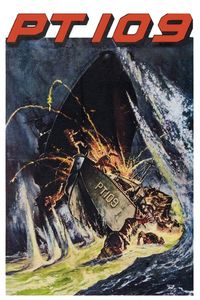
    (On Cable TV, March 2020) Twenty-first century viewers may be forgiven for not knowing that future president John F. Kennedy spent much of World War II captaining his own PT boat, even performing heroics when it was sunk by the Japanese and his crew needed to be rescued. But I can guarantee you that few Americans of voting age in 1960 did not know that story—it was an integral part of the JFK mythos, the young good-looking politician who had proven his mettle during WW2. PT 109 is a semi-hagiographic war film dramatizing those 1943 events, with Cliff Robertson playing the young and heroic president-to-be. JFK is said to have influenced the production of the film, although he insisted that the film remain historical and not without a few criticisms of his early actions. War movie enthusiasts may balk at this focus on a specific individual, but fortunately, PT 109 has more on its mind: it manages to deliver a credible depiction of a team of men during wartime. You can certainly compare it to the 1945 John Wayne PT boat movie They Were Expendable, except that this one is in colour, benefits from fifteen years’ worth of filmmaking improvements, already knows how WW2 will turn out (hence a looser tone), and is shot in colour. While not a great movie, PT 109 is reasonably interesting despite too long of a running time and not quite as heavy on hagiography as it could have been.