Daniel Roby

  • Target Number One (2020)

    Target Number One (2020)

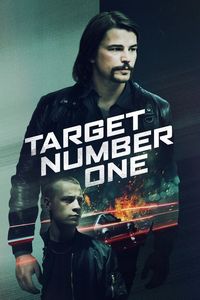
    (On Cable TV, February 2021) I doubt that anyone will care, but in the interest of full disclosure, I’ll include my standard disclaimer that writer-director Daniel Roby is the only working filmmaker with whom I’ve had brief personal contact, back when I did the first version of his first film’s web site thanks to a common acquaintance. You’d expect me to be a bit softer on his work than others, so the irony here is that the thing I dislike most about Target Number One is very much the directorial decision to overuse the shakycam approach, providing so much cinema-verité that it borders on nausea. Fortunately, there’s more to the film than that: A fictional exposé of a Canadian cause célèbre in which elements of the RCMP essentially framed a small-time junkie for drug dealing in order to justify their operational budget, Target Number One presents a true story in a mild thriller-style, yet avoids most of the overdone clichés of the genre. Save for one sequence toward the end, there isn’t much gunplay or car chases — just a banal series of meetings between RCMP officers, informants, and our unlucky protagonist. In parallel, noted Canadian investigative journalist Victor Malarek sniffs a story and starts digging despite the personal costs of his quixotic quest. There’s an unmistakable Canadian stamp to the result — the young junkie at the centre of the action is French Canadian, and one of the rare pleasures of the results is a credible depiction of the Canadian linguistic duality and how it works in practice, much like Roby’s previous Funkytown. Taking on the RCMP is a big target, but the film does a credible job in showing how official corruption can find its roots in humdrum banality rather than caricatural evil. Shot with decent-enough means for a Canadian film, Target Number One goes from British Columbia to Thailand, and features no less than John Hartnett as Malarek. As a thriller, it has an unusual restraint. That does translate into a few lengths that take the film’s running time over two hours, and a climax inspired by real-life events that’s messier than any film would prefer. Still, for Roby, it’s a clear step up in a career that gets more and more interesting at every stage — and considering the number of French-Canadian directors breaking into Hollywood, I’m not just saying that to be nice.

  • Dans la brume (2018)

    Dans la brume (2018)

    (On TV, October 2020) I briefly interacted with director Daniel Roby prior to the release of his debut film La peau blanche back in 2003 (I coded the first iteration of the film’s web site) and we shared a common friend for a decade afterward, so I was favourably predisposed to see what he’d been up to recently, and that turns out to be the high-concept decently-budgeted French disaster film Dans la brume. The film’s first Big Idea is to have toxic gas emerging from the underground to blanket Paris with a thick multi-storey blanket of toxic fog, forcing two of our three main characters to find refuge in the top-floor apartment of their building. The third main character, in Dans la brume’s second Big Idea, is a teenager with a chronic health condition living in a hermetically-sealed bubble that periodically needs to be attended to during the resulting power outage. The main elements having been introduced, the script then goes on to further complicate the situation: ever step forward, such as getting out of the apartment, is accompanied by a step back—some of them frustratingly arbitrary. Still, there’s an interesting blend of thriller and science-fiction thinking at play here, with some horror thrown in late in the script in time for an ironic finale that is foreshadowed long before. There’s an eerie chill to the sequences in which the rooftops of Paris emerge from the toxic mist, or when the characters venture in the fog itself. Dans la brume is more gripping than expected, and while I have my concerns about the mean-spiritedness of the last act, the result is a striking piece of genre entertainment.

  • Funkytown (2011)

    Funkytown (2011)

    (On DVD, July 2011) I should begin by saying that I’m less impartial toward this film than most, having put together a web site for director Daniel Roby’s first feature film a few years ago.  But even then, it’s hard not to be impressed by the scope of Funkytown, which looks at the late-seventies disco scene in Montréal through a large ensemble cast.  The first few minutes are electrifying, as the characters are introduced within a fluid sequence.  Patrick Huard headlines the film as an influential media personality whose decline forms the backbone of the film’s dramatic arc.  Period music is used effectively, and the period is rendered in its glorious brown-and-gold glory.  Not stopping at disco, Funkytown also dares to tackle the socio-political turmoil of the era (which would see the center of Canadian power shift from Montréal to Toronto as separatism led to an exodus of well-off decision-makers from one city to the other) and the rise of AIDS within the gay community.  Loosely inspired by real events (look up the story of Alain Montpetit and Douglas Leopold for reference), Funkytown has enough plot to stuff an entire TV show season as seven or eight main characters jostle for attention.  Screenwriter Steve Galluccio is able to keep everything intelligible, but the story cries out for a novel or a longer-form format, especially toward the end as subplots seem to be cut short.  There’s still a decent amount of subtlety and depth to the end result, and the film’s soundtrack alone is worth a look.  (Never mind the slight anachronisms, though.)  The way both English and French dialogues are used, often in the same conversation, feels authentically Montréal-style.  As one of the bigger-budgeted films in Quebec history, Funkytown has a decent dramatic heft and feels like a reasonably faithful look at the era.  It’s a joy to watch even despite its downbeat dramatic trajectory, and will probably rank as a definitive piece for the era.