Daniel Stern

  • Diner (1982)

    Diner (1982)

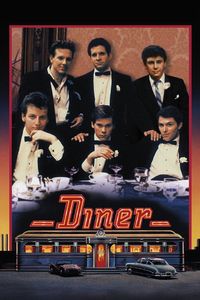
    (On Cable TV, May 2021) Generally aimless but amiable, Diner is the kind of film that plays well but doesn’t leave much of an impression. The first of writer-director Barry Levinson’s “Baltimore Tetralogy,” it’s a slice-of-life piece of nostalgia set in 1959, as a close circle of friends deals with the impending marriage of one of them. Intimate and minimalist, it’s more a series of conversations about 1950s young men mulling about sex, love and marriage than anything else. Today, the film is perhaps more remarkable for a truly surprising cast — young Steve Guttenberg (who never played in a better film), Daniel Stern, Mickey Rourke, Kevin Bacon, Paul Reiser, Ellen Barkin… geez. The production design is convincing yet not overpowering, but this is the kind of film you can almost listen to as a radio play — it’s heavily dialogue-based and very playful. Perhaps more interestingly, it’s not flashy dialogue — you’re not meant to be amazed at the wittiness of it, simply recognize that it’s how people talk. Over the past forty years, Diner has grown to be a bit of a classic — up to and including being made part of Turner Classic Movies’ regular rotation. There are flashier movies out there, but there may not be many more comfortable movies.

  • City Slickers II: The Legend of Curly’s Gold (1994)

    City Slickers II: The Legend of Curly’s Gold (1994)

    (In French, On TV, August 2020) Whatever made the success of City Slickers is certainly revisited in its sequel… except mechanically and in diluted fashion. It’s not a real surprise to see Jack Palance come back to join Billy Crystal and Daniel Stern once again as they head out west. While the first film had all the clichés (or rather: familiar elements) of a cattle drive, City Slickers II goes for the clichés (or rather: familiar elements) of a treasure hunt. It works all the way to an upbeat conclusion, but there are quite a few plot cheats along the way, from a final revelation about this being a manufactured reality that is belied by previous events, and then another backflip in order to provide the kind of feel-good conclusion that its earlier twist prevented. Eh, whatever: once again, the real fun is in seeing Crystal and friends match squints with Palance and the indignities of the wild west so far away from the urban canyons of Manhattan. Palance himself has the panache of a veteran movie star, while Crystal is up to his usual standards. City Slickers II is indeed a slickly made film with a big-enough budget to shoot visually interesting scenes out in the far west, but it does mechanically move through its unconvincing plot and doesn’t have much to go in terms of having the characters develop their relationship – the best it can do is welcome a third partner played by Jon Lovitz, who doesn’t turn out to be quite annoying as first feared. That’s not a lot, although if you just want a few chuckles against a western backdrop, City Slickers II is not that painful of an experience.

  • Rookie of the Year (1993)

    Rookie of the Year (1993)

    (On TV, July 2020) Wish fulfillment runs rampant in baseball fantasy Rookie of the Year, in which a twelve-year-old with a fantastic medical condition giving him an exceptional throwing speed is called to pitch for a professional sports team. It’s obviously a comedy for kids and it makes no effort to present something palatable for adults—it’s all clichés and dumb gags and formula plotting and so on. Daniel Stern directs about as broadly as he plays a comic relief role. Rookie of the Year is passably entertaining, but not by much—I suppose that it’s somewhat better if you’re a baseball-loving tweener.

  • Leviathan (1989)

    Leviathan (1989)

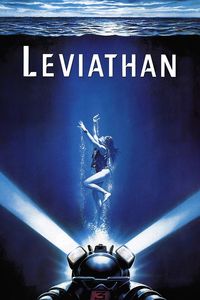
    (In French, On Cable TV, July 2020) Watching Leviathan so soon after Deepstar Six may not have been such a great idea. After all, those were two of the three big underwater thrillers released in 1989 — along with The Abyss, which is so much better than the other two that it will immediately be excluded from further comparison. After meticulously comparing the merits of both remaining movies, I think I can pass a narrow judgment that I liked Deepstar Six slightly better, even despite Leviathan being the most ambitious film. It certainly has an interesting B-string 1980s cast: In-between Peter Weller, Ernie Weller, Richard Crenna, Daniel Stern and the rather cute Amanda Pays, there are a few familiar faces here. The plot has some degree of Alien-inspired complexity to it, what with a blue-collar crew in a hostile environment, a mysterious discovery aboard a derelict ship and a corporate conspiracy that’s absolutely not meant to be helpful. The creature itself is conceptually interesting, amalgamating the people it consumes, but not very well executed given the special effects limits of low-budget 1989 filmmaking. (I wasn’t going to mention The Abyss again, but its special effects were the absolute Oscar-winning limit of what was possible at the time—we 2020 viewers have gotten used to much better for even low-budget features.) Perhaps the clearest example of the outer reaches of the film’s production comes at the very end, with editing placing a monster on one side of the survivors and a Coast Guard ship on the other—the shots are very obviously spliced together despite not matching at all. Ah well—but the mechanistic copying of Alien gets annoying, and I remember Deepstar Six as being a bit more effective at portraying the reality of a deep-sea crew, and exceeding lower expectations. This being said, the difference between the two isn’t all that great, and anyone with more affection for the cast would be justified in liking this one better.

  • James vs. His Future Self (2019)

    James vs. His Future Self (2019)

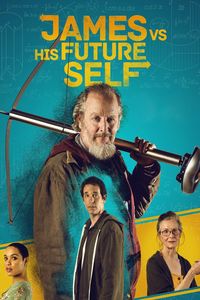
    (On Cable TV, May 2020) Oh my. Am I witnessing the birth of a new science fiction genre? James vs. His Future Self is the third or fourth Canadian Science Fiction film in recent memory to have been filmed in Sudbury. Let me coin the movement: Sudburypunk. I kid, but only a little—Sudbury has slowly become a bit of a destination for filmmakers eager to showcase Northern Ontario landscapes while still being able to count on a metropolitan area as a home base. The city has varied shooting locations, including the futuristic Science North complex, and isn’t too far away from Toronto. James vs. His Future Self is exactly the kind of low-budget science fiction film that can benefit from a bit of Sudbury care. It’s a likable SF comedy about a man getting lessons from his future self coming back in time to save his younger self. Among many strengths, it can boast of likable actors, a gorgeous love interest (Cleopatra Coleman, always terrific), sometimes hilariously profane dialogue, and a self-aware script that delights in upsetting expectations throughout. Over its running time, James vs. His Future Self went from holding my interest to earning my sympathy for the characters. Frances Conroy is particularly good as the off-kilter science matriarch—and let’s not forget Jonas Chernick and Daniel Stern sharing the same role. It’s all blatantly, charmingly Canadian—Sudbury’s Science North is even explicitly featured as itself. For a silly comedy, James vs. His Future Self does tackle heavy themes of themes of self-contradictions, actualization and personal evolution. The final scene is not unexpected, yet surprisingly poignant. If that’s how Sudburypunk is going to go, let me subscribe to whatever else is going to come out of it.

  • Breaking Away (1979)

    Breaking Away (1979)

    (On Cable TV, April 2019) As far as small-town quirky dramas go, Breaking Away certainly has a few elements to distinguish itself. The most distinctive of them must be our colourful protagonist, a bicycle-racing enthusiast obsessed with all things Italian (to the point of picking up the language and culture, and passing himself off as an exchange student to woo a girl). Everything takes place in a small Indiana city with a university, leading to town-and-gown problems that are used in clever ways. Much of this cute, unpretentious coming-of-age film (which eventually turns into a sports underdog third act) is about the usual themes for recent High School graduates: girls, future, friends. But it’s handled with some wit, a knack for memorable sequences and sympathetic acting work. Dennis Christopher leads, but there are early supporting performances here from Dennis Quaid, Daniel Stern and Jackie Earle Haley. Breaking Away doesn’t try to change the world, but it manages to give it a good time.