Daphne du Maurier

  • Rebecca (2020)

    Rebecca (2020)

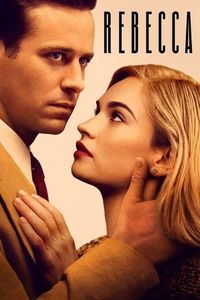
    (Netflix Streaming, December 2021) As someone with a surprising fondness for the original Daphne Du Maurier novel Rebecca and some admiration for the 1940 Alfred Hitchcock film, I was curiously ambivalent about the idea of a remake. Maybe there should be a statute in the Academy Awards that Best Pictures should not be remade. Maybe, on the other hand, a modern look at the classic gothic romance would be interesting in itself. This 2020 version of Rebecca, as it turns out, is somewhere in the middle. Director Ben Wheatley established himself as a director of oddball projects, so he wasn’t necessarily a bad choice here… but the result seems beneath what one could expect from him. I have some appreciation for how the film adapts and changes its tone and visual language as the story advances — surprisingly light, sunny and colourful in the first act as our heroine meets a rich man and falls in love with him during a whirlwind vacation romance. Then, as the story moves to the unsettling Manderley domain, everything gradually darkens and becomes grimmer, all the way to the late film’s murder and incarceration subplot. By the third act, we’re deep in gothic suspense, queer cinema subtext, our heroine doing her best to free the man she loves and the final, celebrated finale. Rebecca works and doesn’t betray the original novel, but the result is likely to be forgotten remarkably quickly — it’s decent but hardly exceptional.

  • Jamaica Inn (1939)

    Jamaica Inn (1939)

    (On Cable TV, November 2020) I like Alfred Hitchcock and I like Charles Laughton, but if my understanding of Jamaica Inn’s troubled production history is correct, the on-screen result is what remains after a spectacular clash of egos. As the story goes, Hitchcock took Daphne Du Maurier’s novel (the first of three adaptations of her stories, followed by Rebecca and The Birds), but had trouble with Laughton-the-producer-and-actor, who wanted to transform a dreary gothic novel into something funnier, more eccentric and not quite some faithful to the original. The result is, for lack of a better word, often weird. The still-unnerving premise (an innocent woman discovering that she’s in the middle of a village of marauders, attracting ships to a treacherous coast where the ships run aground, then, killing the survivors and selling the cargo) runs into a semi-comic performance by Laughton and bizarre touches of humour. The film can’t quite make up its mind about whether it has revelations to tell us, and the ending just gets more and more ludicrous, as the heroine is kidnapped by a lusty villain because… well, there’s no real good explanation, since his plan is untenable from the get-go. This is really not top-tier Hitchcock, and probably not second-tier either—while the film was a commercial success and stands as the last of Hitchcock’s British period before going to Hollywood with Rebecca, it’s weaker than many of Hitchcock’s other 1930s films. Aside from the always-interesting Laughton, special mention should be made of the heroine being played by Maureen O’Hara in one of her early leading roles. The 2014 Cohen Media Group restoration of the film is nothing short of terrific—great image quality and clear sound make this a joy to watch — if it wasn’t for the content!

  • Rebecca (1940)

    Rebecca (1940)

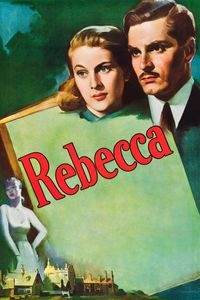
    (On DVD, September 2018) For all of his famed ability at creating and sustaining suspense, Alfred Hitchcock could have a surprisingly romantic streak at times, and few of his movies manage to combine both traits as intriguingly as in Rebecca, perhaps one of the best depiction of the Gothic romance sub-sub-genre ever put on-screen, adapted from Daphne Du Maurier’s still well-known novel. The mystery here is intensely personal, as the new wife of a rich man has trouble measuring up to the example set by her predecessor, the mistress of a vast estate who clearly still has her fans in the household help. Against the lonely and oppressive backdrop of a house far too big for its inhabitants, the heroine starts wondering who’s not out to murder her. It escalates into a fiery climax, but the point of the film, after a sunny romantic first act, is the heroine looking over her shoulder, discovering deeper secrets about her new husband and his house, and sparring with a standoffish housekeeper. Rebecca is noteworthy in Hitchcock’s oeuvre in a few respect: it was his first Hollywood project after emigrating from Great Britain; it was produced/dictated by the legendary producer David O. Selznick and it’s the only Hitchcock film to win the Best Picture Academy Award. Both Joan Fontaine and Laurence Olivier are quite good as the leads, but it’s Judith Anderson who has the best role as the ever-faithful Mrs. Danvers. Otherwise, Rebecca is still good fun to watch, not quite noir but definitely Gothic enough to be visually interesting on top of Hitchcock’s usually skillful direction.

  • My Cousin Rachel (2017)

    My Cousin Rachel (2017)

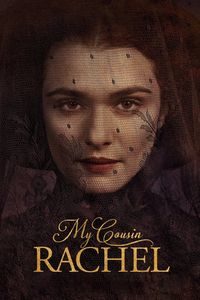
    (Video on-Demand, September 2017) Everything old can be new again, and so it’s not a bad idea to dig up some of Daphne Du Maurier’s Gothic romances as inspiration for movies that set themselves apart from the usual cut-and-dried psycho-killer thriller swill that we see too often today. My Cousin Rachel is a thriller told in suspicions, the viewer going back and forth in believing that a character is out to murder our protagonist. Rachel Weisz is very good as the titular Rachel, keeping us unsettled throughout the film and being able to play menacing or charming at rapid intervals. She makes Sam Claflin look pedestrian in what is supposed to be the protagonist’s role. The production values are high, as we spend a lot of time on a credibly recreated 19th-century British estate. My Cousin Rachel is not a fast-paced film, but it does well in taking its time to present us with an unfolding subtle story. The ending hits harder than it should. It’s the perfect kind of film to watch on a cozy snowy evening.