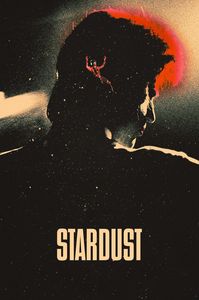
Stardust (2020)
(On Cable TV, April 2021) There are a few entertainers whose public persona is so polished, so distinct, so otherworldly that it can be a shock to be reminded that they once were (and very well still may be) ordinary people struggling with self-doubt and how to create that self-assured image. David Bowie is one of those almost-alien concoctions that it’s hard to remind ourselves that he was once David Robert Jones, arguing with his publicists and journalists and audiences as to what, if anything, set him apart from other musicians. Much of Stardust takes place during Bowie’s first American tour, back in 1971, as he struggled with various personal issues to end up creating the Ziggie Stardust persona (and, along the way, the David Bowie persona as well). Multiple flashbacks take us to previous times in Jones’ life, providing a simplistic but still somewhat effective portrayal of how someone ends up creating themselves. Now, Stardust does have its share of issues — as a low-budget Canadian production that didn’t have the rights to use Bowie’s recordings (and apparently wasn’t fondly received by the singer’s family), you can sense writer-director Gabriel Range being limited by what he can afford to do. I’m also limited as a reviewer to comment too deeply on the factual accuracy of the film or its relationship to the character — I have a sympathetic but superficial understanding of Bowie’s career that prevents me from being all that insightful about it. Still, in between the occasional lulls and sheer weirdness to see a portrayal of Bowie at a formative stage, there’s quite a bit to like here. The atmosphere of a gruelling low-budget tour is not badly portrayed, and the film is often best seen as an origin story rather than a full-blown celebration of Bowie-Superstar. I have no doubt that such a film is coming up eventually, and maybe then Stardust will be best seen as a prequel.