David Spade

  • The Wrong Missy (2020)

    The Wrong Missy (2020)

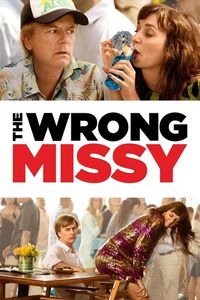
    (Netflix Streaming, December 2021) In making a romantic comedy film centred around an obnoxious character, there’s a tricky balance between irritation and, for lack of a better word, redemption: how far can you push the actions of a character before making them completely unlikable for the rest of the film? Part of it has to do with skillful screenwriting and the other has to do with competent casting. A good actor can make the best even out of standard material written by mediocre craftsmen. So given that The Wrong Missy has to do with a middle-aged businessman (David Spade, looking his age) on a Hawaiian holiday getting swept up with a hyperactive woman with poor understanding of consent and boundaries, well, you have to get a strong actress in that part. Fortunately, the film had the good luck of stumbling on Lauren Lapkus — someone with a proven track record of making the best out of poor material (in Watson and Holmes, namely). In her hands, the “wrong” Missy keeps a thin edge of likability even through the worst possible actions of the film’s first two acts, even when bluntly handled by director Tyler Spindel and the rest of the Happy Madison production crew. This is really not a sophisticated film: the humour is crude, scatological and borderline repulsive. (Those consent issues? Yeah — a gender-flipped take on the same story would be incendiary.)  But Lapkus owns The Wrong Missy’s best moments and makes the worst tolerable until the third act gets down to more conventional likability. That’s not much of a recommendation, but it’s more than the film would have deserved with a lesser lead actress.
  • Police Academy 4: Citizens on Patrol (1987)

    Police Academy 4: Citizens on Patrol (1987)

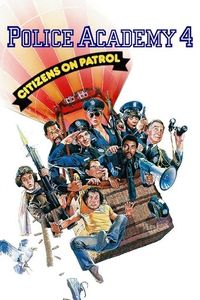
    (Second Viewing, On DVD, November 2021) I somehow remembered Police Academy 4 as one of the high points of the series — but then again, twelve-year old me thought the series was terrific, so I wasn’t the best movie reviewer at the time. Suffice to say that this fourth entry is, by now, comfortably stuck in the confines of its own style — the jokes are as obvious as the characters, and the ludicrous climax shows that the producers had money to burn in order to deliver a final spectacle even when it didn’t really fit the tone of the series. I remembered just enough of the gags to feel a general sense of familiarity with the jokes, and some recognition from the dialogue. Steve Guttenberg, in his last appearance in the series, remains the randy straight-man cornerstone while, at the other end of the spectrum, Bobcat Goldthwait turns in a remarkably weird performance as an ex-con turned policeman. Everyone else gets their one-joke character stretched thin — with even the other characters telling them to cut it out. There are a few surprises in the cast list — Sharon Stone as a bouncy journalist, David Spade in his film debut, and even Tony Hawk somewhere in there. The memorable title song is stupid but fun, which is roughly the same thing we can say about Police Academy 4 as a whole — although I can’t quite tell how much of this appreciation is a residual feeling of the twelve-year-old critic who’s still part of me.

  • Tommy Boy (1995)

    Tommy Boy (1995)

    (In French, On Cable TV, December 2018) The formula behind Tommy Boy isn’t complicated—take an outrageous comedian with a funny physique (that would be the late Chris Farley) and cast him as a man-child chaos-maker, then pair him up with a somewhat more conventional comedian with an ability to freak out in amusing way (that would be David Spade) as the straight man, and send them off on a road trip. There’s a sub-genre with a list of movies a mile long all revolving around the same concept, and Tommy Boy doesn’t break any new ground in following tradition. The details are unimportant, what with two young men trying to save their auto part company from going under by going on an extended sales trip. There’s some mechanistic character development, perfidious antagonists, comedy legends in secondary roles (Dan Aykroyd!) and a car that gradually breaks down over the course of the trip. As is tradition with road movies, it also features both characters singing along to a song. Narrative cohesion isn’t a big concern of the script, as much of the details are of the episodic one-thing-after-another variety. In execution, however, Tommy Boy depends a great deal on the specific comedy of Farley and Spade (better yet; both of them together), a pop-heavy soundtrack and some outrageous visual gags. (If you’re a fan of cars gradually falling apart, this is a movie for you.) It’s not good, it’s not memorable, it’s not clever but it just may be enough for an undemanding viewing in-between more substantial fare. Just don’t get Tommy Boy confused with the other Farley/Spade movie.