David Warner

  • Necronomicon (1993)

    Necronomicon (1993)

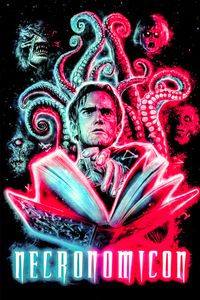
    (In French, On Cable TV, June 2021) Horror anthology films are a roll of the dice every time — not only are the films themselves a gamble, but so are their individual segments as well. Necronomicon has the distinction of focusing on adaptations of Lovecraft’s short stories, but that’s about all that the segments have in common. The framing device has Jeffrey Combs playing Lovecraft as he reads the Book of the Dead in an evil library — not a bad concept, but clearly not the meat of the film either. The rest is uneven. The first segment, “The Drowned,” has some marine chills and an authentic Lovecraftian monster as an antagonist. Follow-up “The Cold” is a more domestic piece that gets away from classic Lovecraftian mythos to deliver an ill-fated romance between a male prey and a female monster (although it does feature David Warner). Final segment “Whispers” is thankfully crazier, going back and forth between reality and fantasy and climaxing with an insane kind of revelation that’s both fun and makes the segment rather pointless. Behind the scenes, there are some impressive names in the crew, from Brian Yuzna to Tom Savini to Christophe Gans. But the result doesn’t quite match the intent — Necronomicon is watchable without being memorable, and there’s a feeling that the tight budget may have limited some ambitions. It’s likely that a modern attempt at the same would be closer to its intentions due to digital special effects technology. More substantially, there’s something regrettable in seeing that the “Lovecraftian” horrors conjured here are about the flash of gooey creatures more than the headier cosmic horror often found in the author’s work. But that’s evaluating Necronomicon based on later, loftier standards — it does remain a decent piece of 1990s horror, and one thankfully focused on supernatural creatures rather than psycho slashers.
  • Cross of Iron (1977)

    Cross of Iron (1977)

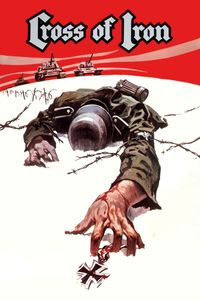
    (On Cable TV, September 2020) Director Sam Peckinpah and war movies seem like an ideal match, and one of the surprises of his filmography is that there are so few of them in there. Maybe producers couldn’t trust him with the budget of a war movie; maybe he felt that there were only so many ways he could say he was anti-war. No matter the reason, at least we have Cross of Iron to fall back on—a gritty, non-sentimental, harsh and nihilistic view of WW2 as seen from the German officers fighting against the Soviets. (The question of their allegiance to Hitler is minimized—one character admits to hating Hitler, and the Nazi political officer is a reprehensible person even by the standards of the film.) The story is substantial, having to do with a glory-seeking officer facing off against a more pragmatic one, but the real worth of Cross of Iron is in the implacable battle sequences filled with explosions, death and futility. Peckinpah is in his element here, as he apparently revels in the senseless violence, the machismo of the soldiers, and the innate ugliness of it all. At least we get decent performances out of James Coburn, Maximilian Schell, James Mason and David Warner. Cross of Iron isn’t for everyone: even those viewers familiar with Peckinpah’s brand of violence may be put off by the unrelenting pace of this film and the way it sees no way out. But that does put Cross of Iron squarely in-line with the rest of the 1970s war films, digesting Vietnam through increasingly meaningless war films that were much closer to the war-is-hell end of the spectrum than war-is-an-adventure Hollywood movies of an earlier generation.

  • Time After Time (1979)

    Time After Time (1979)

    (Second viewing, On Cable TV, March 2018) I remember seeing Time After Time as a teenager and liking it quite a lot. A second viewing only confirms that the film is a surprisingly enjoyable time-travel fantasy involving no less than H.G. Wells and Jack the Ripper travelling through time to late-1970s San Francisco. With Malcolm McDowell (as an atypically heroic protagonist), David Warner (as the Ripper) and the ever-radiant Mary Steenburgen as the modern foil for the Victorians visitors. The plot is a big lend of genre elements, but it’s a measure of the success of its execution that even the hackneyed “fish-out-of-water” moments don’t come across as irritating—it helps that Wells’ character is written as a smart person, and so is able to adjust to the environment as quickly as one could manage. The script gets clever in the last act, although maybe not quite as clever as it could have been—it scratches the surface of what’s possible with access to a time machine, but doesn’t really get going with the possibilities. (And I’m still mildly disturbed that one minor sympathetic character is allowed to die and remain dead because she wasn’t the main sympathetic character.)  Still, minor quibbles aside, Time After Time has aged well. The late-seventies San Francisco setting has become a nice period piece, while seeing Wells and Ripper face off is good for a few nice ideological exchanges about the nature of then-modern society. (We haven’t progressed very much in forty years.) Writer/director Nicholas Meyer went on write and direct two of the best Star Trek movies (II and VI) but I’m not sure that he ever topped Time After Time’s blend of suspense, humour and imagination. A strong cast, clever writing and competent directing ensure that Time After Time will remain a good solid genre choice for years to come.