DCAMU series

  • Superman: Red Son (2020)

    Superman: Red Son (2020)

    (On TV, December 2020) As someone who really enjoyed the graphic novel that Superman: Red Son adapts, I was really curious to see how faithful the film would be. Red Son, after all, is a parallel universe (“Elseworld,” in DC parlance) story that starts with the “what if” of Kal-El landing in Soviet Russia rather than the United States. How would someone like Superman be shaped by the larger cultural and political forces surrounding him? It doesn’t take long for his idealistic nature to come to the fore, and be disgusted by a country that can’t even provide for its citizens. Much of Red Son’s attraction comes after, as Superman sets out to acquire and consolidate power in service of the utopia he imagines for his comrades – essentially becoming dictator in order to improve everyone’s lives. If alternate takes can do one thing, it’s to allow characters to behave in ways that their primary incarnation wouldn’t, and so here we are reminded of Superman’s scientific genius, but discover his political craftiness as well. The other main draw of Red Son has to be the equally alternate takes on familiar characters, as most of the main players of the DC Universe pop up in sometimes very different roles. (To any fan of the comic book: Yes, we get Batman in a Russian hat. That is all.) The movie, as expected, does tone down some of Mark Millar’s comic book material– but it arguably delivers a more conventionally satisfying ending, so there’s room to argue about the choices made here. Still, it’s a story for adults, and one that manages to make a lot of mileage by confronting Superman with social issues that the main Superman would never be allowed to tackle. As such, it’s really not a bad entry in the animated DCU – certainly more substantial than many of the minor episodic material that we’ve seen from Warner Animation Studios lately, and a bold expansion of what those movies can do.
  • Justice League vs. the Fatal Five (2019)

    Justice League vs. the Fatal Five (2019)

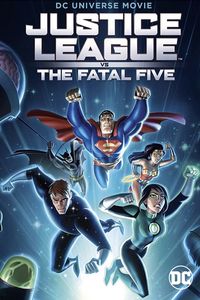
    (On TV, October 2020) At this point, I’m watching the DC animated movies with a very specific perspective: I’m not a completionist nor a big fan of the DC universe, so I don’t really care about the overall details of the universe, nor the specifics of the rather dull fights that feel contractually obligated throughout the films. I have a better time watching the films for their quieter moments: the relationship between the characters or the themes that emerge from the instalments once in a while. For Justice League vs. the Fatal Five, this means that the best bits are some dialogue snippets early in the film, as the main plot is being put together, the overall theme of dealing with mental illness, and a glimpse at the far future of the DC universe thanks to time-travel shenanigans. There’s some surprisingly compelling material here about characters reacting to PTSD and mental health issues, with a few good character moments for familiar characters such as Batman and Superman. Still, my interest in the film dwindled throughout its extended third act, as one meaningless fight after another takes the place of the dialogue and character building. But that’s more or less par for the course whenever we’re dealing with the animated DC universe: The good material is front-loaded, and by the time the fights start, you can fast-forward to the expected conclusion.

  • Reign of the Supermen (2019)

    Reign of the Supermen (2019)

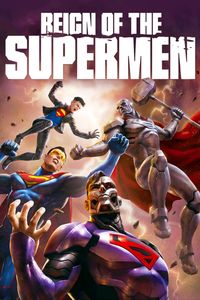
    (On TV, August 2020) Superman’s death can’t be left alone no matter the medium, and so the animated Reign of the Supermen follows the animated Death of Superman as if it had been planned all along. In the aftermath, four different supermen rise up, each claiming to be the successor to the Man of Steel (who, meanwhile, is regenerating in his Fortress of Solitude). But that’s not enough—we also need a new threat that the four supermen can fight, and for the real one to come back and prove that he’s the real thing. Considering that Reign of the Supermen is only 87 minutes long, that’s a lot of stuff to cover in a film and the pacing has this crazy go-go-go speed not helped in the slightest by contrivances and trite dialogue. As is often the case in those episodic DCAMU, the biggest fun is to be found in the details—such as, in this case, Lois Lane and Wonder Woman bonding over the disappeared Superman. It’s probably a mistake to see this as a distinct film— it’s really the conclusion to Death of Superman and watching it in any other context just feels unsatisfying. It’s not quite as good as its predecessor, but at least it concludes the narrative arc.

  • Justice League: The New Frontier (2008)

    Justice League: The New Frontier (2008)

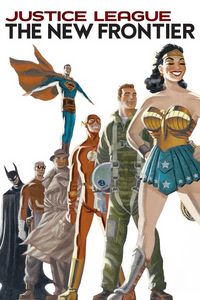
    (On Cable TV, April 2020) One of the most interesting things about the creative freedom allowed to the DC Animated Movie Universe are the occasional leaps into alternate realities that play with familiar characters. In Justice League: The New Frontier, the film adapts the classic Darwyn Cooke run of the Justice League being credibly transposed in the 1950s. It’s not unpleasant to watch, but it’s familiar, rushed and busy. While I’m not that big of a DC comics fan, I do have a nice slip-cased edition of The New Frontier (Why? Because of how Cooke draws his women characters, that’s why) and I’m slightly disappointed by the adaptation. It can’t quite play by the same codes of the original, nor sustain Cooke’s very distinctive visual style. But worse is how The New Frontier tries to condense a silver-age-style story into a far-too-fast 75 minutes focused on plot. This is a film that could have used 15 more minutes of atmosphere and character development in order to let the plot breathe and the 1950s styling make more of an impact. One word of warning to casual fans: the pace at which the film goes means that it does assume a lot of knowledge about the characters: that works for some of the more familiar ones, but not so much for the niche characters. In the end, well, The New Frontier is serviceable but not particularly satisfying, and a significant step down from the comics run itself.

  • Wonder Woman: Bloodlines (2019)

    Wonder Woman: Bloodlines (2019)

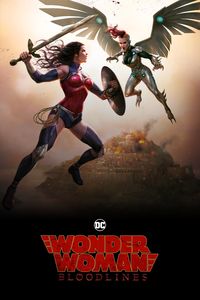
    (On TV, April 2020) While I’ve got quite a bit of respect for the DC Animated Movie Universe (DCAMU), there’s always a risk that it will be redundant to the more popular live-action films, even when it does things better than the box-office behemoths. While Wonder Woman: Bloodlines is not a bad origin story for the character and would have been a significant Wonder Woman film had it been made ten years earlier, it does feel a bit redundant after the 2017 Patty Jenkins live-action film. [December 2021: …and even more redundant after the 2020 sequel steals even more of the subplots.] Laboriously going over Wonder Woman’s origin story once again (if brought to the twenty-first century), it compounds the origin story problem by overstuffing the narrative with six villains, all jockeying for time, attention and importance. While the Steve Rogers romance is fine, quite a bit of the dialogue is slap-dash material that could have used a rewrite or two. It’s also substantially glummer than expected, which may be dramatically respectable but doesn’t do much for the entertainment factor. But most of all is the feeling that Wonder Woman: Bloodlines is too late and too redundant to be interesting to anyone but the most dedicated (or least-informed) Wonder Woman fan.

  • The Death of Superman (2018)

    The Death of Superman (2018)

    (On TV, April 2020) The first “death of Superman,” back in the 1980s comics, was an event. Naturally, it proved to be such a crowd-pleaser that it’s now almost a mandatory episode for any new reinterpretation of the character. 2018’s The Death of Superman is the DC Animated Movie Universe’s take on the material—more closely faithful to the original comic, but still able to update the story to the context of the series so far. It’s not a bad Superman story, and is even slightly more realistic than I expected. The title is both a spoiler and not, as it happens fairly late in the film, and is resolved before the credits roll. As a result, it doesn’t have much emotional weight—we know he will be back. The narrative does give a large place to Clark Kent, which is a good idea considering what we know and expect will happen to his alter ego. But in the end, The Death of Superman ends up being nothing more an honourable entry in the DCAMU, which is often more consistently successful than its live-action equivalent.