DCU series

  • Wonder Woman 1984 (2020)

    Wonder Woman 1984 (2020)

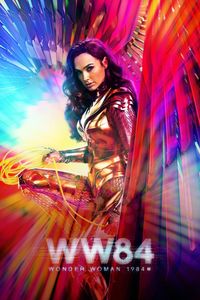
    (Video on-Demand, April 2021) When watching Wonder Woman 1984, it’s difficult to escape the thought that we’ve been spoiled by recent superhero movies. While we were perfectly fine taking in merely competent ones in the 2000s (because there were so many bad ones), the bar was raised once Christopher Nolan and the MCU entered the game. Now that the DCU has levelled up, notably with the first Wonder Woman film, expectations have risen (explaining lukewarm reactions to even to the recent-and-improved Zack Snyder’s Justice League) and the old way of sorta-kinda stumbling into something slightly satisfying is no longer impressive. Wonder Woman 1984 does signal its problems early on, as one overstuffed character introduction is followed by another overstuffed introduction of the same character. The script is at the foundation of all problems, with numerous issues and a lack of depth everywhere you look. The film fails any kind of plausibility — even at the surface level, nearly every minute brings a new and unsatisfying questions on top of a pyramid of implausibility, lazy plotting and half-baked developments. Perhaps most horrifying is a subplot about bringing back a character from the previous film by having him take over the body of Some Random Guy with a stunning lack of awareness in addressing the troubling issues inherent in that development. But Wonder Woman 1984 is just as incoherent in justifying its world-changing events or its individual character moments or its leap from one implausible plot point to another. The execution repeatedly stumbles over trite lines and ordinary moments, leaving a strange impression of a film that could have used another rewrite, shortening it to something snappier than two and a half meandering hours, and not painting itself into dumb corners along the way. Fortunately, it’s not a complete waste of time: Gal Gadot is still quite good as the lead character, and it’s an inspired choice to see Kirsten Wiig unlock her potential beyond awkward comedy. Pedro Pascal has his moments as a surprisingly likable villain, and the film’s action sequences occasionally work. There’s a really fun cameo slightly in the credits and the look at the 1980s can be fun. But it all comes at the price of being irritated throughout the film by a litany of mistakes big and small. But then again, we’re been lucky in terms of superhero films lately—so even middling efforts like Wonder Woman 1984 can feel like disappointments.
  • Zack Snyder’s Justice League (2021)

    Zack Snyder’s Justice League (2021)

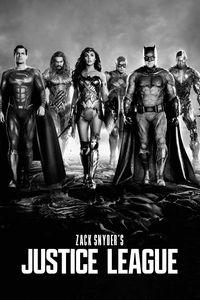
    (On Cable TV, March 2021) Just so that everyone is clear on where I’m coming from, I still think that the idea of Zack Snyder’s Justice League (i.e.: giving the director an estimated 70 million dollars to finish a film he had to abandon midway through) is one of the dumbest — rather than waiting for a new superhero movie that wasn’t built on such shaky grounds, fans deluded themselves into demanding a director’s cut, and the brand management geniuses at Warner Brothers thought it was a good idea to spend that much money to prop up the corpse of a middling film now four years old. So here we are now with a strange object, patched up through deleted scenes and special effects and reshoots to result in a staggering four-hour-long film that is unexplainably presented in dull TV aspect ratio betraying the point of a superhero epic. (Yes, I know about the IMAX argument — no, I don’t think it makes sense.)  My memories of the original aren’t particularly vivid (that’s what happens with a middling film), but this expanded version of Justice League does bring more to the table. Sometimes ridiculously so: Each character is introduced at least twice, and the editing of the film never attempts to be snappy when there’s slow motion to be used or generous pauses between each angle or line of dialogue. Still, there’s new content to feast upon. Rather a lot of content, including entire special-effects action sequences, such as The Flash’s second introduction. There are more character moments as well, including a far more developed arc for characters such as Cyborg and The Flash. Some story beats make more sense, and while we lose the overly humorous “magic lasso” truth-telling scene, the result is not quite as grim as the rest of the DCU up to Justice League. To answer the crucial question: yes, it’s a better movie. But is it $70M’s worth of a better movie? Is the punishing length of the result worth the added effort? No amount of patching can hide the ill-conceived structure that attempts to introduce new characters in a film meant to pay off audience involvement — as the running time demonstrates. No amount of “original artistic vision” can erase the ponderous pacing of the result and the overstuffed plotting. All that effort to earn, at best, half an additional star on an average film seems like self-indulgence writ large enough to be confused for fan service. I do like many aspects of this Justice League: The actors all do well: Ben Affleck is particularly good in this expanded version of Batman, and actors in small roles seem to have more to do. Snyder remains a great visual technician despite his bad storytelling instincts, and the special effects show what a team of highly paid professionals can do with additional time and compensation. Still, the final object is often more dumbfounding than satisfying. It makes plenty of effort (still) to set up later instalments that now have practically no chance of ever existing, considering the changes made in the DCU since then. At some point, why bother? I’m not naïve enough to think that the $70M spent on this Justice League could have been allocated as-is to a fantastic new original film project, but this endless rehashing of past failures for marginal improvements is not a good thing for the future of film.