Debbie Reynolds

  • The Tender Trap (1955)

    The Tender Trap (1955)

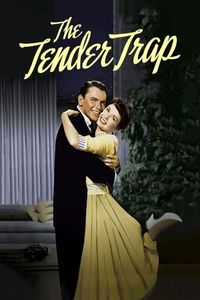
    (On Cable TV, December 2021) Even from sixty-five years later, it’s easy to see the hook of The Tender Trap. No, not the catchy title song that became a Frank Sinatra signature tune, but the concept of a proto-sex-comedy opposing legendary womanizer Sinatra with pure-as-snow Debbie Reynolds in a battle of the sexes on the way to matrimony. Sinatra plays the bachelor of many men’s dreams, with a high-paying job allowing him to afford swanky clothes and a killer Manhattan bachelor’s pad. Such is his appeal that when a friend decides to leave his married Midwestern life behind, he immediately heads over there to crash as he figures out what to do, and takes advantage of a few female friends feeling neglected by the protagonist. Said protagonist is only too happy juggling numerous conquests, except when one of them, an ultra-organized monogamous gal (Reynolds), seems worth giving up everything. It’s all pleasant enough in a Mad-Men-inspiration vein — even for a film explicitly dealing with an unrepentant bachelor and a wayward husband, the tone is so resolutely restrained that it seems almost likable. There’s an interesting line to draw from The Tender Trap to the more freewheeling sex comedies of the 1960s — in fact, many viewers may have trouble believing it’s not a 1960s film. Sinatra is just as compelling as usual, and there’s a rather good scene in which Reynolds, then Sinatra, then Reynolds again take on the title song, each time making it richer and more interesting in its delivery. David Wayne (looking a lot like Daniel Craig!) is also a highlight as the married man taking a holiday — although the film certainly does not dwell on what he’s up to when he takes one of his friend’s regulars on late-night dates. It’s all quite amusing (as long as you can buy into the fantasy of a Manhattan playboy, that is), bolstered by Sinatra and Reynolds at their most charming and some clean crisp 1950s colour cinematography. The Tender Trap certainly paved the way for more daring films to follow, and fits comfortably in the string of New York City-set sex comedies of the following decade and a half.
  • The Mating Game (1959)

    The Mating Game (1959)

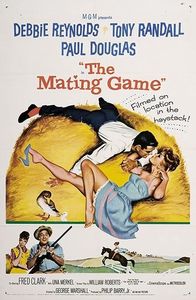
    (On Cable TV, September 2021) We don’t usually think of IRS agents as potential leads for romantic comedies, but if there was one actor who could make it work, it was Tony Randall — his strait-laced buttoned-down comic person being ideal for the role he was meant to play in The Mating Game. Here, he finds himself as an accountant sent on the farm of a man who’s never paid income taxes — and, worse, barters for everything he needs. Stuck there to assess how many back-taxes are owed, he can’t help but notice the farmer’s daughter, played by Debbie Reynolds… and there’s the rest of the movie, along with a few tax code shenanigans for comedy. (Yes, really.)  As far as 1950s MGM romantic comedies go, The Mating Game is fine without being particularly great. The rural environment is a change of pace, and the tax comedy angle remains distinctive, but the film seems stuck in this strange zone between a musical and a true comedy: Without songs nor strong jokes, it just comes across as middling. It’s amiable, with Randall and Reynolds being put to good use, but The Mating Game doesn’t get to the next level, where it would be genuinely funny.

  • Bright Lights: Starring Carrie Fisher and Debbie Reynolds (2016)

    (On Cable TV, July 2021) On a very surface level, Bright Lights: Starring Carrie Fisher and Debbie Reynolds is a documentary about the relationship between mother Debbie Reynolds, a classic Hollywood star who had the lead in 1951’s Singin’ in the Rain, and daughter Carrie Fisher, who achieved her own superstardom a generation later with 1977’s Star Wars. The documentary presents both women later in age, as they live in adjacent houses “separated by a hill.”  Even by the standards of mother/daughter relationships, theirs is complex: A mixture of codependency, affection and long-festering resentment all tempered by aging. The film does a really good job at portraying what it feels like to grow up under the spotlight for Fisher and her brother, with a movie-star mother and a music crooner father. That’s interesting by itself, and the film does a fine job at showing (or reminding) viewers about their achievements. There’s some added interest here for those interested in measuring Classic Hollywood with New Hollywood: We get a look both at Reynold’s effort to preserve Golden-Age Hollywood memorabilia, and (through Fisher’s wry humour) as honest a take as possible on the weird demands of modern fandom from the stars’ point of view. It’s probably not an accident if Fisher gets the most airtime here — that a child of a less inhibited age would be at times painfully honest about her issues, while her mother would cling, even late in life, to the decorum expected of studio stars. (Her brother Todd Fisher acts as a fact-checker at times, as he practically becomes a narrator to fill in some context.) Fisher does come across as a fun eccentric here — although we’re warned that the camera is capturing her in a manic, outgoing phase. Still, that conversation with Griffith Dunne in which both discuss how he took her virginity (!) will strike many as being incredibly, even uncomfortably forthright. Those with a better awareness of the meta-contextual history of Reynolds and Fisher will be able to fill in some of the blanks that the film merely hints at — in particular the long periods of estrangement between the two, some of it reflected in Fisher’s semi-autobiographical Postcards from the Edge or better yet her filmed one-woman show Wishful Drinking. Thanks to a mixture of interviews, historical footage, explanations and fly-on-the-wall footage, Bright Lights becomes a way to do justice to a relationship almost too extraordinary to believe. But the one thing that puts the entire result in perspective is something that is (sadly) not mentioned in the film, something that happened a few months after its theatrical premiere and two weeks prior to its TV premiere as an HBO presentation: Fisher died and then, one single day later, Reynolds died as well. Dramatic to the end, they went out adding even more credence to this portrait of their lives.

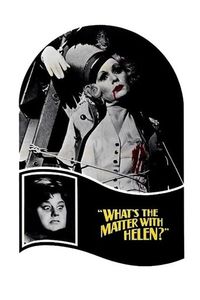
  • What’s the Matter with Helen? (1971)

    What’s the Matter with Helen? (1971)

    (On Cable TV, July 2021) It’s really hard to watch What’s the Matter with Helen? and not notice the similarities with psycho-biddy exemplar What Happened with Baby Jane? : In both cases, we’re dealing with a bloody psychodrama, featuring female protagonists intent on doing harm to each other, played by actresses past their prime years. In this case, we have two women cleared of a murder in the 1930s, moving to Los Angeles to open up a dance academy but being pursued by a dangerous stalker intent on making them pay. Considering the delicate mental state of one of the women, however, the biggest danger may not come from outside! Debbie Reynolds and Shelley Winters star, with Winters being far more memorable in her unhinged role. (Reading about the film’s production history is wild, with Winters seemingly breaking up along with her character, and some weird business about a prop knife being replaced by a real knife.)  The script is suitably macabre all the way to an often-spoiled climax. What’s the Matter with Helen? is not an exceptional film, but like many films in its subgenre, it does offer up a few treats, especially for classic Hollywood fans looking to complete their filmographies of known actresses.

  • The Gazebo (1959)

    The Gazebo (1959)

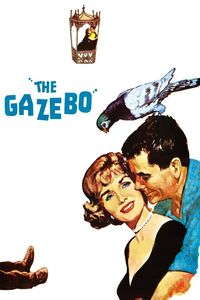
    (On Cable TV, May 2021) As far as late-1950s comedies go, The Gazebo is markedly darker than you’d expect — especially as it begins with a murder plot to ensure that the protagonist’s wife isn’t embarrassed by the release of nude pictures. That’s right — the hero shoots down a bad guy and spends the rest of the film trying to prevent events from further getting out of control. Glenn Ford plays the harried husband killing to protect his wife’s honour (especially considering that she’s played by Debbie Reynolds), but the script is aligned in his favour, as all the people harmed during the course of the film definitely deserved it. Amusing without necessarily being all that funny, The Gazebo arguably plays better when viewed alongside more serious criminal fare of the era — Alfred Hitchcock gets name-checked (indeed, there are similarities here with his The Trouble with Harry, since playwright Alec Coppel contributed The Gazebo’s original story to and handled screenwriting duties on Vertigo) and you can see the film as a slight film noir parody (albeit in colour and in a small town, so not really all that much). It’s not mandatory viewing, but it’s certainly watchable and even more so if you’re familiar with 1950s thrillers. The Gazebo’s got a bit more bite than other movies of the era, as the dark comedy it features would become more prevalent later on. But keep your expectations in check.

  • Susan Slept Here (1954)

    Susan Slept Here (1954)

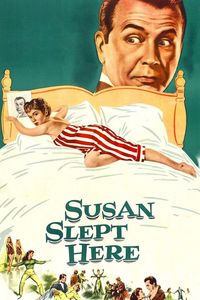
    (On Cable TV, December 2020) On paper, Susan Slept Here sound revolting. After all, the story has a 35-year-old screenwriter fostering, then immediately marrying a 17-year-old-runaway. It gets even woooorse when you realize that star Dick Powell was 50 and Debbie Reynolds was 22 the year the film was released. Even calibrating by 1950s standards, this is far beyond the frontiers of creepy. But everything is in the execution, and excuses can be found in details. For one thing, the film is built to be a comedy examining the age difference between the leads and often acknowledges the repellence of the situation. What’s more, the younger woman is clearly the dominant partner in Susan Slept Here – her desires are what drives the film, and her street-smart personality clearly outshines that of the older, somewhat boring man. This is even reinforced in a dream sequence ballet in which she sees her crush being seduced by a four-armed spider woman and chokes someone to gain the key to her freedom from a cage. If that’s not weird enough, consider that the film is narrated by an Academy Award statuette. Oh, yes, there’s a lot going on here – pretty good dialogue, Powell turning in a swan song of sorts (it was his final film appearance) and Reynolds being very good in a tricky role. The predictable ending will still make everyone uncomfortable, except that “uncomfortable” is still a great deal better than “aghast,” which may have been a possibility had lesser talents had handled Susan Slept Here’s built-in creepiness.

  • Give a Girl a Break (1953)

    Give a Girl a Break (1953)

    (On Cable TV, November 2020) There were a lot of Broadway musicals in the 1950s, and Give a Girl a Break was certainly one of them. It’s neither better nor worse than the norm—simply very much a typical musical of its period, with decent songs, fine dancing, a buoyant atmosphere and a perfunctory romance to anchor everything. As far as star power, you have Debbie Reynolds playing one of the three hopefuls competing for a top spot on an upcoming Broadway show after the lead actress walks out. She is being championed by a show gofer played by none other than Bob Fosse, but there are two other actresses and two other champions to contend with, and much of Give a Girl a Break consists in dancing and singing while they’re waiting for the final decision of which one of the three actresses will be picked for the role. Much of the film’s first half is formulaic, playing off Broadway backstage musical tropes without too much originality. Only “Nothing is impossible” breaks up the monotony a little bit. Things get more stylized and more interesting in the second half, the standout sequence being a balloon dance played backward. It’s a bit of a commentary on the film that the “contest” between the three would-be stars is a bit of a dud: the resolution is messy and everyone gets something nice for their trouble. But this isn’t about a character winning over the others: it’s about song and dance and the classic warm fuzzy feeling of a Broadway musical where nothing too serious is likely to happen. I happen to like the foundational elements of Broadway musicals and so quite liked Give a Girl a Break despite not finding all that much distinctive about the film.

  • Singin’ in the Rain (1952)

    Singin’ in the Rain (1952)

    (On Cable TV, January 2018) I’m currently bingeing on classic movies, with occasional flashes of giddiness along the way as I (re) discover great movies along the way. I’m surprised at how much I just love Singin’ in the Rain. I had two or three minutes of doubt at the very beginning of the film, as the opening sequence takes on a grandiloquent tone that could be mistaken for earnestness rather than satire. Fortunately, the “Dignity, always dignity” sequence quickly set me straight as to the film’s real tone and intention. As with most of the Gene Kelly musicals I’ve seen, Singin’ in the Rain is a musical that celebrates that it’s a musical … and also recognizes that its audience has seen enough musicals to expect more. As a result, the tone is satirical, there are some spectacular set pieces and the result is optimized for maximum entertainment. Among the highlights is the early “Fit as a Fiddle” acrobatic number, which is eclipsed later on by the anthology-worthy “Make ’Em Laugh.”  Gene Kelly is terrific, but Donald O’Connor is a great partner in dance, along with Debbie Reynolds and Jean Hagen to round up the cast. It certainly helps that the film is often laugh-aloud funny—never mind “Make ’Em Laugh” when there’s the classic “early talkie” sequence. (Which I dimly remembered from having seen at least this part of the film decades ago) Looking at Hollywood’s early-sound age is a great excuse to trot out excesses, and to have a lot of fun along the way. I’m certainly not alone in my love for the result, as Singin’ in the Rain earn an enviable spot on many best-of lists. It’s movies like this one that will keep me digging into film history, trying to catch what has charmed so many people since then.