Deborah Kerr

  • The Grass Is Greener (1960)

    The Grass Is Greener (1960)

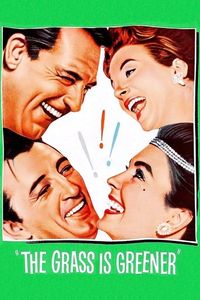
    (On Cable TV, September 2021) The cast alone would make The Grass is Greener worth a look: Robert Mitchum playing the cad trying to romance Deborah Kerr away from Cary Grant, while Jean Simmons looks on in amusement? Yes, that is the kind of film that even twenty-first viewers can enjoy. It’s not that good of a movie, but it has enough high moments to be fun. Grant isn’t quite in his persona here, as a British aristocrat fallen on hard times that must find a way to keep his wife away from a charming American oil baron while keeping the decorum we expect from his social class. As expounded in long but enjoyable soliloquies to other characters, too forceful a response would drive her farther away — he’s looking for a better solution. That eventually leads him to invite his rival to the estate for a weekend, and eventually initiate a pistol duel (!) in the corridors of the mansion. Mitchum plays an interesting mixture of wolfishness in a meek presentation, being utterly charming even as he tries to steal a wife away from her husband. Kerr does modulate carefully between her temptation and her duties as a rather bored wife, while Grant couldn’t have been better in a tricky role. It’s all presented in the very entertaining style of the 1950s looking back at the sophisticated Lubitschian comedies of adultery of the 1930s, but clearly anticipating the more permissive 1960s. There’s one standout sequence from director Stanley Donen in which split screens are brilliantly used to show parallel conversations taking place by phone — the rest of the film is far more sedate from the directorial aspect, but that one scene is terrific. The cast is great, but the story also works well. The Grass Is Greener all wraps up in schemes revealed, the lead couple reuniting and the oil magnate getting a quirky American heiress for his trouble. In other words, the kind of amusing romantic comedy that pokes at temptation but makes sure everyone goes home happy.
  • Marriage on the Rocks (1965)

    Marriage on the Rocks (1965)

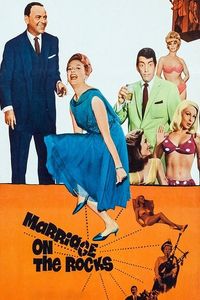
    (On Cable TV, September 2019) While almost forgotten today, Marriage on the Rocks offers the still-amusing spectacle of seeing Frank Sinatra and Dean Martin as romantic rivals — the first one married, the second proudly single but still pining after the other man’s wife (played by Deborah Kerr). An attempt to transpose the 1930s comedy of remarriage in the 1960s, the film gets kicking in high gear when Sinatra’s character and his bored wife accidentally divorce while in Mexico, and she uses the episode to make him squirm a bit. Contrivances happen, and soon enough she’s just as accidentally wedded to her old flame. Don’t fret — there’s not even a suggestion of inappropriate hanky-panky here even as Sinatra’s character takes the accidental marriage in stride, moves out and encourages his friend to take his place as the head of the household. Comedy is often found in aberrant human behaviour and there’s plenty of that at play here, as the characters experience offence, revenge and counter-revenge. It ends a bit abruptly, but happily. Of course, the fun here is in seeing old Rat-packers Sinatra and Martin banter as friends and then rivals. Among minor amusements is the fact that Sinatra’s daughter Nancy plays Sinatra’s character’s daughter, and a pre-Star Trek DeForest Kelly is seen in a minor role. Marriage on the Rocks is hardly a perfect film — it has some curious lulls, and the style of the film seems stuck in that curious mid-1960s period where the studios were creatively exhausted and beginning to see the possibilities offered by New Hollywood, but not yet ready to make the jump. At times, Marriage on the Rocks feels tamer than the 1930s comedies of remarriage despite its 1960s setting, not quite able to take on the naughtiness of the (innocuous) sex comedies of the time. One suspects that any film featuring the biggest two Rat Packers simply could not get away with racier stuff — their audience was older and less forgiving than the teenage hordes that would redefine American cinema a few years later.

  • The Arrangement (1969)

    The Arrangement (1969)

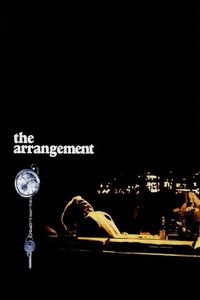
    (On Cable TV, September 2021) I don’t remember much about reading Elia Kazan’s The Arrangement nearly twenty-five years ago, but my contemporary notes suggest that I found it overlong and sporadically funny. That actually turns out to be a remarkably good take on the film adaptation as well — with writer-director Kazan adapting his own novel to the screen. The film version of The Arrangement does have the advantage of casting, though:  I’ll watch Kirk Douglas in nearly everything, and here he is as a California-based ad man going through a psychotic break in which he (the only sane man of the story, or so we’re told) starts rethinking the various social obligations that bind him. Suicide attempts, affairs, insulting clients, dying parents, arson, psychiatric confinement and pop-philosophy about the meaning of life in a modern world are what The Arrangement is made of. It’s… sporadically funny. Douglas is often much more compelling than the material, and the same goes for Deborah Kerr (who plays his wife) and Fay Dunaway (his mistress). It’s rather amusing to see Hume Cronyn play a dying man considering that he still had another forty years ahead of him as an actor. Still, despite the jokes and performances, there’s not much to like in The Arrangement. Self-indulgent and convoluted, it can’t be bothered to get to the point: it wanders in a quest to score fake epiphanies that feel trite today and can’t quite maximize its humour into something more cohesive. This may be Kazan at his most self-indulgent, as the result often seems to score goals against an unseen and uninteresting opponent. Oh well — it’s one more Douglas performance worth watching even in a film that’s not necessarily worth the trouble.

  • Count Your Blessings (1959)

    (On Cable TV, July 2021) Idiot plotting has always been a staple of Hollywood screenwriting and audiences have accepted some famously stupid stuff over the years, but there’s always a point where enough-is-enough, and Count Your Blessings is a particularly egregious example of the form. Presented as a Technicolor romantic comedy, it features an Englishwoman who gets swept off her feel by a charming Frenchman during WW2, only for her to get married and impregnated in the mere days before he returns to the front. That’s wild enough, but not unusual for movies of that era. But wait, because after that he doesn’t return to her for nine years, pretexting various military engagements around the world. By the time he comes back to meet his nine-year-old son, nearly every viewer will scream at the heroine to get away from him as soon as possible. It’s the world’s least surprising plot development when he’s revealed to be a womanizer, keeping several mistresses thanks to the family fortune. The heroine finally decides at some point to divorce, but what would have been a happy ending soon sours when their adorable nine-year-old poppet somehow manages to get them back together, at which point the film concludes on a note of horror rather than happy romance. The plotting is bad enough, but the execution somehow makes it even worse: Deborah Kerr doesn’t seem particularly pleased with romantic counterpart Rossano Brazzi, and the film’s stultified directing makes everything feel slow, artificial and contrived. Maurice Chevalier barely escapes with his dignity intact as the “wise” old uncle providing advice to the couple — but we know that his character was probably even worse during his youth. I frankly watched the film only because I’m a Chevalier completist, but this is a low point in his filmography despite his fine performance with bad material. Not every Classic Hollywood film was a hit — there are plenty of duds as well, and Count Your Blessings is unquestionably one of them.

  • Dream Wife (1953)

    Dream Wife (1953)

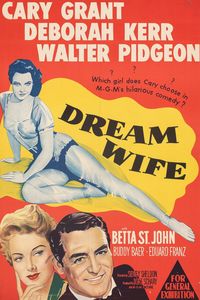
    (On Cable TV, March 2021) One distinction about Dream Wife is that this was my first Cary Grant film after reading Scott Eyman’s great Cary Grant: A Brilliant Disguise, meaning that I now knew plenty about Grant’s life, insecurities, weaknesses and low points. Dream Wife doesn’t rank as one of his finest films, and I was curious to see if knowing too much about Grant beyond his screen persona would negatively impact my experience of the film. The answer, unsurprisingly, is… no. Grant’s megawatt charm is such that he’s mesmerizing on-screen, and the nature of his off-screen weaknesses isn’t the kind of material to make anyone look askew at what happens on-screen. This being said, well, Dream Wife isn’t one of his finest hours — coming at the end of a momentary career letdown (whose last phase would pick up anew in 1955 with his next film To Catch a Thief), it’s a slight romantic comedy that almost entirely depends on Grant anchoring the proceedings. The narrative has something to do with Grant as a businessman romancing a Middle Eastern princess (Betta St. John) despite still carrying a torch for the State Department employee (Deborah Kerr) chaperoning them in the hope of securing a lucrative oil agreement for the United States. But then again, it’s an excuse for Grant to unleash his usual mixture of charm, poise and utter ridiculousness as the situation spins out of control. He is admittedly very good at it — it’s in serviceable productions such as this one that you can recognize the worth of a great actor, and Grant often singlehandedly elevates scenes with impeccably timed mumbling and great staging. Otherwise, the film feels conventional, riffling through Grant’s assets without necessarily getting more than a moderately entertaining result out of them. Some of the most interesting things about Dream Wife aren’t even on-screen—From Grant’s biography, I already had the shock of realizing that writer-director Sydney Sheldon is the same Sydney Sheldon who later became a best-selling melodrama author. Still, I don’t want to be too harsh about it — Dream Wife is entertaining in exactly the way we expect from a Cary Grant vehicle.

  • Julius Caesar (1953)

    Julius Caesar (1953)

    (On Cable TV, July 2020) In a fair fight, what would win: My innate inability to process Shakespearian English, or James Mason’s mellifluous voice? In this take on Julius Ceasar, Mason plays the backstabbing Brutus, alongside such notables as Marlon Brando (as Mark Anthony), Greer Garson and Deborah Kerr. Decently written and directed by Joseph L. Mankiewicz, the film attempts to be a blend between the sword-and-sandal epic movies of the 1950s and a more classical restaging of the theatrical material. Ultimately, it’s the black-and-white cinematography that traps the film closer to a theatrical space while a widescreen Technicolor approach would have freed the material. I found this Julius Caesar a bit dull, but considering that this is my default stance for nearly all straight Shakespearian adaptations, that’s not too bad of a review. Let’s admit that the film was made for the Shakespearian crowd and move on to the next review. I was only here for James Mason anyway.

  • The Prisoner of Zenda (1952)

    The Prisoner of Zenda (1952)

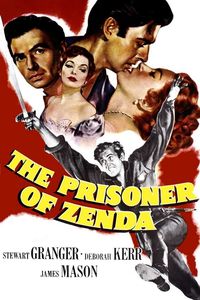
    (On Cable TV, May 2020) Modern critics of Hollywood’s fondness for near-identical remakes should find perverse satisfaction in being reminded that this is not a recent development. In fact, many periods in Hollywood’s history had blatant remakes as the order of the day—the 1930s for sound remakes of silent hits; the 1950s wave of colour remake of past black-and-white crowd-pleasers. Few, however, have been as blatant in remaking the same material as the 1952 version of The Prisoner of Zenda, which took nearly the exact same script (aside from a few minor modifications) as the 1937 version. Except in colour, and with the added technical innovations of 15 years of filmmaking. The premise is a trope classic: the visitor in a foreign country who looks exactly like the king, and thus becomes involved in palace intrigue. It’s generally watchable for a wide variety of audiences, considering that it hits upon matters of adventure, romance, action and political conflict. While lead actor Stewart Granger is a second-tier classic Hollywood reference at best, the film has another lead role for Deborah Kerr, and a deliciously scene-chewing performance from James Mason as a villain. As a modern (ish) European fairytale, The Prisoner of Zenda ends with a spectacular sword fight and plenty of swashbuckling victories for its hero. It’s not bad by itself, and even more interesting as a remake… but the baseline is that it works no matter how you see it.

  • An Affair to Remember (1957)

    An Affair to Remember (1957)

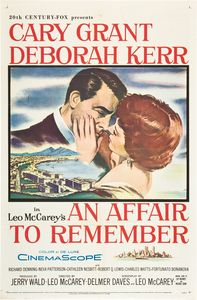
    (On TV, February 2020) While An Affair to Remember is often hailed as one of the finest romantic movies of all time, it’s amazing to see how much it walks a very fine line between an honest romantic comedy and overcooked romantic schmaltz. The film is almost clearly divided into two halves, and as things unfolded, I ended up watching the film in two separate sessions separated by that division. The first half of the film is significantly better than the second, as a world-famous playboy meets a retired nightclub singer aboard a transatlantic liner bound for New York. Comedy and smart dialogue take precedence in this flirty first half, culminating in a cleverly unseen kiss that complicates everything for both characters, as they are already engaged to others. Faster than you can say, “Sleepless in Seattle will steal this,” they agree to meet on top of the Empire State Building six months later. It’s all funny and charming and Cary Grant can do no wrong and Deborah Kerr (despite an unflattering hairstyle) clearly shows why she was one of the best actresses of her time. Then there’s the break: the characters disembark from the ship in Manhattan, and the film loses the pressure of the seagoing setting. But that’s also the point where the film piles on the contrived obstacles, what with one character becoming paraplegic on the way to a weepy conclusion. It works largely because of the actors, because suave, charming and sophisticated Grant could make people swoon by reading the telephone book at that time of his career. It ends on a note that would be unbearable had the film starred nearly anyone else—good casting, certainly, but not-so-good screenwriting. Despite its flaws, there’s no denying that An Affair to Remember is a film to remember as well: not as a completely successful film as much as an imperfect one that succeeds despite itself based on certain very specific elements. Amusing enough, it’s directed by Leo McCarey, who also directed Love Affair, the film on which An Affair to Remember is based.

  • The Innocents (1961)

    The Innocents (1961)

    (YouTube Streaming, December 2019) Eerie, subtle, and ambiguous, The Innocents is almost a horror movie and almost not a horror movie at once. The opening sequences certainly feel comforting in their familiarity, as a woman (Deborah Kerr) is hired as a governess in a foreboding gothic mansion. The kids, as we find out, aren’t all right as they exhibit signs of maturity beyond their years, and a fascination with morbid or violent things. As the story slowly unfolds (this is meant to be an atmospheric film) and details about the mansion’s tragic back-story emerge, our viewpoint protagonist becomes convinced that a pair of ghosts are possessing the children to relive their doomed romance. But from the viewer’s perspective, things aren’t so clear—is she imagining all of this? This foundation for an inconclusive psychological horror movie being established, The Innocents doesn’t disappoint in its lack of resolution. While relatively daring back in 1961, this kind of thing is now commonplace, and perhaps the aspect of The Innocents that has best survived is the setting—the vast decaying mansion, the isolated surroundings, the macabre imagery all combine to give us a familiar but still-effective backdrop. The film is perhaps most noteworthy as a counterpoint to the kind of cheaper horror movies that was starting to emerge by the early 1960s—while it’s not as fresh as it was back then, it has aged better than many others.

  • Separate Tables (1958)

    Separate Tables (1958)

    (On Cable TV, November 2019) It’s interesting how various genres of film age well (or not) due to different factors. Something often underestimated is thespian intensity, especially in those movies designed to be actor showcases. Separate Tables starts from strong dramatic material, being adapted from a pair of short theatre plays. This is most clearly seen in the strong dramatic unity of the result, taking place over a few days in a secluded hotel where two pairs of guests have largely separate subplots. On one side, a man (a typically intense Burt Lancaster) has to pick between his nice new girlfriend and his shrewish ex-wife (Rita Hayworth, glammed up to the point where she can be mistaken for Grace Kelly). The dialogue pyrotechnics here occasionally suggests Who’s Afraid of Virginia Wolfe?, with a conclusion that may surprise you. On the other main subplot, an officer with a mystery past (David Niven, up to his high standards) beguiles a spinster (Deborah Kerr, strongly de-glammed) trying to get away from the influence of her mother. The addition of a bit of romantic comic relief between two young lovers helps ease into the film before the dramatic intensity starts. Under Delbert Mann’s direction, the film benefits from clean images, unobtrusive direction and full leeway for actors to deliver on the material. The result was nominated for nine Academy Awards (including Best Picture) and won two acting awards. Clearly, this showcase certainly worked, and it helps Separate Tables to be worth a look even today.

  • King Solomon’s Mines (1950)

    King Solomon’s Mines (1950)

    (On Cable TV, November 2019) Anyone watching a 1950s MGM Technicolor adventure film and expecting a sensitive, respectful take on its African setting is not going to have a good time—much like its 1937 film forebearer and 1885 original H Rider Haggard novel, this is a straight-up adventure in the time of colonialism, with buried treasure and hostile natives. (Although this, like the previous film, does add a female character—and an excuse to see Deborah Kerr in the jungle.)  Largely shot on location and meant as a big MGM spectacle, this version of King Solomon’s Mines generally delivers on its premise, even if this premise can be repugnant to modern audiences (I really could have done without the elephant shooting, for one thing). There’s some spark to the relationship between the two lead characters, with Kerr playing opposite Stewart Granger as Allan Quatermain. The nature landscape photography alone can be spectacular. You’ll have to ignore some heavy-duty colonialism along the way, though, especially considering how this version minimizes some of the more heroic African characters. While this King Solomon’s Mines is, as a whole, slightly better than the earlier film version, it’s still not quite satisfying—with the underwhelming ending not helping with the dissatisfaction.

  • The Gypsy Moths (1969)

    The Gypsy Moths (1969)

    (On Cable TV, September 2019) Looking at director John Frankenheimer’s filmography and The Gypsy Moths’ production year, it’s hard to avoid thinking that it’s his attempt to come to grip with the New Hollywood that was beginning in earnest at the time. It takes a potentially white-knuckle topic (skydiving, at the time something so novel that you could charge admission for such shows) and ends up wrapping it in small-town existentialism, as the quiet lives of the locals are contrasted with the devil-may-care attitude of the nomadic protagonists. It’s not hard to see the clash of culture between the two Hollywoods here, especially when it features a pair of Classic Hollywood icons (Burt Lancaster as an aging daredevil, and Deborah Kerr in one of her last performances) playing off a pair of actors who would later become far better known (Gene Hackman, quite compelling; and Bonnie Bedelia whom most will recognize from performances twenty years later in Die Hard and Presumed Innocent). As an illustration of a pivotal time in American movies, it’s not uninteresting. As a straight-up drama, however, it does have problems: The skydiving sequences are compressed at the end of the film, the climactic sequence arguably comes twenty minutes before the end, the small-town drama takes forever to get to a point and can’t quite manage to become effective. Compared to other films of the period, it fails to engage fully with the social changes that were sweeping America, despite half-hearted nude sequences and adultery. Compared with three of the other four Lancaster/Frankenheimer collaborations, The Gypsy Moths feels limp and meandering for most of its duration, only becoming alive when shooting the skydiving sequences. Said sequences are still interesting, but they’ve been duplicated so often (in everything from Moonraker to both Point Break films) that they’ve lost their impact—not to mention the rise of skydiving as a recreational sport. The film’s most flawed aspect comes at the very end, when what should have been a climactic moment merely leads to an extended epilogue that doesn’t go anywhere that a better ending would have achieved in thirty seconds. Historical accounts of the film suggest that studio meddling may have been responsible for the film’s refusal to fully engage with its uncensored themes (and that’s probably true—not everyone knew what to make of the post-Hays-Code artistic freedom) but there’s a limit to the amount of interference in a project with a lopsided structure. The Gypsy Moths does amount to an interesting curio if you’re going for a complete Frankenheimer filmography (especially since he considered it one of his favourites) or an illustration of late-1960s changes in movie history, but overall, it’s a bit of a disappointment.

  • The Sundowners (1960)

    The Sundowners (1960)

    (On Cable TV, February 2019) There is a weightiness to The Sundowners that makes it both respectable and a burden to watch. The story of a nomadic family trying to make ends meet in outback Australia, it’s a character study (adapted from a novel) of a man unwilling to settle down, something that his wife finds increasingly untenable. Robert Mitchum stars in a very manly role, with Deborah Kerr as his long-suffering wife—despite the mostly happy marriage banter between the two, much of the film’s central conflict is about whether or not they’ll be able to reach an accommodation, and the ending is far less definite than many would have wanted. But the real reason to watch the film may have less to do with plotting and more with the impressive colour cinematography—unusually enough for 1960, much of the film was shot on location in deep Australia, featuring plenty of koalas, kangaroos, sheep and sheep-shearing. Peter Ustinov makes an impression as a refined older man somehow found in the outback. It’s a solid drama that was eventually nominated for five Academy Awards (including Best Picture), but don’t expect much in terms of resolution.

  • The Life and Death of Colonel Blimp (1943)

    The Life and Death of Colonel Blimp (1943)

    (Archive.org streaming, November 2018) Structure isn’t always used as effectively as it could in movies, especially as a tool to reveal dramatic ironies. But The Life and Death of Colonel Blimp is a film from 1943 that does it exceptionally well: It starts with an impetuous young British soldier disregarding orders to mock-capture an older officer as he’s in a Turkish bath. The older man seems like an object of ridicule with an overblown moustache, a portly belly and a pitiable insistence on following rules in war. But then the flashback begins, and so does our perception of the character through a forty-year span. Made at the height of WW2, The Life and Death of Colonel Blimp isn’t your usual wartime propaganda film: it’s a sophisticated meditation on age, wisdom, unfulfilled romances, the sacrifices required to fight evil and the nature of friendships. Our protagonist (magnificently played by Roger Livesey at a variety of ages) is occasionally sympathetic but not always admirable—he causes diplomatic trouble for dumb reasons, derives the wrong lessons from his life and becomes increasingly fixed in his ways. In short, he’s an authentic character in a medium far more interested in easy archetypes. He escapes easy description, and that also goes for the entire film as it pokes and prods at British tradition, military customs and the changing dynamics between friends. Is it better to be ethical or victorious? Is it better to be young and dumb or old and inflexible? It’s an unexpectedly moving film, and one that escapes the kind of cheap rabble-rousing propaganda that emerged from the era. Deborah Kerr is fine in three separate roles, but Anton Walbrook is almost as good as a friend/foil of the protagonist. There’s some serious moviemaking skill in some of the film’s delivery (most notably in portraying change across a lengthy period), and the colour cinematography of the film makes it feel more modern than its early 1940s origins. Even if the version I watched was a poorly-compressed low-resolution digitization of a pre-restoration copy of the film (it was the most easily available way to see the film legally), the magic of the film still works. By the time we get back to the framing device, we no longer see the older man in the same way, nor do we think that the young man is completely right … but neither do we think he’s completely wrong either. Such nuances were rare in early-1940s cinema, and it’s one more reason why The Life and Death of Colonel Blimp has survived so well along the way.

  • The King and I (1956)

    The King and I (1956)

    (On TV, July 2018) So, so very boring. I should be sorry for saying so, but there it is: Despite liking all three lead actors a lot (Yul Brynner, Deborah Kerr, and especially Rita Moreno) and liking musicals a lot, and not being completely unreceptive to mid-fifties filmmaking, I found The King and I very long, very dull and unable to go beyond its familiarity. It doesn’t help that the film’s outlook on colonialism is, well, from the mid-fifties (if not earlier, given the film’s lineage to a Broadway production, then to a book, then to real-life experience). I’ll point out that my not liking a musical is not a surprise when the musicals are based on a Broadway/Hammerstein source—I find Broadway adaptations not as interesting as musical developed directly for the screen, and Hammerstein to be humorless. Otherwise, as The King and I demonstrates, it usually ends up being an unimaginative restaging of a theatrical production with very little in terms of purely cinematographic art. It doesn’t help that the source material is almost entirely devoid of anything looking like humour or playfulness.   On the other hand, many of the individual components of the film are just fine. The scenery and costumes are terrific. Brynner is fantastic in the royal role, while Kerr and Moreno are also very good in their roles. And yet, I just couldn’t get or remain in the film, occasionally perking up at some of the better numbers but otherwise thinking “I’ve seen this already with Jodie Foster and Chow Yun-fat”.