Destry series

  • Destry (1954)

    Destry (1954)

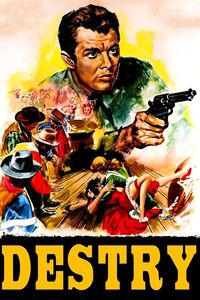
    (On TV, September 2020) Considering that I had Destry lying there on my DVR, even as I was watching the original 1939 Destry Rides Again, I had to take a look at the 1954 remake as soon as possible. Curiously, I’m not really disappointed. Sure, the original had none other than James Steward and Greta Garbo, whereas the remake has Audie Murphy and Mari Blanchard. Don’t look for additional plot twists, because this remake is almost shot-for-shot identical to the first film. But the story is fine enough that even another redo is a fun time. Blanchard is surprisingly good—to my eyes more animated than Garbo, which fits the character better. While Murphy isn’t Stewart, this very fact makes it easier to see Destry-the-character rather than the Stewart persona being called Destry. Plus, Destry is in colour—that’s not supposed to matter, but it does. The staging and cinematography are a bit less artificial, as per the evolving technical qualifies of filmmaking over two decades. While the original film remains quite good, there’s nothing specifically wrong with the remake either—as a portrait of a lawmaker out to pacify a town without resorting to excessive violence, it’s even inspiring.

  • Destry Rides Again (1939)

    Destry Rides Again (1939)

    (On Cable TV, August 2020) It can take a lot for a western film to grab me these days –it doesn’t help that there’s a seemingly infinite number of them in the Classic Hollywood catalogue. Also, perhaps more importantly, I don’t have any basic affection for the genre as I do for musicals or film noir – as a result, I tend to watch westerns and forget them almost immediately. But Destry Rides Again is slightly different. For one thing, it features none other than screen legends James Stewart and Marlene Dietrich in the lead roles – for another, it’s a somewhat less trigger-happy take on cleaning up a rowdy frontier town, with a baby-faced Stewart playing a deputy sheriff with an aversion to carrying or using a gun. (This being said, the film makes it crystal-clear that he’s an expert marksman when he wants to, which is a trope that frequently turns up in American “pacifist” fiction.) Meanwhile, Dietrich plays the femme fatale of the local drinking establishment, a powerful influence who could make or break the deputy sheriff’s efforts to get rid of the local lead hoodlum. The absolute highlight of the film comes when the two get involved in a saloon fight – or more specifically when she starts throwing objects at him and he’s bound not to answer in kind. Otherwise, Destry Rides Again does follow a generally satisfying narrative that promotes non-violence in the service of a taming-the-wild-west story. Or rather up to a certain point: true to form for American cinema, there’s a point where guns have to be used and bad people have to die. Still, the result is more memorable than many other westerns from the era.