Diahann Carroll

  • Goodbye Again (1961)

    (On Cable TV, April 2022) There is a lot in Goodbye Again that I like, so it would make sense that I’d like it all, right? Take middle-aged Ingrid Bergman (a beauty at any age) as a Frenchwoman, a prime-era Yves Montand as her philandering boyfriend, a young and not-yet-typecast Anthony Perkins as her younger lover, the atmosphere of early-1960s Paris, Classic Hollywood Francophilia and, logically, the film should be at least the sum of its parts. Alas… Goodbye Again, while not a bad movie, does aim for a very specific kind of romantic drama, gender-flipping familiar tropes to show a woman hesitating between an age-appropriate but unfaithful partner and a much younger one. It’s not a bad premise (and there’s certainly an appreciative audience for such can’t-win situations) but the execution can be trying at times – the situation is clear early but the film continues to trample that familiar ground until it ends. The mood is glum, which marks a contrast with the rather free-wheeling atmosphere of Paris as depicted in the film (with none other than Diahann Carroll showing up briefly as a nightclub singer). Black-and-while cinematography, while the norm for such character-based dramas at the time, also takes away from what should be a colourful setting. Perkins is a bit too perky to be fully believable, even if Bergman is her irreproachable self and Montand is up to his usual standards, especially in playing a cad. So, I remain only half-satisfied by Goodbye Again and its inevitable downbeat ending – it gets what it goes for, but what it goes for is not as impressive as what it could have gone for.

  • Paris Blues (1961)

    (On Cable TV, February 2022) Few filmographies are as rock-solid as Sidney Poitier’s work in the 1960s, and Paris Blues is certainly a great, if lesser-known, entry in the list. Like a few other Hollywood films of the time, it goes overseas to make a point about American racism—this time to Paris, where two expatriate best buddies (played by Poitier and Paul Newman) have fun playing jazz music… until two vacationing American women (Joanne Woodward and Diahann Carroll) lead to a reconsideration of their lifestyle. The richness of the film means that you can appreciate it in many ways. There’s the jazz angle, obviously, with Louis Armstrong even dropping by briefly for a cameo. There’s the romantic aspect of it, with an attractive cast of lead characters against the strong Parisian atmosphere—and some romantic conflict bubbling into wider societal considerations. There’s the matter-of-fact interracial friendship between Newman and Poitier’s characters—still a rarity in American cinema at the time. There’s the strong discussion of American racism, obviously, with two characters arguing about whether it’s best to live a happy life abroad in Paris’ relatively accepting environment, or go back home and become an activist despite the unpleasant consequences. While Caroll looks stunning here, Newman and Poitier competing with each other to see who’s cooler means that the clear winner is the audience. But even if you strip all of those qualities, Paris Blues still remains a story about two young men figuring out what they want out of life and measuring facility against achievements. I didn’t expect much from Paris Blues (and I maintain that its Parisian décor would have been much more effective with colour cinematography), but director Martin Ritt has an underappreciated success here: perhaps not as striking had the story retained the interracial romance angle of the original novel, but still a quietly effective piece of work that acts as a lead-in to the more engaging material that would follow later during that decade. I’m also noting a strong kinship between Paris Blues and the 1950s Italian dolce-vita Hollywood-on-the-Tiber subgenre, which may be enough of another incentive to watch the film. No matter why, it’s worth a look.

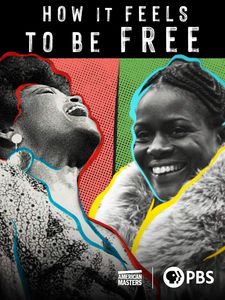
  • How it Feels to be Free (2021)

    How it Feels to be Free (2021)

    (On TV, January 2021) One of the unexpected benefits of a deep dive in Hollywood history is knowing what people are talking about when they bring up half-forgotten, underappreciated or ill-served artists of the past. When How it Feels to be Free set out to shine a spotlight on six black female entertainers of previous generations, I was on semi-solid ground: I don’t need to be told about Lena Horne, Nina Simone and Pam Grier’s greatness, and I was at least able to nod in recognition at the praise for Abbey Lincoln, Diahann Carroll and Cicely Tyson. Six homages in two hours is a lot, but director Yoruba Richen manages to be both specific and sweeping, talking directly about each one of its six entertainers and still using them as a group to make larger points about discrimination, representation and inspiration. Historical footage is blended with contemporary interviews with a decent roster of stars (Halle Berry, Lena Waithe, Samuel L. Jackson, Lena Waithe, co-producer Alicia Keys, etc.) and heirs. Part of the reason to watch the film is getting a reminder about why these women were so fantastic, part of it is digging deeper into some biographies and discovering equally great people (including getting a crash course in Lincoln’s activism, Carroll’s groundbreaking work in TV and Tyson’s own brand of race-aware role selection). The film works itself up to a powerful argument in favour of diversity on the production side of the entertainment world, pointing out that some stories will never be told accurately if they don’t come from those different perspectives. I enjoyed the result quite a bit, and not just in the scope of the film itself: In between watching How it Feels to be Free and writing this review, Cicely Tyson died and the loss hit me harder than merely being told that she was the star of Sounder. It was important to capture why she was remarkable that before it was too late.