Dick Powell

  • Meet the People (1944)

    Meet the People (1944)

    (On Cable TV, November 2021) Don’t mind me, since I was watching Meet the People just for Virginia O’Brien — as her biography goes, she was playing in a local revue of the same name when she was discovered by MGM recruiters and thus got her movie contract. It must have been a return to roots of sorts when, a few years later, she was selected to play in the movie adaptation… even if I gather than the film and the revue don’t have much in common other than the title and a few numbers. O’Brien doesn’t have much of a role here, as the film is a musical comedy featuring Lucille Ball and Dick Powell: she does get a standout musical number (“Say That We’re Sweethearts Again,” a darkly funny song about the decidedly unfunny topic of homicidal spousal abuse — and she even sings the song without her usual deadpan tone) and assorted small comic bits, but she’s once more a supporting player. The rest of Meet the People is a very comfortable wartime musical, designed to both bolster the war effort and provide crowd-friendly entertainment. The plot has to do with a shipyard worker (Powell, before becoming a film noir fixture) becoming a Broadway writer, and getting involved in subsequent hijinks. It’s paced to allow for musical and comedy numbers, pulling the film closer to the 1930s Broadway revues as much as 1940s wartime comedies. It’s funny enough to be watchable, although the blatant propaganda is more interesting than inspiring nowadays (a good chunk of the first fifteen minutes is about characters selling war bonds). Unlike similar films of the era, there aren’t many top musical acts in Meet the People, although Ball is a perfectly charming presence as a showbiz star getting mixed up with blue-collar steelworkers. It probably doesn’t add up to much of a film for those who don’t have a specific affection for the era (or Ball, Powell and O’Brien), but it’s not unpleasant to watch, and it does have its highlights.
  • Page Miss Glory (1935)

    Page Miss Glory (1935)

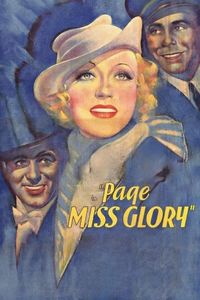
    (On Cable TV, February 2021) While I like 1930s comedies a lot more than you’d think, an issue I’m noticing from those films is that they are frequently featureless from an audiovisual perspective compared to later movies. This is not a criticism — more an acknowledgement that technical means being limited at that time, 1930s films work within a narrow range of audiovisual constraints, something that can be further throttled by films that have not been (or cannot be) restored. It’s almost all black and while, or rather shades of gray with very little dynamic range. The audio is usually scratchy, with very little range between the highs and the lows. Soundtracks are usually made of classical music pieces with few variations. The result, unfortunately, means that movies of that era will not catch your eyes and ears as well as later films — if you happen to be distracted, the film will not draw you back in through an arresting colour scheme, flashing lights, loud noises, catchy songs or any of the techniques that decades of filmmaking have perfected. I’m bringing this up regarding Page Miss Glory not only as an example of a widespread issue, but also to explain why, despite a promising plot in which a made-up star has to be played by a real person, the film had a really hard time keeping my attention. There’s no real reason, from a script-centric point of view, why it should be so: the story itself still has some originality, the stars are fine (including Marion Davies, Pat O’Brien and Dick Powell), director Mervyn LeRoy’s work is adequate for the time… but the film itself seems to flitter away at the slightest distraction. I could, I suppose, watch Page Miss Glory again under the strictest constraints to give it my full attention. Or I could just complain about its relative flatness.

  • Footlight Parade (1933)

    Footlight Parade (1933)

    (On Cable TV, January 2021) Hailing from the first half-decade of Hollywood movie musicals, Footlight Parade pales in comparison to later films in the same vein, but still packs a few moments of fun. Featuring none other than James Cagney as a producer of live shows trying to compete with those newfangled movie musicals, it’s an opportunity to see Cagney in a rare non-gangster film during that decade. (He started as a musical star but accidentally became better known for gangster roles.)  The story is a somewhat standard comic backstage musical, and in keeping with later films from codirector Busby Berkeley, keeps most of its musical highlights for the last act. The story has to do with a producer putting together three big numbers for a single night, and the steps taken to find stars and ultimately protect the secrecy of the numbers by locking up the entire crew for three days. While Footlight Parade is primarily directed by Lloyd Bacon, the imprint of Berkeley on the musical number is unmistakable, especially during the “By a Waterfall” number featuring three hundred dancers executing kaleidoscopic figures in a swimming pool. It’s impressive but reminiscent of other numbers—I had far more fun during the comedic (and hummable) “Honeymoon Hotel” number clearly showing the Pre-Code nature of the film. Other artefacts of the film’s production year include a surprising number of bare legs, some barely avoided profanity and passing acknowledgement of prostitution, especially in the “Shanghai Lily” number. Ruby Keeler looks wonderful in early scenes with glasses, while Dick Powell has an early role here as a romantic lead. Still, it’s Cagney borderline manic dialogue, especially in the first half, that holds most interest in terms of acting: much of the film’s later half simply rolls off the musical numbers after the buildup. Footlight Parade doesn’t look as impressive when compared to its contemporaries (even 42nd Street seems more satisfying) or later, savvier takes on movie musicals. But it still has its own kick, and that’s more than enough to warrant a watch by movie musical fans.

  • Susan Slept Here (1954)

    Susan Slept Here (1954)

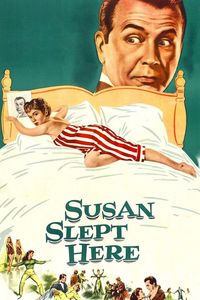
    (On Cable TV, December 2020) On paper, Susan Slept Here sound revolting. After all, the story has a 35-year-old screenwriter fostering, then immediately marrying a 17-year-old-runaway. It gets even woooorse when you realize that star Dick Powell was 50 and Debbie Reynolds was 22 the year the film was released. Even calibrating by 1950s standards, this is far beyond the frontiers of creepy. But everything is in the execution, and excuses can be found in details. For one thing, the film is built to be a comedy examining the age difference between the leads and often acknowledges the repellence of the situation. What’s more, the younger woman is clearly the dominant partner in Susan Slept Here – her desires are what drives the film, and her street-smart personality clearly outshines that of the older, somewhat boring man. This is even reinforced in a dream sequence ballet in which she sees her crush being seduced by a four-armed spider woman and chokes someone to gain the key to her freedom from a cage. If that’s not weird enough, consider that the film is narrated by an Academy Award statuette. Oh, yes, there’s a lot going on here – pretty good dialogue, Powell turning in a swan song of sorts (it was his final film appearance) and Reynolds being very good in a tricky role. The predictable ending will still make everyone uncomfortable, except that “uncomfortable” is still a great deal better than “aghast,” which may have been a possibility had lesser talents had handled Susan Slept Here’s built-in creepiness.

  • Gold Diggers of 1935 (1935)

    Gold Diggers of 1935 (1935)

    (On Cable TV, September 2020) Despite clearly tying itself to Gold Diggers of 1933, the follow-up Gold Diggers of 1935 is a different beast in many ways. The plot is completely different, as could be expected—while a theme of good-natured “gold-diggers” (though they’re rather prefer being called “wealth seekers” or simply “aiming to marry high”) is carried through, the plot itself is different and doesn’t carry any of the characters. More importantly, this film came in right after the imposition of the prurient Hays Code dictating the material that could or could not be shown, and as a result the film feels considerably tamer than its prequel. Which doesn’t entirely invalidate it, of course: Once again, the light comedy material holds the picture long enough until the distinctive Busby Berkeley musical numbers have a chance to wow audiences. While “I’m Going Shopping with You” makes for an early funny song, the film moves in higher gear with “The Words Are in My Heart,” a number that echoes the neon violins of the previous film by undulating movie grand pianos as far as the eye can see. Still, the masterpiece of Gold Diggers of 1935 has to be “Lullaby of Broadway,” which is a self-contained number describing a day in the life of Broadway, with numerous tight stylized shots of people waking up, going to work and going to the shows afterward. It’s quite a good capper to a relatively average film, although those who are interested in 1930s movie musicals will eventually see this one even if for no other reason than to see Berkeley at work. Having such names as Dick Powell, Adolphe Menjou or Gloria Stuart doesn’t hurt, though. There would be two other instalments in the Gold Digger series, but Gold Diggers of 1935, along with the 1933 original, remains the best known of them.

  • Gold Diggers of 1933 (1933)

    Gold Diggers of 1933 (1933)

    (On Cable TV, September 2020) In some ways, Gold Diggers of 1933 is very similar to the other top musicals of the period: It was a time, only a few years out of the silent film era, when you could still feel the giddiness of film producers in wowing audiences with dazzle-dazzle singing and dancing. The story takes place on/near Broadway, as many musicals of the time did, in order to provide audiences a familiar frame of reference as to how the music was integrated in the film. Recognizable names such as Ruby Keeler, Ginger Rogers and Dick Powell are in the cast, as the story focuses on four women trying to marry rich and make it big. Perhaps more interestingly to modern audiences, it’s a pre-Code film, meaning that it features scantily-clad women and a playful attitude toward risqué subject matter that wouldn’t fly even two years later. (Indeed, its direct sequel Gold Diggers of 1935 would be far tamer in that regard, the Hays Code having taken over Hollywood by then.) While Mervyn LeRoy directs the comedy material of this musical comedy, the dance numbers are directed by Busby Berkeley, whose touches become more and more apparent as the film goes on. “We’re in the Money” kicks things off with a memorable tune sung by Rogers, “Pettin’ in the Park” is pure pre-Code hilarity, but the film really reaches its apex during “The Shadow Waltz,” especially during a moment where the dancers carry neon-lit violins and the overhead camera shot practically turns to animation. “Remember My Forgotten Man” concludes things with fewer pyrotechnics, but more striking result. Worth noting is how, in a decade known for escapism, the Great Depression is an integral part of the plot (and the songs, given that “We’re in the Money” imagines an end to the Depression), giving us a tiny glimpse at life outside Hollywood fantasies. Being like the other musicals of the time isn’t a bad thing when most of them still hold up nicely today, and Gold Diggers of 1933 does have a few added qualities.

  • The Enemy Below (1957)

    The Enemy Below (1957)

    (On TV, September 2020) While The Enemy Below may, at first glance, be nothing more than a naval WW2 adventure between an American destroyer and a German submarine, a few rewards await those looking a little deeper. For one thing, it’s shot in pretty good Technicolor, giving further life to a wartime adventure. For another, it’s directed by none other than Dick Powell, in the third act of his life as a filmmaker after being a musical matinee idol and then a film-noir tough guy. The result of his fourth directorial effort, adapted from a novel, is a tense cat-and-mouse game between two experienced military officers with unequal means. The destroyer does not have an advantage over the submarine, and that keeps the action going throughout most of the film, and provides a spectacular climax between the two war machines. It took two great actors to fill the shoes of the characters, and we get that with Robert Mitchum (surprisingly credible as a military officer) and Curd Jürgens as the Hitler-hating German submarine commander. The Enemy Below won an Oscar for special effects and looks like it. It’s all quite enjoyable—relatively light at 98 minutes, and buoyed by capable lead performances. Even in the generally good subgenre of submarine movies, it’s above average.

  • Varsity Show (1937)

    Varsity Show (1937)

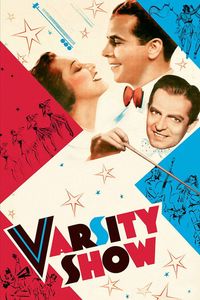
    (On Cable TV, May 2020) When measured against other musicals of the late 1930s, Varsity Show definitely comes across as a second-tier film. It doesn’t have snappy songs, barely ekes out a rousing finale thanks to Busby Berkeley, breaks no ground in matters of originality, and while it sports a fine Dick Powell, the rest of the cast isn’t particularly remarkable. (Well, except for Mabel Todd, very cute as a bespectacled blonde “class pest.”) On the other hand, Varsity Show does keep viewers’ attention and has a lot to offer if you’re willing to engage with it. Part of its fun is how it combines the archetypical “let’s put on a show” structure of a movie musical with the college campus culture of the 1930s—meaning that if you ever wondered what it would feel like to walk down a campus a few decades ago, then Varsity Show has a Hollywoodized answer for you. William Keighley’s direction is surprisingly interesting in the first few minutes, despite substandard actors—there are some Altmanesque ensemble cast-juggling and quick cuts to briskly introduce characters within the film’s 80 minutes. The first half of the film has strong comic moments, as students looking to put on a show hired an alumnus now on Broadway—while unaware that his last three shows have been a failure and he needs out of Manhattan fast. For twenty-first century viewers, there’s something utterly fascinating in seeing students from the 1930 complain about the stodginess of an authority proposing ideas that were in vogue back in the… 1910s.  The second half of Varsity Show cranks up the musical numbers as the troupe goes to New York City and the show does go on. It concludes with one of Busby’s signature epic numbers, where human figures are a mere component of something much bigger. Some of the film’s sauciest moments bring to mind pre-code film—I could have sworn at times that this was an early-1930s film. For all of those reasons—Varsity Show is not a great musical, but it’s a fun one as long as you’re indulgent.

  • Flirtation Walk (1934)

    Flirtation Walk (1934)

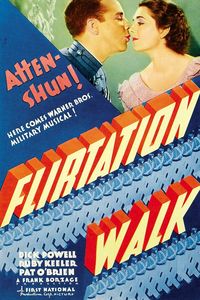
    (On Cable TV, January 2020) At one time, Americans loved their military officers as much as they loved their musical stars, and so Flirtation Walk is a naked attempt to combine both, as it focuses on a soldier who falls for a general’s daughter in Hawaii, and meets her again years later while they’re both at West Point. It’s also, in movie musical history, a film known for first attempting to get away from Broadway-inspired backstage musicals to a more naturalistic setting in which song and dance numbers could be integrated. Dick Powell and Ruby Keeler make for a good romantic pair—helped along by an antagonistic relationship that gradually defrosts and a comic tone that has the heroine pursuing the male lead on his own territory. The idea of getting the musical away from Broadway isn’t fully realized yet—or should we say that it comes with a rescue buoy given how much is made of the male character’s work on a West Point musical theatre play. (You can get the musical away from Broadway, but you can’t get Broadway away from the musical…) It’s not that good of a musical from a song and dance perspective, but it does work relatively well as a romantic comedy, with some very funny sequences midway through as the heroin barges in on the play that he’s writing—and he responds in kind. Blend in the romance, song, military, stars and amiable tone and you get something in Flirtation Walk that was apparently good enough to be nominated for a Best Picture Academy award back in 1934—a year in which the winner was the funnier but non-musical romantic comedy It Happened One Night.

  • The Bad and the Beautiful (1952)

    The Bad and the Beautiful (1952)

    (On Cable TV, August 2019) In the pantheon of Hollywood movies about Hollywood, The Bad and the Beautiful still stands tall as being emblematic of its era, right before the weight of studio producers crumbled before television, antitrust legislation, and the end of exclusive studio contracts. Kirk Douglas is in fine form as a movie mogul with numerous enemies, bringing three of them together so that he can convince them to work on his next project. But it’s a framing device, as the producer recalls his history with each one of his three listeners, leading to three shorter related stories about a director, a star and a writer. In each case, the protagonist plays the spoiler, pushing them to further heights even as he (as they put it) ruins their lives. As a way to take a multifaceted look at the way Hollywood worked up to that point, The Bad and the Beautiful is ingenious—it takes us in three different sub-worlds of Hollywood, loosely linked together. The tone is strictly melodramatic, which does add to the period charm. Douglas plays a magnificent bastard here, willing to sacrifice relationships in order to make movies … and then get the band back together. As befit a framing device holding together three shorter films, the ending is a bit weak, but that’s fine: this is very much a journey-is-the-destination film where the climax is less important than the scenes leading to it. At this point in time, it almost feels like comfort viewing—a paean to a lost Hollywood, but whose echoes can still be felt today.

    (Second viewing, Streaming, May 2025) Every year, I learn a little bit more about Classic Hollywood, and that in turn changes the experience of re-watching the films of that era.  A second looks at The Bad and the Beautiful is not quite the same.  Sure, Kirk Douglas is just as impressive as a life-altering studio mogul — but this time around, I get to appreciate Dick Powell in a later-career role unlike his earlier turns.  I get to take in Gloria Grahame’s short but striking role a Southern belle that the script heartlessly dispatches as being a distraction from creativity.  (Lana Turner is top-billed, but Graham, and to a lesser extent, Elaine Stewart, make more of an impression in a shorter time.)  I get to chuckle at the nod to Val Lewton’s Cat People, and revel in the glimpses of classic-era film-making.  There are quite a few touches of wit in director Vincente Minnelli’s direction, working with the script to punch-up some fake-outs (“It stinks!”) and amusing reveals (such as the pool dip).  Sure, The Bad and the Beautiful is melodramatic, uncomfortably dissonant with modern values, and perhaps too much in love with Classic Hollywood to deliver an honest conclusion.  But it’s fun, witty, an utterly splendid illustration of a specific era in film history, and a pretty good acting showcase.  It stands on its own as a story, but it becomes greater when measured against its era.

  • Murder, My Sweet (1944)

    Murder, My Sweet (1944)

    (On Cable TV, June 2019) Aw yeah, pump that undiluted film noir stuff right into my veins, because I can’t get enough of that genre and Murder, My Sweet is as pure as it gets. Adapted from Raymond Chandler’s more innocuous-sounding Farewell, My Lovely, this is a film that goes right for the archetypes of film noir, what with the private investigator, femme fatale, precious McGuffin, criminal figures, gunplay and complicated plotting. The addition of a nice girl thankfully lands the movie in happy-ending territory without necessarily sabotaging what comes before. I had a bit of trouble accepting Dick Powell as Philip Marlowe, but was gradually won over by his sardonic humour, reasonable stature and flashes of vulnerability—the shadow of Bogart looms large of the character, but Powell’s take on it is excellent. Alongside him, Anne Shirley is as lovely as she needs to be as the only rock of morality in an otherwise gray-on-gray tale. Claire Trevor is ideal as a femme fatale, while Mike Mazurki is a presence as a dim-witted enforcer. Perhaps the best thing about the film on a moment-by-moment basis is the delicious tough-guy dialogue, played unironically given the film’s place in early noir history. Murder, My Sweet is, unsurprisingly, one of the most influential films in the noir canon—it had the good fortune of appearing on screens in 1944, alongside a class as distinguished as Double Indemnity, Laura, The Woman in the Windows and (arguably) Gaslight, a time when noir was gaining traction as a specific thing (even if defining it took another two years on another continent). There have been many, many imitators and some of them may even have surpassed Murder, My Sweet. But the original is still more than worth a watch.