Disney Animation Studios

  • Encanto (2021)

    Encanto (2021)

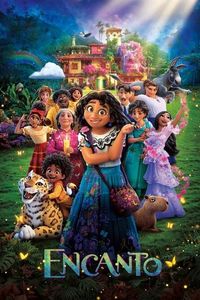
    (Disney Streaming, December 2021) I really shouldn’t care all that much about what happens to a film from a gigantic multi-billion entertainment behemoth, but as of this writing, the cultural impact of the sixtieth mainline film by Disney Animation Studio is slight — Encanto, like many other films of the 2020s-so-far, has suffered from the COVID pandemic scrambling the usual marketing and release institutions of Hollywood. While new Disney movies are usually a Big Deal, this one briefly popped up in theatres (at a time of contagion-wary audiences) before finding a home on the Disney+ streaming service. As a result, it’s not clear whether it has had any cultural impact yet — quantifiable popular interest is down compared to other Disney films, and there’s a sense that it may be too closely associated with Raya and Coco to develop a distinct identity. It’s early, though — and I suspect that in time, the true winners of these strange plague times will become clearer. [December 2022: I worried needlessly: Encanto, a year later, has found its public and then some!]  It may or may not help that Encanto is, in the end, roughly of similar quality than other Disney films — the Mouse knows how to make movies, and this one is just as satisfying as most of their New Renaissance era. Not necessarily a classic, but a solid well-crafted hit with just enough to set it apart once you watch it. Heading to Columbia for inspiration, Encanto is about a family with magical powers… and the lone offspring that does not. Exceptionally cute in look and behaviour, Mirabel (ironically the name of an infamous Montréal-area airport) struggles to understand why she’s not gifted as the rest of her family, but ends up being the ideal one to investigate why their powers are slowly weakening. Clearly taking after the South American tradition of magical realism, but pushing it into, well, magical fantasy, Encanto also benefits from the musical talent of Lin-Manuel Miranda as he contributes eight songs to the film and several of its highlights. The fantastic opening “The Family Madrigal” is clearly in Miranda’s style in cadence and delivery, while the theme of “What Else Can I Do?” brings to mind Frozen’s power ballad “Let it Go.”  “We Don’t Talk About Bruno” has the film delivering some well-paced editing, rounding up the best songs of the film. As for characters, it’s tough to ignore the magical Casita taking care of the domestic needs. While I found the ending perhaps a bit too subtle in fixing the character’s thematic issues (the film clearly wasn’t going to go for “what happens after the magic fades away?”, but it could have been clearer in exposing the pre-renewal hidden conflicts.), it ages well upon reflection. I expect that Encanto will, similarly, do well in future and repeat viewings — the Disney formula is a formula, but it’s a good one that succeeds and builds trust that the next films from the studio will also be worth a look. As the sixtieth full-length Disney Animation Studio films, Encanto joins a large and illustrious group but doesn’t look out of place.
  • The Great Mouse Detective (1986)

    The Great Mouse Detective (1986)

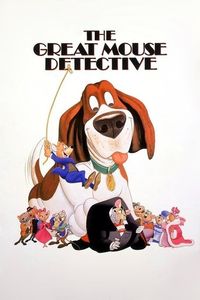
    (Disney Streaming, August 2021) The mid-1980s were not the best of time for Disney Animation Studios, but The Great Mouse Detective was something of a shot in the arm after the lack of success, critical or commercial, of 1985’s The Black Cauldron — and pointing the way to the renaissance sparked by The Little Mermaid three years. Later. Narratively, it does feel familiar — essentially a Sherlock Holmes remix featuring anthropomorphic mice, with a classic portrayal of mouse-Watson as a bit useless, and mouse-Holmes as the thinker who gets out of various scrapes. (The film takes pains to show that this isn’t an anthropomorphic world — the mice live in human-Holmes’s basement.)  There isn’t much to the plot or the running time at barely 74 minutes, although the film is notable for starting to integrate 3D computer imagery in an animated cartoon thanks to a climax set in the Big Ben clocktower. The Great Mouse Detective is not bad, but it did leave me wanting just a bit more — more of Watson being competent, more details about the mouse society underneath London and more substantial plotting. Still, the result is not too bad: it compares advantageously to many preceding Disney animated features, and to the less-than-stellar sequels that came out at roughly the same time. It’s fun, short and amusing to Holmes fans (albeit probably not as special now, considering the recent glut of Sherlockania in cinema and TV) and the animation quality is higher than some of the 1970s–1980s Disney films. The Great Mouse Detective is certainly not as memorable as other later Disney films, but it generally works.

  • The Rescuers Down Under (1990)

    The Rescuers Down Under (1990)

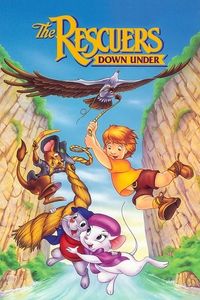
    (Disney Streaming, August 2021) Renaissances are not necessarily binary — it’s not because suddenly you get one hit that you’re on your way back, and sometimes it takes a while to get on track. Looking at the history of the Disney Animation Studio, for instance, everyone can agree that their Renaissance was sparked by 1989’s The Little Mermaid and everyone remembers 1991’s The Lion King. But in-between them? Not-so-fondly-remembered sequel (the first one in their history, notwithstanding the more recent hubbub about Frozen II) The Rescuers Down Under, taking its characters on an Australian adventure capitalizing on the Crocodile Dundee-led success of all things Australian in the late 1980s. As someone who’s not that fond of The Rescuers in the first place, I’m already not starting from a place of goodwill. That goodwill was further extinguished by a rather long and dull setup delaying the entrance of the titular Rescuers by nearly half an hour, and then a story that simply didn’t do all that much with the Australian setting. While the film feels slightly less dark than the original (which was remarkably dark for a Disney film), it’s still not a lot of fun and surprisingly mean-spirited at times. Put all of that together and you don’t exactly end with one of the hidden gems of Disney Animation Studios’ history. No wonder The Rescuers Down Under didn’t get much notice back then (although opening on the same day as Home Alone wasn’t a good idea) and gets scarcely more than a side glance when Disney historians talk about the transformation of the studio as the 1980s closed. It’s a lower-tier Disney, not helped in the least by its proximity to much-better movies.