Dominique Fishback

  • Judas and the Black Messiah (2021)

    (On Cable TV, July 2021) There’s been, in keeping with the times, quite a subgenre of 1960s-activism movies latterly — many of them Oscar-nominated. A recurrent theme of this latest crop has been a hard look at the efforts of the United States government in sabotaging civil rights activism. Judas and the Black Messiah is even more caustic in depicting systemic racism within American law enforcement, escalating to murder in a way that will feel eerily familiar to twenty-first century viewers. One of the film’s strengths, as it presents the twin stories of Black Panther activist Fred Hampton and small-time crook turned FBI informer William O’Neal, is to present a convincing picture of what it was like to be involved with the Black Panthers at the time, in-between aggressive rhetoric and the toll taken by opposing the system. The real-life story dramatized here has a quasi-operatic tragic grandeur of betrayal and guilt — the real-life death of O’Neil providing a sobering coda to the film. While the script and direction of the film are both really good (some great work by Shaka King on both counts), the film’s biggest assets remain the acting talent assembled for the occasion. Daniel Kaluuya is incandescent as Hampton — playing a revolutionary with a flair for rhetoric takes panache, and you can see how Kaluuya ended up with an Oscar. Still, there’s also quite a lot in the ensemble cast: Lakeith Stanfield has a more subtle but not less difficult role as the reluctant informant; Jesse Plemons is his usual unbearable self as an FBI agent; Dominique Fishback is compelling whenever she’s on-screen; and there’s some irony in having Martin Sheen play J. Edgar Hoover. Comparisons with other recent films, such as The Trial of the Chicago 7, The United States vs. Billie Holliday and BlacKKKlansman, are inevitable, not unwarranted but not necessarily to Judas and the Black Messiah’s detriment — it has style, theme and narrative difference enough to distinguish itself, and some striking acting to appreciate on its own.
  • Project Power (2020)

    Project Power (2020)

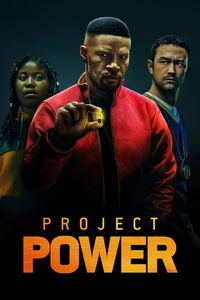
    (Netflix Streaming, March 2021) I’m not at all happy with the contamination of current science fiction films with comic-book thinking. Yes, there is a difference: The platonic ideal of Science Fiction starts with an imaginative premise, and then exploring it in depth with rigour. Comic book thinking, on the other hand, is usually far more superficial and focuses on surface-level action at the expense of ideas. (Yes, there are exceptions; yes, those exceptions are the comic book movies I like best.)  So it is that Project Power does have an idea at its core. Unfortunately, it’s a dumb idea — a drug that gives you five minutes’ worth of physics-breaking superpowers. Always the same superpower, but you don’t know which one until you take the drug for the first time, at which point you do risk death if you get a “bad” superpower. It’s an idea that makes no logical sense — and it gets even more nonsensical when the film sputters some kind of justification having to do with evolving animal powers, as if animals could burst into flame like the superhumans here do. Naaah — this is a comic-book movie with comic-book inspired plot devices and surface-level comic-book narrative qualities. This isn’t to say that Project Power can’t be intermittently enjoyable on its own terms: there are plenty of decent action sequences once the superpowers take effect, there’s some pleasure in seeing Jamie Foxx go up against Joseph Gordon-Levitt (with an impressive supporting turn from Dominique Fishback), and some sequences do tickle at the thematic potential of its premise. Alas, whatever Project Power does mildly well only underscores the gap between what it is and what it could have been. Perhaps the biggest gap is its tantalizing parallels between superpowers and real social power — there’s a socially conscious cry for justice here that is merely suggested (and badly suggested at that, with characters dismissing the traditional path to success and social change in favour of luck-based stardom) and then forgotten as we move toward the fights-and-explosions part of the film. A real science fiction film (or a superior comic-book film) would have dug down deeper into those parallels, found interesting thematic resonance and provided some better material to make us believe in the film’s premise. As it is, Project Power runs on surface impact and its lead actors’ screen persona — it’s not terrible, but it falls short of what it could have done with its innate… power.