Don McKellar

  • Through Black Spruce (2018)

    Through Black Spruce (2018)

    (On Cable TV, June 2020) There’s something deliberately unsatisfying in Through Black Spruce that makes it hard to like, no matter how much any reviewer would like to support First Nations filmmaking. I suspect that much of this has something to do with adapting a novel to the big screen—the storytelling flaws of the source seem built into the unfocused result. Part of the plot is about a young Cree woman investigating the disappearance of her twin sister in Toronto; the other part is a tale of harassment and revenge on a reserve. Alas, the Toronto segments never lead anywhere (why raise a mystery if it’s not going to be resolved?) and the reserve subplots are both hazily motivated and arbitrarily developed. The raw look at the relationship between the reserve and the big city is promising but leads nowhere—ultimately, the admirable effort and provocative details don’t amount to a compelling story. While handsomely directed by Don McKellar, one of the crown princes of Canadian cinema, and benefiting from a compelling lead performance by Tanaya Beatty (plus Graham Greene in a supporting role), Through Black Spruce seems determined to make itself hard to appreciate, by insisting on a markedly less interesting subplot and scrupulously avoiding any kind of resolution.
  • Last Night (1998)

    Last Night (1998)

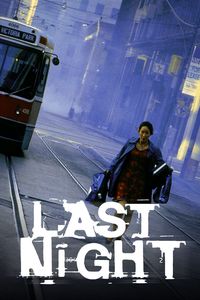
    (On Cable TV, January 2020) I can name at least three “the end of the world is coming and here is how the characters react” movies in recent memory—Melancholia, These Final Hours and Seeking a Friend for the End of the World—but Last Night predates all of them, and still offers its own unique take on the premise. Shot and set in debris-strewn Toronto streets, writer-director Don McKellar’s film feels like an exceptionally Canadian take on cozy catastrophes: the rioting and panic having taken place earlier and offstage (aside from a few brief moments of crowd craziness midway through the film), we’re left with characters reacting with dignity and black humour to the impending apocalypse as the clock counts down to the end. Some indulge in hedonism, checking off their bucket lists, while others retire home to pray. Meanwhile, our lead couple (McKellar and a captivating Sandra Oh) improbably connects despite very different plans. Add TTC streetcars, some French-Canadian dialogue with Geneviève Bujold, the eye-catching Sarah Polley and a rare (but dignified) acting performance by director David Cronenberg and you’ve got one of the most Canadian of all 1990s Canadian movies. I enjoyed Last Night far more than I thought I would, but then again, I have a soft spot for that exact premise, and it’s substantially funnier than I expected. The only thing that marred my experience is that Canadian Cable TV channel Encore must have dredged their copy of the film from their old TMN/Moviepix archives because the transfer here is markedly low-resolution with faded colours and standard aspect ratio—not a good way to present a good film.

  • Blindness (2008)

    Blindness (2008)

    (On Cable TV, November 2018) Some movies celebrate the human spirit, and some movies focus on the innate depravity of people. Guess to which category Blindness belongs to? Here’s a hint: In a universe where a disease is turning everyone blind, government inevitably resorts to concentration camps where the prisoners are left to fend off for themselves. Authoritarian rule quickly follow, along with resources hoarding and mandatory rapes because it’s that kind of story. There’s a voluntary vagueness to the film that is supposed to make it universal but instead comes across as indecisive—coupled with the intentional flight from realism, it does make Blindness a bit of a chore to get through. Once it’s clear that the film has allegorical points to score, it does become obvious in the way it goes to achieve them, and that the characters are mere puppets in that service. Still, those issues are more attributable to the source (Nobel-award-winning José Saramago’s novel) than the film adaptation itself: from a visual standpoint, it is handled with some skill and no one will dare say anything less than favourable about the performances of Julianne Moore and Mark Ruffalo in the lead roles. A few Canadian icons appear, most notably writer/director Don McKellar (who wrote but did not direct Blindness) in a small role. It’s unusually literary for a post-apocalyptic movie, but that doesn’t necessarily work in the film’s favour: instead, it seems to be pulling back from engaging with macroscopic ideas and locking itself up in its own pocket universe while everything degrades. Blindness is not guaranteed to be a good time for horror or Science Fiction fans.