Doris Day

  • Calamity Jane (1953)

    (On Cable TV, December 2021) A common criticism of classic Hollywood westerns and musicals alike is that the most average of them all blur together in one indistinct mass. That’s certainly an issue in the first act of Calamity Jane — even in its specific niche as a western musical focused on a female sharpshooter, it feels almost too much like Annie, Get Your Gun (whose commercial success directly led to this film) to be wholly distinct — something reinforced by the tomboy presentation of both brassy heroines and male romantic interests coming from the same factory. It does get slightly better as the film goes on, as it focuses on an actress visiting a small western town and getting into shenanigans with Jane. Clearly comic and certainly not historically accurate, Calamity Jane eventually acquires its own distinction — especially, as other commentators have pointed out, when the film’s two female lead characters start cohabitating and we find ourselves in proto-queer cinema territory. More conventionally, Doris Day is fine (but no more) as the lead, while Howard Keel is surprisingly bland as the male lead and Allyn Ann McLerie gets one of her most noteworthy roles as a maid passing herself off as an actress — she does look terrific onstage. Some comic set-pieces work well, even if the film feels too long (especially in the first act, before all characters are introduced). By the end, Calamity Jane has done enough to distinguish itself and even pass itself off as a middle-tier musical. I doubt, however, that I’ll revisit this one any time soon, except if I forget that I’ve seen it in the first place.
  • The Pajama Game (1957)

    The Pajama Game (1957)

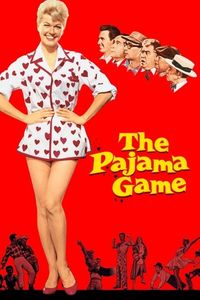
    (On Cable TV, November 2021) The more you dig into the history of the Hollywood musical, the more you find some… unusual material. I’m consciously not using the word “weird” here because The Pajama Game is about as conventional as musicals go: With Broadway roots, Stanley Donen directing and Doris Day in the lead, it’s about as innocuous as these things are. But here’s the unusual thing: The Pajama Game is a romantic comedy musical in which a union takes on management for a pay raise and wins. By 2020s standards, following the regrettable erosion of union power and public perception thereof, this would almost certainly brand the film as socialist propaganda in some of the nuttier American circles — what do you mean, unions as the good guys? It’s become such a fleeting sentiment that pro-union films have become about as rare, remarkable and subversive as it’s possible to get in recent American discourse. (I’m allowing for some distance here because one of the better consequences of the early-2020s COVID crisis recovery has been far more power taken back by employees. But I digress.)  I don’t particularly enjoy that The Pajama Game has so much political baggage now (and I’m writing this from a unionized Canadian’s perspective), but there we go — the 1950s reaching us about progressivism. As for the film itself, there’s not as much to say in strict moviemaking terms: it’s competently handled, with tunes that are snappy without being memorable, and dancing that’s competent without being awe-inspiring. (This being said, it was Bob Fosse’s first major film as choreographer.)  Day is wholesomely bland but still good in the lead role, while the film does have fun making light of a topic matter that led to much darker films. (If you want to make a double feature with this and quasi-contemporary On the Waterfront, hey, go ahead.)  The Pajama Game ranks in the solid middle of 1950s musicals, but I don’t expect it to come up all that often in discussions, except for mentioning the pro-union sentiment.

  • Tea for Two (1950)

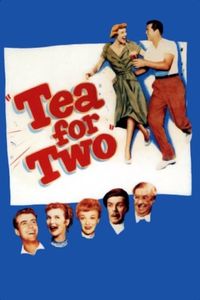
    Tea for Two (1950)

    (On Cable TV, October 2021) Let’s face it: most classic musicals have a touch of the absurd in them—it comes with a genre in which people burst into song, dance and a full-blown orchestral accompaniment. But some kinds of absurdities are easier to take than most, and it’s often the smallest stuff that does you in: When the heroine of Tea for Two accepts a condition to answer “no” to every question and then proceeds to clearly self-sabotage every opportunity she gets, that’s somehow even harder to accept that the song-and-dance. Even as a comic premise, it’s not all that funny: there’s far more amusing stuff going around the edges of the main plot. For instance, the picture noticeably grows brighter the moment S. Z. Sakall walks on-screen, with bonhomie and exasperation. As the lead, Doris Day (in her first leading role and first dancing role) is okay—maybe slightly bland, but still able to carry the film. The songs are sometimes fun but not specifically memorable, while the dancing numbers are fine—the highlight is a bit of staircase tap-dancing from Gordon MacRae. Tea for Two is in the honest average of 1950s musicals: not exceptional, not terrible, perhaps slightly more forgettable than it should but still an acceptably good time.

  • It Happened to Jane (1959)

    It Happened to Jane (1959)

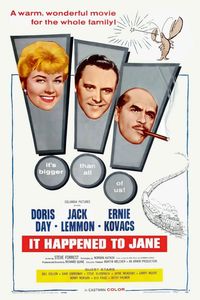
    (On Cable TV, March 2021) I’m almost certain that I will forget the title of It Happened to Jane tomorrow, but I won’t so quickly forget that the film co-stars Doris Day and Jack Lemmon, or that its plot revolves around lobsters and trains. As a romantic comedy, it gets going when a lobster processing plant owner (Day) sees her shipment ruined by the neglect of a railroad company — the fun starts when she gets a friendly lawyer (Lemmon) to successfully sue the railroad and earns as payment… a train. The respective charms of both actors are well used, as they each play within their screen persona. The flip-side of this degree of comfort is that the film itself quickly becomes unremarkable. This is a middle-of-the-road effort for both of them, and it’s hard to say whether the finished film would have been better if it had played more seriously or more absurdly. (The smile we get in seeing Lemmon shovel coal in a train is a strong hint, though.) It’s pleasant to watch but curiously insubstantial, which is a weird thing to say given its plot elements and the quality of its stars. It doesn’t help that Day (an actress I find mildly likable but saddled with a bland persona) pales in comparison to Lemmon’s frequently-frantic antics. The final result is perhaps most interesting for its bucolic northeastern setting and winks at the burgeoning TV landscape rather than for how well it executes a lacklustre plot. If you accept that It Happened to Jane is an average comedy of its time, you also have to acknowledge that late-1950s comedies were in an odd place — too late for the golden era of musicals, but too early for the reinvigoration that the permissiveness of the 1960s would bring to the genre.

  • Midnight Lace (1960)

    Midnight Lace (1960)

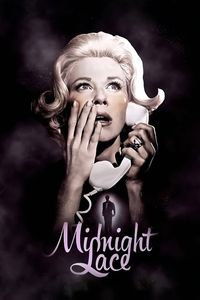
    (On Cable TV, March 2021) If you’re looking for the least Doris-Dayish film ever made by Doris Day, you probably don’t have to look much farther away than Midnight Lace. In some ways, it’s an incredibly familiar kind of movie: one where the beautiful lead actress is threatened by a mysterious man, and has to face both incredulity and betrayal in order to resolve the threat to herself. But here’s the thing: here, the damsel in distress is played by Doris Day, whose filmography does not include any other thriller of the kind. (Yes, she played in Hitchcock movies, but her role in The Man Who Knew Too Much really wasn’t in the same category.)  If you’re in a mood to hear Day screaming and whimpering in fear (a disturbing idea in its own right), this is the film for you, as her mysterious assailant employs everything in his power to frighten her beyond reason. The plot won’t be particularly original for anyone who’s seen more than two of those thrillers — the red herrings get a lot of work here to distract us from the fairly obvious conclusion. Still, it’s a change of pace: I doubt that the film would be nearly as remembered today if it had starred someone other than Day in the lead role — although seeing Rex Harrison as her husband and a secondary role for an elderly Myrna Loy aren’t to be discounted as bonus features. Day herself didn’t like the experience of shooting the film, in which she had a bit of an on-set breakdown — she never starred in another thriller again.

  • Love Me or Leave Me (1955)

    Love Me or Leave Me (1955)

    (On Cable TV, March 2021) For seasoned movie fans, there’s an interesting meta-movie aspect in seeing two performers with strong screen presences go head-to-head in a single film, especially if they play roles reasonably close to their personas. Much of the fun in Love Me or Leave Me isn’t as much in the inspired-by-a-real-event story of a nightclub singer becoming married to a gangster, but seeing Doris Day, in singing mode, having to compose with James Cagney in full mob boss splendour. While the result is unquestionably a jukebox musical playing from Ruth Etting’s discography, Day gets closer to Cagney’s register than the reverse: the tone is dramatic, and Cagney’s character’s abusive behaviour appears harsh in a 1950s musical. There’s some additional interest in seeing Love Me or Leave Me portray the 1930s — or mostly failing to represent the 1930s while carrying itself like a 1950s musical. Still, seeing Day carry herself as a victim of spousal abuse is more sobering than other musicals at the time. The result is an interesting blend of elements — generally successful, but obviously pulled in two different directions at the same time.

  • Lullaby of Broadway (1951)

    Lullaby of Broadway (1951)

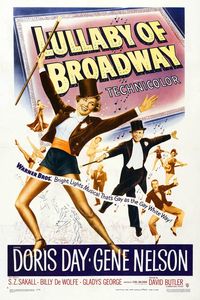
    (On Cable TV, March 2021) Oops! Earlier today, I referred to I’ll See You in My Dreams as Doris Day’s most musicalesque musical even as I acknowledged not seeing all of her movies, and I should have kept that in mind because Lullaby of Broadway (from the same year) is the most musicalest of her musicals. It certainly fits under the archetype of the Broadway backstage musical, as characters spend the movie putting together a show, rehearsing musical numbers and the entire film climaxing at the successful premiere. Day herself plays a singer who gets into complications in-between her mom’s deteriorating medical attention, attention from an older man (S. Z. Sakall, in a typically likable performance) being misunderstood by her would-be lover and the older man’s wife, and the making of the show itself. The songs themselves are catchy and the film has a charming quality that is in-line with other musicals of the period. Lullaby of Broadway is not exactly earth-shattering, but it works and it does provide a link between the classic musicals and Day’s career.

  • I’ll See You in My Dreams (1951)

    I’ll See You in My Dreams (1951)

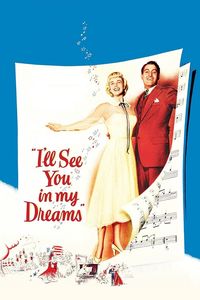
    (On Cable TV, March 2021) Songwriter biographies were a staple of Hollywood from the 1930s to the 1950s, and I’ll See You in My Dreams, about Gus Kahn, fits the profile of most of them — cleaning up the ethnic origins of its subject, playing up his struggles against alcoholism, streamlining the romance with his wife. Doris Day stars alongside Danny Thomas, and while I haven’t seen all of Day’s films so far, this strikes me as one of the most conventional musicals in her career: the tone is very much in-line with the Golden Age of musicals, with explicit musical numbers (most of them sung by her) punctuating the biographical scenes (of him). Audiences in the 2020s won’t have the same attachment as 1950s audiences did to the songs sung here, although “Makin’ Whoopee” still has some cultural currency (in my case, thanks to a Newsradio parody of a scene from The Fabulous Baker Boys). There’s not much of a criticism to offer about I’ll See You in My Dreams but neither is there all that much praise: it’s an average example of its subgenre, perhaps most noteworthy for featuring Day having plenty of occasions to showcase her singing talents.

  • It’s a Great Feeling (1949)

    It’s a Great Feeling (1949)

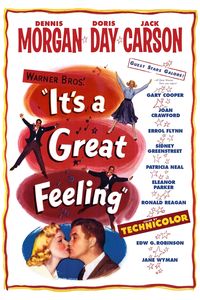
    (On Cable TV, March 2021) As much as I’ll take any occasion to recommend classic Hollywood movies to everyone, there are a few movies that are best seen once you’re a few hundred titles deep in the Golden-Age Hollywood back-catalogue. Many of them are films that are best classified as parodies, satires or ensemble comedies poking fun at the other movies churned out by Hollywood at that time. It’s a Great Feeling is a crystal-clear example of that form, as it tells viewers a tall tale about a young actress being discovered by a studio that becomes eager to feature her on the big screen. The point of the film, however, isn’t as much the plot as selling, in colour!, the fantasy of the studio system at the end of the 1940s, and more specifically Warner Brothers’ stable of contract actors. Doris Day, in one of her earlier, more free-wheeling roles, plays a cafeteria girl with big dreams who tries to make nice with the director and lead actor of an upcoming prestige production… but things soon turn awry when they have to get studio head approval. Nearly everyone here plays themselves, at the exception of Day, the studio executive and a few character roles. From the first moments of It’s a Great Feeling (featuring directors Vidor, Curtiz and Walsh turning down a project), there are many, many cameos and finding them funny is a litmus test on your knowledge of circa-1949 Hollywood. The best of those cameos has to be Joan Crawford, throwing a hissy fit as the protagonists because that’s what she does in every film. Also funny is Edward G. Robinson convincing a security guard to play up his image as a tough guy. More conventional comedy segments (such as a still-funny series of technical mishaps sabotaging a screen test) are interspaced between a few musical numbers to showcase Day’s singing talents. The clever script, written by frequent Billy Wilder collaborator I. A. L. Diamond, spoofs Hollywood without quite criticizing it (polishing its mythology in doing so) but keeps its most iconoclastic joke for the end, as Hollywood life isn’t for our protagonist… and then immediately flips that joke on its head with a quick final cameo that may or may not work as a comedy capstone depending on whether you recognize Clark Gable. In some ways, it does feel like a backlot-budget version of other better musicals of that time, but the style of comedy here is very specific and quite specifically dated to 1949. These days, It’s a Great Feeling works best as an inside joke for classic Hollywood fans — spot the celebrities, bask in the idyllic portrait of studio contracts and smile at the not-too-satirical take on something that was intensely familiar to everyone involved in the film’s production.

  • Storm Warning (1951)

    Storm Warning (1951)

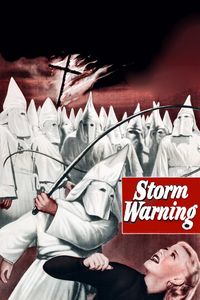
    (On Cable TV, March 2021) The more I dig into Hollywood films (especially the not-so-well-known ones), the more I realize that racism and anti-racism are as American as anything else you’d care to mention. From slavery to the Civil War (fought over preserving racism!) to the Klu Klux Klan (both the original and the revival) to modern white supremacist movements, the United States has often featured both systemic racism and organized reaction to it. A further contribution to this theory is found in Storm Warning, a suspense film in which the KKK (revival edition) are squarely designated as the villains in a small-town murder thriller. Surprisingly enough for such a hard-edged topic, the film stars no less than Ginger Rogers, Doris Day and Ronald Reagan in very serious roles — with Reagan stepping into the film midway through as a crusading district attorney: not a bad film to have on one’s filmography back when Republicans were not running platforms of institutionalized racism. Things being said, there’s a distinction to be made between a noble subject and a less-than-successful execution, and Storm Warning is often better in summary than in execution: the plot is a bit conventional, but worst of all is that the racism of the KKK is not highlighted very strongly. The film seems to presume that the audience knows all about the KKK and doesn’t really touch that topic, leading to a curiously all-Caucasian film about an incredibly racist organization that barely features what they’re best known for. At times, regrettably, you could have replaced the KKK with any other backwoods organized crime outfit and much of the film wouldn’t have played very differently. What a wasted opportunity. But then again, it’s useful to remind ourselves that the film dates from 1951, a time when even the major studios were cutting black-performer numbers from their musicals because Southern USA theatres refused to play such movies. 1951 was a time before desegregation, before the civil rights era, before Loving vs. Virginia, before, well, the latest iteration of racism in American discourse. It’s an ongoing fight, and progress is being made—but even in its watered-down version, Storm Warning is a reminder that the fight should have been over a long time ago—and that many people are now as evil as the KKK was.

  • The Thrill of It All (1963)

    The Thrill of It All (1963)

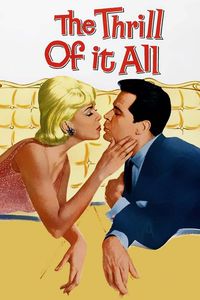
    (On Cable TV, February 2021) The life of a cinephile can be unpredictable: A few weeks ago, I was surprised to learn that no less serious filmmaker as director Norman Jewison had, early in his career, directed a romantic comedy like Send Me No Flowers. But it wasn’t the only Jewison romcom! Now here we are, taking in its immediate predecessor, the Doris Day/James Garner romantic comedy The Thrill of It All. Curiously enough, it’s a film with some clear social relevance today, as the satirical script (by Carl Reiner) is focused on a housewife who comes to be offered a lucrative contract lending her authenticity to a series of advertisements for a national brand… much to the dismay of her husband. There’s only one small step from there to the influencer lifestyle of today, with tensions within couples where the influencer suddenly becomes more famous than the other partner. While Day and Garner are terrific and often very funny in their roles, the film’s worst moments have to do with the male character demonstrating a mile-wide raw streak of fragile masculinity in the face of a more successful partner, intentionally putting her down in a twisted-logic kind of attention-seeking. This behaviour does make the third quarter of the film more difficult to get through than expected — if you want to skip from the car plunging into the pool to another car getting stuck in traffic, that may be best to avoid the whole unpleasantness. Still, it’s hard to resist Garner’s early-1960s squared-jawed charm, and Day is, as usual, the leading partner when it comes to comic timing. The film’s best satirical material is in wrestling with the nature of television advertisements, while Day proves game to do just about any indignity asked of her. For Jewison, The Thrill of It all is yet another example of his incredible variety as a director in a career that spanned five decades. The result is not entirely likable, but it’s well worth a look.

  • On Moonlight Bay (1951)

    On Moonlight Bay (1951)

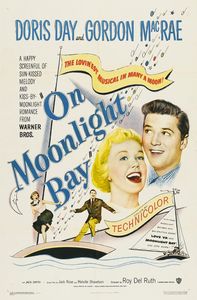
    (On Cable TV, February 2021) My well-established fondness for musicals is not unshakeable, and it clearly reached its limits with On Moonlight Bay. To be fair, this is a film that plays on chords that don’t particularly matter to me: As an affectionate look at 1910s small-town America, it played far better to older American 1950s audiences who could recognize themselves in there. (It’s worth mentioning that the film scrupulously avoids any realistic portrayal of the misery of life in the 1910s — this is a musical comedy, after all, and nothing is as important as the romantic fantasy it showcases.)  It also features Doris Day in one of her squeaky-cleanest roles as a young debutante faced with two romantic prospects: not the Day persona I like best, as she was far more interesting in satirical non-musical comic roles. But those are not the movies that On Moonlight Bay tries to be: This, based on a series of short stories, was meant to lull audiences into nostalgia enlivened by a few standard songs and familiar romantic choices. It’s not much and it feels even less interesting now than it must have been back then. The comedy is not that comic, the songs are not that striking and it’s a Technicolor Warner Brothers production— if anyone is looking at why MGM was such a powerhouse musical-making machine in the 1950s, you can do worse than studying the difference between their 1951 musicals and this one. On Moonlight Bay is far duller than I expected, although it earns a defensible place on any Doris Day filmography as an example of her early roles.

  • Lover Come Back (1961)

    Lover Come Back (1961)

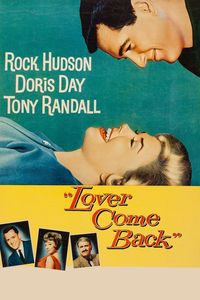
    (On Cable TV, January 2021) For such an iconic screen couple, it’s interesting to realize that Doris Day and Rock Hudson only played in three movies together. As luck and DVR scheduling would have it, I ended up seeing all three in a matter of months, with Lover Come Back being the middle instalment sandwiched between Pillow Talk (1959) and Send Me No Flower (1964). All three films feature Tony Randall in a supporting role, mismatched personalities and plenty of lies, deceptions and dirty tricks to keep things interesting until the big romantic finale. In Lover Come Back, we see both of them as competing advertising executives—she’s a workhorse, whereas he’s a showman with dodgy morals. When the conflict between them escalates, he dons a beard and glasses and (of course!) passes himself as someone else, a member of an illustrious family whose achievements grow ever more numerous and outlandish the longer he talks. It’s really not meant to be serious at all—it’s absurd, funny and naughty in the way the most progressive comedies of the early 1960s could be (which is to say rather charmingly coy by today’s standards). There are plenty of good jokes and funny moments, most notably in seeing Hudson and Randall go to Canada to face off with a moose and grow big beards. You can have objections to how Hudson deceives his way into a romantic relationship but (deep breath) those were the things that were funny at the time—but don’t spend too much time on the rather offensive ending, which should have been rewritten on the spot. Despite this noticeable problem offered as part of a conclusion, Lover Come Back is still fun, especially when it goes on a satirical riff about the advertising industry or goes through the execution of its carefully crafted comic set pieces. I still prefer Pillow Talk, but Lover Come Back has its moments—as long as you don’t think too much about its other moments.

  • The Glass Bottom Boat (1966)

    The Glass Bottom Boat (1966)

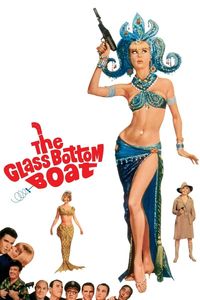
    (On Cable TV, January 2021) It’s not always a bad thing for a film to be dated. You can very precisely identify The Glass Bottom Boat as a mid-1960s film in at least three ways. Obviously, there’s the technological element, as it’s a comedy set around the world of space exploration, specifically revolving around the iconography of the Gemini capsules that preceded the Apollo program. You could also pinpoint it thanks to the presence of Doris Day as a gaffe-prone PR person who attracts the eye of a CEO played by square-jawed Rod Taylor—Day is clearly in her later-stage persona here, too old to play ingenue like she did in the 1950s but still of a stature that would justify a star vehicle like this, along with Taylor, who was at the height of his popularity as a leading man. (As it turns out, The Glass Bottom Boat was Day’s last big box-office hit.)  Finally, there’s the naughty-nice tone of the romantic comedy, a bit freer than the Hays Code standard but not quite as vulgar as what we’d see later on in New Hollywood movies. Mix in the Cold War comedy of a military/industrial establishment and director Frank Tashlin’s cartoonish style and you’ve got something that could only have been created in the mid-sixties. It has definitely aged: the soundtrack highlights every joke twice, Day plays a character that would be embarrassing to later generations, and the blunt broad humour goes better with a big dose of period atmosphere. But it’s not that bad if you’re willing to play along. Day was a gifted comedienne no matter the circumstances, and the goofier moments (including a portrayal of an automated kitchen—complete with an antagonistic cleaning robot) are straight out of space-age silliness. Comedy notables such as Robert Vaughn, Dom DeLuise, and Dick Martin appear in various small roles, adding to the period feel. (You will probably hear Vaughn’s split-second appearance more than you’ll see it.)  It turns out that a dated film gets a few additional viewing bonuses along the way—it’s not what we’d expect to see today, but it’s a welcome throwback to an entirely different time. So it is with The Glass Bottom Boat, which has aged into a unique curio that sometimes tells us more about the 1960s than the respectable films of the time, or any attempt to re-create that period.

  • Send Me No Flowers (1964)

    Send Me No Flowers (1964)

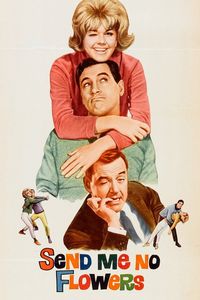
    (On TV, January 2021) I did not know that Norman Jewison had directed a fluffy Doris Day/Rock Hudson romantic comedy (their last), but considering the breadth and diversity of his filmography, I’m not really surprised. Send Me No Flowers feels very much in-tune with other Day/Hudson films—it’s colourfully shot, amusingly plotted and lightly played. Hudson plays a hypochondriac that, thanks to only-in-movies contrivances, thinks he’s got a few weeks left to live and thus sets out to find a suitable replacement husband for his wife. Much of the fun of the film is seeing a husband act in highly unusual ways in trying to set up his wife with another man but never telling her what he’s up to, because of idiot plotting. Still, the film is amusing fluff, perhaps not as memorable as other Day/Hudson vehicles (my favourite still being Pillow Talk) but entertaining enough in its own right. Hudson has the right square jaw for the job, while Day is also up to her usual standards. The conclusion is perhaps a bit rushed, but Send Me No Flowers itself is an agreeable watch, and a definite curio in a filmography from a filmmaker far better known for more serious later fare.