Dorothy Malone

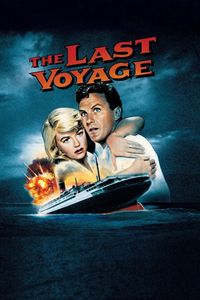
  • The Last Voyage (1960)

    The Last Voyage (1960)

    (On Cable TV, November 2020) It’s fascinating to dig into movie history and find early precursors of later trends. The disaster movie isn’t new and traces back its roots to silent cinema, but the very specific strain of 1970s disaster movies has a clear predecessor in 1960’s The Last Voyage, in which an aging ocean liner suffers catastrophic damage and starts to sink, trapping one of our protagonists under a steel beam. It’s not a perfect example of the form that Airport would formalize a decade later, but it’s close enough. It doesn’t get completely crazy like The Poseidon Adventure, but the intensity of the disaster steadily grows throughout the film—and the end sequence in which the survivors walk, then waddle through a progressively sinking promenade deck is suitably intense, made even more urgent by the very long duration of the shot. Perhaps the best decision made by writer-director Andrew L. Stone was to rely on an actual ocean liner destined for destruction as backdrop for The Last Voyage—the ship feels old and past its glory, making for an interesting change from most ocean disaster films taking place on maiden voyages, and imparting quite a bit of faded golden-age atmosphere to the aged sets. Robert Stack decently plays a father trying to rescue his beam-trapped wife and keep his daughter calm—it’s a prototypical tough guy’s role, and he gets it. Meanwhile, Dorothy Malone does well in a role that has her stuck on the same set for most of the film, eventually with the complication of rapidly rising water. George Sanders is also remarkable as the ship’s captain, whose bad decisions only make a bad situation even worse. The suspense builds up despite being based on very familiar elements, and the colour cinematography helps in making the film feel closer to its 1970s inheritors. The Last Voyage is still a remarkably effective watch, even more so for being somewhat specific in its thrills, and not seeking to overwhelm viewers with a CGI frenzy of exploding stuff.
  • Written on the Wind (1956)

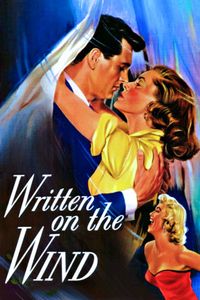
    Written on the Wind (1956)

    (On Cable TV, October 2020) I have, in past reviews, used “melodrama” as a bit of an epithet, complaining about overwrought drama as if it was a bad thing by definition. But Douglas Sirk’s Written on the Wind has shown me the error of my ways, as its overblown, overwrought, overdriven plotting is a spectacular demonstration of the joys of melodrama when it simply stops caring about being plausible. From the first few minutes (even discounting the very dramatic framing device that gets us to murder in less than sixty seconds), it’s obvious that this isn’t a script that plays in subtleties, as characters get married on a whim and are soon enjoying line-by-line verbal jousting. Robert Stack and Lauren Bacall play bickering couples like few others, and both amazingly tear into their dialogue without cracking up at the absurdity of it all. Things get much better (or worse) once a scheming sister (Dorothy Malone, shattering her mousy persona with a brassy blonde hairdo) and a longtime friend (Rock Hudson, in a straight—ahem: sedate—performance that became rich in subtext when his homosexuality was revealed decades later) enter the picture and also start making trouble. The love square is inherently unstable, and it becomes even wilder once infertility, money, alcoholism, lust and plain old death enter the picture. The fifth character here is heard rather than seen—the orchestral score is exceptionally aggressive here, not underscoring the action as much as overscoring it—there’s a scene with a boy riding a mechanical horse outside a restaurant that has to be heard to be believed. It’s all very broad and outrageously in-your-face, so much so that the film flips into satirical territory by pure brute force. The kicker is that there really isn’t much of a difference between Written on the Wind and later soap operas, even glorified ones such as Dallas and Dynasty—Sirk was clearly ahead of his time here, or simply repurposing pulp fiction to the big screen with a ferociousness that would set a precedent. No matter why or how, Written on the Wind remains a striking movie today, going for madcap blatant melodrama and leaving a much stronger impression than many so-called serious dramas of the time.

  • The Big Sleep (1946)

    The Big Sleep (1946)

    (In theaters, August 2000) Truly great movies are never outdated, which is why we’re still able to look at The Big Sleep nearly fifty years later and wonder why they don’t make’em like this any more. Crunchy dialogue (you could pull quotes from this one forever), wonderful characters, a Byzantine plot, constant reversals (not much suspense, but plenty of surprises!) and several of the world’s loveliest women soft-shot in glorious black and white, including one librarian (Dorothy Malone) that has definitely not gone out of style. Add to that a great, unashamedly-macho performance by Humphrey Bogart, and you’ve got yourself a classic. You will want to watch it again, if only to understand the plot.

    (Second viewing, On Cable TV, November 2020) I first saw The Big Sleep in a repertory theatre roughly twenty years ago, well before I started being interested in Humphrey Bogart, Howard Hawks, noir or even the classic film period. So, I was curious to see it again and see if my perspective had changed in any way. There are a few things I remembered from my first viewing that I revisited with as much joy this time around: Dorothy Malone’s super-sexy one-scene wonder as a librarian, for instance, is even better a second time around knowing the direction that Malone’s career would take later on. Something that I was definitely anticipating this second time around was the sheer scene-to-scene narrative appeal of director Hawks’ approach. Among other things, his ideal of “the Hawksian woman” leads to three very strong female roles—beyond Malone’s character, we also get two very confident sisters, each playing the events on their own terms. For modern viewers, the Hawksian women always feel more interesting than other female roles at the time, even in the notoriously female-empowered noir subgenre. This being said, I suspect that the marquee appeal of The Big Sleep will remain elsewhere—namely, one of Bogart’s most striking performances as private detective Philip Marlowe, the trenchcoat and overdone narration exemplifying the core of his screen persona. Considering this assortment of riches almost entirely unrelated to the plot, it’s no surprise to realize, once again, that The Big Sleep is best appreciated as a mood scene: the plot is so infamously complex that even the filmmakers had trouble keeping it straight, which means that viewers are advised to soak in the film’s atmosphere, even enjoy individual self-contained scenes, and not worry too much about whether it all makes sense. Fortunately, there’s enough atmosphere, bon mots and acting moments to reward viewers throughout even after they’ve stopped worrying about keeping the entire story in their heads at once. Given the twenty-year gap between both of my viewings, I’m nearly sure that the version I’ve seen in theatres was the 1997 re-release of the 1945 original cut and so was this Turner Classic Movies broadcast… but I can’t be too sure, and I don’t care all that much: If you ask me, The Big Sleep is about Bogey looking frumpy and talking tough, Malone and her glasses, Hawks making sure that the female characters were interesting, and the pure encapsulated iconography of noir on full display.