Ed Harris

  • Game Change (2012)

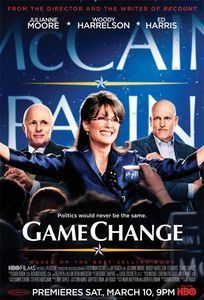
    Game Change (2012)

    (On Cable TV, March 2012) Political junkies will get their fix of gossipy fantasy in this made-for-HBO docu-fictive account of Sarah Palin’s role in the 2008 American Presidential race as seen from her Republican entourage.  Fans of the original Halperin/ Heilemann book will be surprised to find out that this adaptation barely mentions the Obama/Clinton contest and focuses solely on Palin’s selection and the backroom dealings of the Republican strategists trying to do what they can with an unsuitable candidate.  At its best, Game Change is a fascinating look behind the scenes of a major political campaign as a team of self-aware political professionals has to deal with a wholly unsuitable candidate.  It plays like a mainstream Hollywood comedy in which a half-wit is thrust in a position of importance… except that it really happened, and it happened recently in an American presidential election.  True enough, Palin occasionally comes across in the film as more admirable than her public personae would suggest: a dedicated mom, perhaps a figure to be pitied for having been asked to do more than she ever could.  Still, she really doesn’t come across well here: out of her depth, overwhelmed, petty and of limited capabilities.   The casting is exceptional: Julianne Moore excels in a nearly-perfect take on Palin, whereas Ed Harris has no problem establishing himself as a sympathetic McCain.  Meanwhile, Woody Harrelson turns in a clever performance as strategist Steve Schmidt, the nominal protagonist of the film.  The film is generally well-directed by comedy director Jay Roach and scripted competently, but it does have to work within the constraints of real-world events: The dramatic arc here is slight (especially compared to Obama’s journey) and even understanding that this is a heavily dramatized version of events as they occurred isn’t much of a comfort.  Game Change will appeal to those who remember the 2008 election well, but may not be all that compelling for others.  Which is fine, really: Even political buffs deserve their slick Hollywood entertainment.

  • Appaloosa (2008)

    Appaloosa (2008)

    (In theaters, October 2008) This is an old-fashioned western drama with all the usual fixings (trains, horses, six-shooters, saloons, hats, villains, Indians, Mexicans and so on) and little in terms of radical genre re-interpretation. It’s basically a tragic buddy-movie, or what happens when a woman comes in-between them. The dialogue is clipped and folksy, the tough guys remain tough guys, and the bad people get killed. There’s enough here to please both the traditionalists and those who think that westerns are a fertile ground for slash fiction. Alas, there’s a limit to the enjoyment such pictures can create, and Appaloosa remains too well-mannered and too conventional to take chances. Ed Harris’ direction in generally unremarkable, while the short growled lines of dialogue can be hard to understand without subtitles. The two female characters are plot devices, which also goes to the film’s villains and allies: only the two protagonists are really worth considering. In a way, charming throwbacks to classic westerns are nowadays unusual enough to be interesting, but there’s a good reason why they don’t make as many westerns as they used to: the genre’s palette is limited, and it doesn’t take much to touch upon all the essential points if you’re coloring inside the lines.

  • National Treasure: Book Of Secrets (2007)

    National Treasure: Book Of Secrets (2007)

    (In theaters, December 2007) It’s not high cinema, and it’s not even great genre entertainment, but National Treasure 2 manages to hit the same sweet spot than its predecessor in terms of contemporary adventure, historical lore, Nicolas Cage craziness and sarcastic quips. As this adventure trots around Washington, Paris, London and Montana, it’s hard to resist being swept up with this infectious brand of blockbuster slickness. There are a number of clunkers in the mix (Ed Harris sleepwalks through the film with a Southern accent; some of the early setup is laborious; Geek-boy isn’t as geeky, nor as amusing, as in the first film) and the action scenes don’t work as well as they should, but then there are a handful of scenes that redeem the entire thing: The “book of secrets” concept is rich in possibilities, the London car chase is fun and the series’ overall passion for history is a refreshing change of pace from the usual brand of mass-market anti-intellectualism. The biggest problem with the film is that it occasionally suggest how much better it could be with just a few tweaks: An action-minded director, a more memorable female lead and a screenwriter with more attention for coherence could have brought much more to the film. But while we’re waiting for National Treasure 3: Page 47, there’s still plenty to like here. It’s a perfect end-of-year chaser after so many self-important Oscar-bait motion pictures.

  • The Rock (1996)

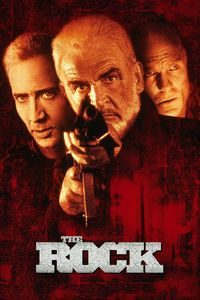
    The Rock (1996)

    (Second viewing, On DVD, May 2002) There is something awe-inspiring in the grandiose panache with which this movie flaunts itself. Continuity mistakes, logical flaws and nonsensical developments are swatted aside like irrelevant trivialities, allowing director Michael Bay full power to show incredible images on-screen. The camera moves, sweeps, pans, captures perfect moments and doesn’t give a damn about the words or the continuity. The Rock is as close as anyone has ever come to the ultimate action movie. I still find parts of it silly beyond words—but soon after I’m silenced by the boffo action sequences and the slick polish of the whole production. I love the characters (Nicolas Cage, Sean Connery and Ed Harris are perfect), I love the direction, I love most of the one-liners and I love the explosions. Why should I complain about the rest? To see if you’re a real action-movie junkie, try watching only five minutes of the film. The first-generation DVD includes the film, and nothing else. But the movie is so good…