Elliott Gould

  • California Split (1974)

    (On Cable TV, September 2021) I don’t gamble and I’m not often a Robert Altman fan, so my expectations going into California Split ran low. This is, after all, a very Altmanesque film (complete with overlapping dialogue made possible by the then-innovative technique of using eight-track mixing) about two gamblers meeting each other and going through the highs and lows of the lifestyle. Surprisingly, though, I quite liked the result. From a clever opening sequence mixing an instructional tape with ironic counterexamples, the script has a sure-footed take on the toll and exhilaration of full-time gambling, taking us to casinos and pawn shops along the way. It helps to have two capable actors anchoring the cast: George Segal as the gambling apprentice, but especially Elliott Gould as the inveterate devotee to a life spent chasing the next sure thing. The atmosphere of mid-1970s Los Angeles and Reno is nicely portrayed, and the typically Altmanesque cacophony is used to good effect when it comes time to represent the confusion of a gambler on a multi-hour binge. Interestingly enough, California Split resists the temptation to offer a moral lesson— while one of the protagonists may have had a moment of clarity, the other clearly intends to keep on doing what he’s been doing not-that-successfully. It all comes together for a film that’s still quite entertaining, with a filmmaking technique that feels appropriately modern at times.
  • The Lady Vanishes (1979)

    The Lady Vanishes (1979)

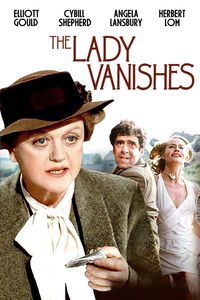
    (In French, On Cable TV, October 2020) Trying to remake Hitchcock is such a pointless exercise that it probably shouldn’t be attempted. We already have the (admittedly interesting) Gus van Sant version of Psycho to tell us that, but Anthony Page’s earlier remake of The Lady Vanishes should have been evidence enough. Oh, the film is watchable enough—and if you asked a viewer used to contemporary films to watch either one of them, the remake is more accessible. Updated elements include colour cinematography, the presence of more recent actors such as Elliott Gould, Cybill Shepherd and Angela Lansbury, as well as resetting the setting to explicitly take place in Nazi Germany rather than the ersatz substitute used in the 1938 film. Most of what people remember from the original is in the remake as well: the two football-fan comic reliefs, the sense of paranoia, the climactic shootout and the final whistled tune… but it’s not quite Hitchcock, nor is it a marvel of technical innovation as the original was. If nothing else, it’s a decent-enough suspense with Nazis losing at the end, which isn’t too bad already. But it doesn’t help anything thinking that they can remake Hitchcock pictures with impunity.

  • Bob & Carol & Ted & Alice (1969)

    Bob & Carol & Ted & Alice (1969)

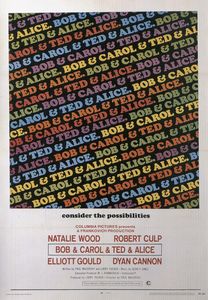
    (On Cable TV, March 2020) Mainstream Hollywood’s take on the sexual revolution of the 1960s gets one of its definitive examples in Bob & Carol & Ted & Alice. Writer-director Paul Mazursky takes on the radical openness of the time with his protagonists seeking enlightenment (or maybe just a sense of cool) through affairs and proposed swinging. But nothing quite goes as planned, which definitely keeps the film more interesting than a simple time capsule. A typical problem with 1960s films is that they often feel like watching your parents trying to goof off—we know it’s not going to hold and, in the meantime, it’s just embarrassing. Bob & Carol & Ted & Alice, in its breathless embrace of free love and infidelity, occasionally runs into this problem. But keep watching because Mazursky eventually arrives at a conclusion that anticipates the post-hedonistic letdown of the 1970s. Or maybe the film is more about messy feelings than the attraction of free sex, and that works just as well. In addition to Mazursky’s welcome ambivalence about the whole thing, the film does benefit from a solid cast—with specific mentions to the ever-beautiful Natalie Wood and a pleasantly goofy Elliott Gould. While permeated by the smell of the 1960s, Bob & Carol & Ted & Alice has aged better than the average drama of the time: it doesn’t go for easy answers, moral characters or irony. It’s still definitely a period piece, but not an unbearable one.

  • MASH (1970)

    MASH (1970)

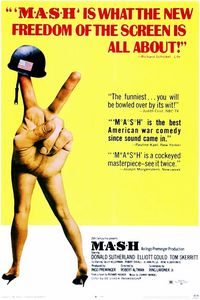
    (On TV, June 2018) Some films are so successful that they sabotage their own legacy, and if MASH doesn’t feel quite as fresh or new or daring as it must have felt in 1970, it’s largely because it was followed by a massively successful TV series and embodied a new cynical way of thinking that would come to dominate (North-) American culture in the following decades. Obviously commenting on the Vietnam War by using the Korean War, MASH shows us disaffected doctors treating the war, and the entire military institution, with obvious contempt. They’ve been drafted, they belong elsewhere and their attitude encapsulates what many Americans had come to think about the military by 1970. Such things are, to put it bluntly, not exactly new these days—and you could easily build a mini-filmography of films in which military heroes behave badly. MASH also suffers from an episodic, largely disconnected plot—there’s a new episode every ten minutes, and it doesn’t build upon those adventures as much as it decides to end at some arbitrary point. Director Robert Altman’s shooting style is also far more similar to newer films than those of 1970—inadvertently scoring another point against itself. It’s not quite as interesting as it was, not as innovative as it was, not as shocking as it was. As a result, it does feel more inert than it should. It’s still worth a watch largely as a historical piece, but also as a showcase for an impressive number of actors—starting with Donald Sutherland, alongside Elliott Gould and a smaller role for Robert Duvall. The metafictional ending works well, but it still leaves things unfinished.

  • Capricorn One (1977)

    Capricorn One (1977)

    (On DVD, September 2017) I’m not that fond of anything bolstering moon landing hoax conspiracy theories, and Capricorn One (despite technically being about a faked Mars landing) is one of the codifiers of that particular delusion. But let’s not blame a glum seventies thriller for contemporary idiocy—and let’s recognize that the film, one of veteran writer/director Peter Hyams’s first popular successes, still has a modest kick to it. Much of Capricorn One’s first half is a procedural thriller explaining why and how a Mars landing would be faked, and the reasons why the astronauts would go along with it. Then, landing successfully faked, it switches gears to a more familiar conspiracy thriller, keeping a trio of desert chases for its third act. The conspiracy itself doesn’t make a lot of sense (although it is good for a few vertiginous moments, such as the lengthy shot that gradually pulls away from a helmet to encompass the studio in which everything has been broadcast) but the film does get better with its thrills as it goes along. Highlights include a first-person runaway speeding sequence through a city that feels viscerally dangerous, and an extended air chase sequence toward the end that rivals anything produced since then. Hyams is a canny filmmaker, and it shows through a film that occasionally feels as gripping as it must have been back then. There are also a few good actors: Hal Holbrook is remarkable as a man who ultimately has to fake everything in order to keep his dream alive, whereas Elliott Gould is in fine form as an unlikely action hero. (For more of Gould as a dashing lead, have a look at the rather good Canadian-made thriller The Silent Partner, also released the same year.)  O.J. Simpson and James Brolin also show up as astronauts, even though they’re severely underwritten. While Capricorn One could have been tightened up considerably, it’s decently enjoyable as it is. I’m not asking for a remake, though.

  • The Silent Partner (1978)

    The Silent Partner (1978)

    (In theaters, June 2008) Both good enough to be entertaining and bad enough to be amusing, this drama benefits from a good script by Curtis Hanson (who would later achieve notoriety with L.A. Confidential), capable actors, and a very Torontonian setting to overcome thirty years of bad editing, ridiculous replies and stiff direction. This low-budget film has definitely aged, but more in individual moments rather than overall story: The plot (about a bank clerk who matches wits with a robber) still works wonderfully well today, as the protagonist (Elliott Gould) proves both resourceful and sympathetic in a cornered-sad-dog fashion. A slick-faced scenery-chewing Christopher Plummer plays the devilishly evil antagonist, while John Candy makes an appearance as another bank employee. People familiar with Toronto will get plenty of small thrills as the film is largely set in the Eaton center, features shots of City Hall and the CN Tower, and even has its characters talking while driving a convertible down the Gardiner Expressway. The film isn’t so successful in its shot construction, reflecting the stiff pre-digital low-budget conventions. But once that’s past (and once given the indulgence to laugh over some unexpectedly terrible moments), The Silent Partner remains an effective little crime drama, with unexpected twists, a better-than-average duel between protagonist and antagonist, and a uniquely Canadian flavor.