Emilio Estevez

  • Nightmares (1983)

    Nightmares (1983)

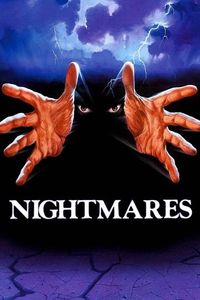
    (In French, On Cable TV, November 2021) As yet another horror anthology film, Nightmares remains in the honest average for the subgenre — uneven stories, some striking moments, a few notable cast members but a lack of cohesion that makes it little more than a collection of short films rather than a deliberate build-up to something bigger. The anthology film is distinctive for being the work of a single director Joseph Sargent rather than several ones, but its origin as a TV series pilot does explain some of the restraints in those segments. The first story is a dull retelling of the killer-in-the-back-seat urban legends, not really setting a promising note for the rest. The second tale is far more ludicrous, and concludes on seeing Emilio Estevez using an arcade laser gun to shoot at a creature escaped from a videogame — it’s silly stuff, but I liked the throwback to the early days of videogaming. The third segment is a more sombre Duel-inspired affair involving a faithless priest, played by Lance Henriksen, confronted with a pickup from hell (yes, you read that right), but it does conclude on a decent car stunt. Finally, the film wraps with a story in which a family confronts a rodent of unusual size in their basement, with Veronica Cartwright playing the mom. All stories work themselves up to a moral of some sort and are mild on the thrills, so that’s a contrast from some of the more gore-oriented horror anthology films out there. Still, you may forget Nightmares faster than you’d think.
  • Men at Work (1990)

    Men at Work (1990)

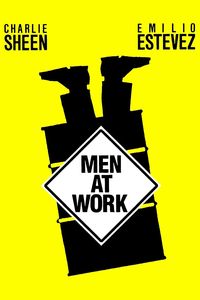
    (On Cable TV, July 2020) There’s something very perfunctory to the dark comedy of Men at Work that makes the film far less distinctive than it wishes to be. It’s still special in that it brings together brothers Charlie Sheen and Emilio Estevez as good friends involved in a murder thriller in small-town California. Garbagemen by profession but certainly not professionals by any means, our two heroes seem content to goof off all day long until they’re stuck with an observer on their daily routes, and accidentally find a murder victim. Things get wilder once their observer proves to be crazier than themselves, and the agents of the small-town conspiracy go looking for them. While the camaraderie between the two leads is exceptional, the rest of the film plays off familiar elements. Keith David gets increasingly funnier as his demeanour is stripped to its fundamentals, and Leslie Hope is eye-catching as the love interest. But much of Men at Work seems perfunctory in the way that very average circa-1990 comic thrillers could be, stuck between two decades’ very different aesthetics and not quite distinctive enough to be memorable. It’s still not a bad watch, but it’s far less memorable than I would have expected.

  • Maximum Overdrive (1986)

    Maximum Overdrive (1986)

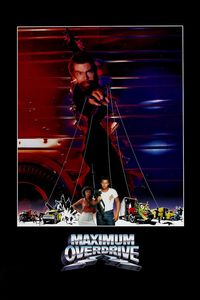
    (On Cable TV, May 2020) I remember watching bits and pieces of Maximum Overdrive as a young teenager and being disgusted by it. (That soda-dispensing machine and bulldozer killing little leaguers—ugh!) Fortunately, a second look at the film as a middle-aged reviewer is far more positive. If nothing else, I’m far more jaded now, and I can recognize that this horror film written and directed by Stephen King is very playful in the way it mixes an impossible premise with the dark humour typical of genre horror and overblown set pieces designed to make viewers roll their eyes. It’s certainly not a perfect film, and maybe not even a good film. As a director, King does a serviceable job at best, and the script isn’t fully cooked: the opening bridge sequence, for instance, doesn’t have any plot links with the rest of Maximum Overdrive, and is sandwiched between another introduction sequence and the introduction of our protagonists. The premise is still remarkably dumb, but the impossibility of what’s happening is very much part of the fun. Fortunately, the film does find its groove once its characters are stuck in a North Carolina service station by roving trucks intent on subjugating them. The sense of atmosphere is pretty good, and there are some spectacular heavy iron special effects. (The irony is that the film is big on heavy metal, both as a threat from the machines and through the AC/DC soundtrack.) Alas, the finale leaves the truck stop just long enough to lose a lot of energy. Emilio Estevez makes for a likable protagonist (Also of note—a live-action performance from Yeardley Smith, who voices Lisa Simpson in The Simpsons.). Still, Maximum Overdrive definitely has some entertainment value even with its shortcomings—it does remain a bit of a unique sell, though. If you’re not already attuned to the very specific brand of genre horror humour… maybe wait until you are.

  • Saint Elmo’s Fire (1985)

    Saint Elmo’s Fire (1985)

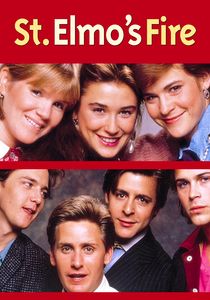
    (In French, On Cable TV, July 2019) It’s one thing to have complex nuanced characters, especially in an ensemble film. But Saint Elmo’s Fire is almost impressive in the way that it features one unpleasant character after another, self-absorbed and terrible to each other. It does start promisingly in its mid-1980s Georgetown setting, as its freshly-graduated protagonists try to figure out life, love and everything else. Alas, this quickly goes nowhere as the characters engage in self-defeating behaviour, do terrible things to each other and can’t seem to learn a single thing. The point of the film, for many viewers, will be the cast and director: A defining work of the “Brat Pack,” Saint Elmo’s Fire features Rob Lowe, Demi Moore, Emilio Estevez, Ally Sheedy, Judd Nelson, Andrew McCarthy and, not quite in the Brat Pack nor all that long in the movie, my own favourite Andie MacDowell, with Joel Schumacher at the helm (and, unusually, as a co-writer). It does feel like an immature teen movie with characters who only happen to be old enough for sex but not anything feeling like human interaction. It’s hard to believe that anyone involved in the film wasn’t aware of the inanity of the script, but if they tried doing a comedy then it’s a complete misfire. Trying to explain the finer details of the film’s plot is begging someone to call you insane. Anyone thinking of watching Saint Elmo’s Fire for the cast may want to reconsider the limits of that intention.

  • Young Guns II (1990)

    Young Guns II (1990)

    (On Cable TV, March 2019) You don’t have to be a genius Hollywood executive to figure out why Young Guns II exists—the first film was a smash hit, most of the good-looking actors were available for a sequel and what’s a little retroactive modification of the first film’s happy ending if it can lead to a new story? Not that this sequel can be accused of being overly precious with its returning characters—by the end of the film, it’s clear that a hypothetical Young Guns III would have required outright resurrections in order to work. A bit of effort is put into the framing device and narration, adding just a bit more interest to the results. Pop music enthusiasts will also note that the film spawned two hit singles that many people can still hum today: Jon Bon Jovi’s “Wanted: Dead or Alive” and especially “Blaze of Glory.” As with the first film, the focus here isn’t as much on the story than the actors being glossily photographed—it’s a great showcase for actors who would go on to have decent careers, such as Emilio Estevez, Kiefer Sutherland, Lou Diamond Phillips and Christian Slater. An equal-opportunity fan-service machine, the film may feature mostly male actors, but it doesn’t miss an occasion to show mild female nudity either. In between the actors, pop music and numerous sequences featuring heroics, one-liners, explosions and guns, it’s an action western for young and excitable audiences that wouldn’t be caught watching an authentic 1950s western. It’s quite a bit of fun even despite the downer ending.

  • The Mighty Ducks (1992)

    The Mighty Ducks (1992)

    (In French, On TV, January 2019) Sports movie are often intensely formulaic, and The Mighty Ducks is even more formulaic than most. It being a hockey movie is almost irrelevant to the hackneyed underdogs plot that it follows without deviation, assembling a team of misfits to take on much better teams. Emilio Estevez slums it up by taking on the usual coach role of those movies, overcoming some personal trauma by working with troubled kids. It’s a bog-standard sports movie and perhaps that helps explain its enduring popularity. Estevez is not bad, the tone of the film is carefully pitched to impressionable young teenagers (who are guaranteed to remember it fondly as adults) and hockey helps the action move faster than baseball. You can compare and contrast the beige amiability of The Mighty Ducks to spikier fare such as The Bad News Bears for an instruction on how bland corporate products are extruded. It almost inevitably led to the naming of Disney’s own hockey team, furthering cementing the film’s legacy right before the two sequels and animated TV series. For adults, though, The Mighty Ducks is an umpteenth take on an overly familiar formula. It’s watchable, but almost immediately forgettable.

  • Stakeout (1987)

    Stakeout (1987)

    (In French, On Cable TV, January 2019) Here’s a hypothetical situation to test your skills at being a Hollywood producer. It’s not a hard one. Here you have a pair of actors starring in your movie as stakeout cops: Emilio Estevez (aged 25) and Richard Dreyfuss (aged 40). You also have the rather sexy Madeline Stowe (aged 29) playing a woman who’s being watched by our heroes. Naturally, there’s going to be a romance—that’s a given, not to be put in doubt. The question is this: Would you rather pair up Stowe with Estevez (four years her junior) or with Dreyfuss (eleven years her elder)? Take your time. Don’t cheat. There’s only one answer. But of course, this is Hollywood and at the time Dreyfuss was the biggest actor, so naturally we have a May-July romance going on. So it goes in an industry controlled by older men. Bad casting aside, Stakeout is merely a decent film. Veteran director John Badham’s attempt to combine comedy and action thrills is intermittently successful, although the film is more effective in its action moments that the often-juvenile comedy. The soundtrack is very eighties, but then so is much of the film as a buddy cop movie. There are a number of ethical issues raised by Stakeout’s romance (the word “stalking” is never mentioned, although it should be), but like most police movies of the time it’s far more interested in designating its heroes as beyond reproach than actually exploring those issues. Stakeout remains an entertaining film, but it does have a number of issues that may cause more discomfort than fun.

  • Young Guns (1988)

    Young Guns (1988)

    (On Cable TV, January 2019) Not being much of a western fan, it was probably inevitable that I wouldn’t care much about Young Guns. Clearly made with the intention of bringing sexy back to the western genre, it does have the good sense of casting the Brat Pack of photogenic young actors for a nice little shoot’em up. Even today, who wouldn’t be tempted to have a look at young Emilio Estevez, Kiefer Sutherland, Lou Diamond Phillips, Charlie Sheen and Dermot Mulroney in the same horses-and-guns movie? Alas, the movie around those actors isn’t quite up to the promise—for all of the then-trendy soundtrack, this retelling of the Lincoln County War and Billy the Kid’s life does feel perfunctory. I suppose that here’s a cultural element at play here—Being Canadian, I have little use for outlaw legends along the lines of Billy the Kid, and so that aspect has nearly no grip on my particular imagination. While stylish, Young Guns definitely shows its age and late-1980s pedigree—thirty years later, it looks flashy, dated and a bit ridiculous with its overcoats and lengthy slow-motion moments. I don’t quite dislike the result, but neither do I care for it much—although I suspect that the deliberately accumulated sex appeal of half a dozen guys is wasted on me.