Emmanuelle Riva

  • Léon Morin, prêtre (1961)

    (On Cable TV, September 2021) At first glance, I wasn’t expecting much from Léon Morin, prêtre: Why should I go back to Vichy-era rural France for a priest’s character study? But as it turns out, the film is slightly better than that, and not all that much about religion. It ebbs and flows, takes a while to get to the point and doesn’t end on a particularly satisfactory note (although it’s unclear if it ever could), but it gradually imposes its style. Much of the film’s plot ends up centred on the relationship that the priest develops with a young widowed mother, as they converse about theology, philosophy and other intellectual topics. The suspense comes when she clearly develops feelings for him, and finds her advance rebuffed by the very pure priest. Much of the credit of the film’s success goes to Jean-Paul Belmondo and Emmanuelle Riva in the lead roles — both of them attractive and compelling even in the midst of abstract conversations. The oppressive atmosphere of Nazi-occupied France adds some interesting subplots, and Jean-Pierre Melville’s direction shows his familiarity with the era. There’s an unpredictability to the details of the film, and while Léon Morin, prêtre definitely plays with seduction, the ending doesn’t necessarily provide cheap culmination. It all adds up to a substantially more interesting film than I expected, and one that fits nicely within Melville’s filmography.
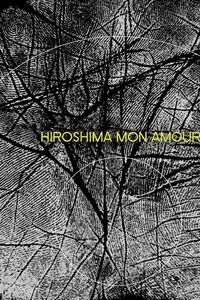
  • Hiroshima mon amour (1959)

    Hiroshima mon amour (1959)

    (Criterion Streaming, July 2020) I am not and will never be a big fan of Hiroshima mon amour, but I have to respect a film that blends interracial romance with meditations on the nuclear bomb. Director Alain Resnais being a sober filmmaker, this is a quiet, long-running romantic drama. While the obsession with nuclear holocaust may be a reminder of the multi-decade social trauma that cold war generations endured, it’s also used in mature, subtle ways to illustrate the ongoing love story. The romantic material is universal even if highly specific to late-1950s Japan, as a French actress and a Japanese architect go through the city (with the unescapable spectre of nuclear devastation) and have a few tiffs. Appealing leads (Emmanuelle Riva and Eiji Okada) do keep our attention during a film that’s deliberately long and moody. Interesting at times, interminable at others, Hiroshima mon amour nonetheless leaves a unique impression.

  • Amour (2012)

    Amour (2012)

    (In French, On TV, October 2019) The real horror movies aren’t always marketed as such. In Amour, for instance, we’ve got a near-intolerable depiction of a realistic and heartbreaking situation: an elderly man having to take care of a severely disabled partner at the very end of their lives. There’s no way it will end well, as either the premise or the opening moments of the film suggest. Much of the two-hour film is a steady descent into the inevitability of death and there’s nothing remotely fun about it. In Michael Haneke’s usual style, the camera lingers long before, during and after the main point of a scene has been made: there isn’t much of a plot despite the film’s running time, and that makes the experience even more harrowing. Emmanuelle Riva and Jean-Louis Trintignant are heartbreaking as a committed couple who end up suffering through no fault of their own except for the breakdown of human bodies. Despite the straightforward plot, Amour is a lot to take in because it deals in inevitabilities. No genre element, no fantastic creature we can deny: just what happens to a lot of us as we age. If the film has any upside, it’s to make the thought of dying alone seem almost like a happy ending considering the alternative.