Erich von Stroheim

  • Five Graves to Cairo (1943)

    Five Graves to Cairo (1943)

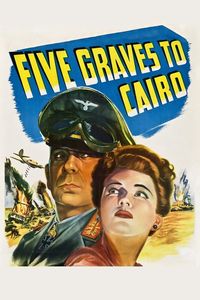
    (On TV, May 2020) While not perfect, Five Graves to Cairo is a very capable WW2 adventure tale put together during WW2 itself. A Billy Wilder film featuring Erich von Stroheim as Rommel, it blends real-world events with pulpish mysteries and thrills to produce something perfectly watchable even today. There are secrets to discover and a tension-filled plotline, even if it does meander at times and the ending takes just a bit too long to resolve. Amusingly, this film has a war-wide scope… and a setting limited to a hotel. It would make a splendid double feature with Sahara. In Wilder’s hand, the timeless Five Graves to Cairo is more than wartime propaganda.

  • Foolish Wives (1922)

    Foolish Wives (1922)

    (YouTube Streaming, March 2020) Oof. I have a hard time making it through 1920s silent dramas, and Erich von Stroheim’s Foolish Wives is as demanding as his later Greed in that regard. At a staggering two hours and twenty-some minutes, it’s slow-paced, melodramatic, single-minded and infuriating at times. It’s a long sit even with the best of intentions, and any competent editor would be able to bring this down to 90 minutes with very little loss. But film is an education, and Foolish Wives does far better the moment you stop viewing it and start reading about it. The film was notorious back in 1922 by being the first Hollywood movie (probably the first movie ever) to have a budget higher than one million then-dollars. Much of the cost (which ballooned from an initial 250K$ budget) was attributed to writer-director von Stroheim’s perfectionism and can readily be seen on-screen: the recreation of 1920s Monte Carlo on a Hollywood backlot is detailed and often fascinating, and the film does make generous use of ambitious exteriors. Stroheim himself may be the other big reason to see the film: as a writer, director and star, the film is his in ways that anticipate auteur theory—down to the curiously modern meta-textual touch of having a character read a novel titled Foolish Wives by von Stroheim himself! Finally, one shouldn’t dismiss the decadence of the result, which freely presents a morally terrible protagonist all-too-willing to seduce rich women to maintain his lifestyle: something that would become rarer as Hollywood was forced to sanitize itself in the 1930s. While Foolish Wives may not be enjoyable, there’s certainly a lot here to contemplate and study for film historians. I really wouldn’t dare suggest it as casual viewing, though.

  • Greed (1924)

    Greed (1924)

    (On Cable TV, April 2018) Diving into classic movies is often best done in stages: some of it is accessible to modern audiences, some of it takes a little bit more work and sympathy and some of it will frankly bore the pants off casual viewers. Knowing this, I’m convinced that I have seen the reconstructed four-hour-long version of Greed far too early in my development as a classic movie fan. The back story is worth explaining: 1924’s Greed is widely acknowledged as one of the finest dramatic films of the silent era and a masterpiece for screenwriter/director Erich von Stroheim. But the 140-minute version that has been shown on-screen since the 1924 is reportedly a mere shadow of the 462 minutes of the lost original director’s cut. In 2012, however, film experts reconstructed a 239-minutes version of the film using the original script and photos taken during the production of the film. That reconstruction was the version I saw and, well, it maximized all of my issues with silent movies: The pacing is mortally slow, the use of photos (zoomed, cropped, panned) as placeholders for missing scenes is jarring and the new material did seem extraneous from the bulk of the story. It takes a lot to convince me to sit down to watch a four-hour movie, and Greed did not match that level of interest. This being said, I can see why this version would be interesting to someone already fascinated by the movie. Alas, this strikes me as Greed 201 rather than the 101-level lesson I’m ready to digest at this point. All of this being said, there’s quite a bit that I liked about even this interminable version of the film. The story is complex and strong, being adapted from a novel, and it does explore its central theme with the cleverness we’d expect from more contemporary examples. The writing of the title cards is a noticeable cut above most silent films, being sometimes reprinted from literary material. Gibson Gowland makes quite an impression as the protagonist of the story: it’s not a good impression (“punchable face” comes to mind), but his is not a good character either. Meanwhile, ZaSu Pitts looks like an alien with her wide eyes and unusual hairdo—hers isn’t a good-natured character either, and the drama she creates is tragic. Strong actors, a strong script and some really interesting period detail make for a film with definite strengths, but I have the clear impression that I would have enjoyed the cut-down version more. Thanks, TCM, I guess, for providing more than I needed—but I’ll get more out of the reconstructed Greed whenever I’ll be more familiar with 1920s cinema.