Ernst Lubitsch

  • Cluny Brown (1946)

    (On Cable TV, December 2021) The obvious reason to see Cluny Brown is that it’s master director Ernst Lubitsch’s last film before his untimely death — the last go-around for “The Lubitsch Touch,” this time taking aim at British social conventions. But the unexpected delight of the film is Jennifer Jones’ performance as the titular Cluny — a bright, scattered young woman who clearly has no intention of learning her place, let alone keeping it. Compared to other Lubitsch pictures, it’s true that Cluny Brown feels like a second-tier result — not bad, still amusing, but clearly not in the same category as his better-known films. Still, it amuses: its look at stuffy British class conventions is clearly meant to upset upper-class British viewers by showing them as so out of touch on vital issues. (British reviewers reportedly weren’t kind to the film.)  The romantic shenanigans between Cluny and a foreign intellectual (revered by the British characters, but seen as a mere man by the protagonist) end up making up most of what passes for plot here, although —typically—much of the fun of the picture is in the small details, exchanges and observations rather than the overarching plot. Lubitsch was gone far too soon, but at least we got Cluny Brown before he went.
  • The Love Parade (1929)

    The Love Parade (1929)

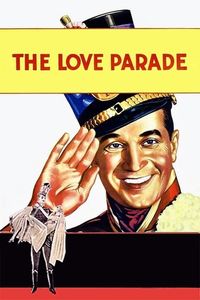
    (On Cable TV, September 2021) Perhaps the fairest assessment of The Love Parade is that it feels like a prototype for better films by director Ernst Lubitsch and star Maurice Chevalier. It’s certainly not a bad movie: The plot manages to cram a few musical numbers within a story about a man falling in love with a princess, only to discover that the life of a consort is annoying to a man used to taking the lead. Pampered within the palace, he eventually rebels, threatens to walk out… and unconvincingly reconciles five seconds before the end. (It’s reconciliation through submission, which is not nearly as amusing now than then.)  The musical aspect of the film does feel ahead of its time, with nine numbers weaved into the plot (one of the first, if not the first, film to do so rather than adopt the revue approach of other early musicals) and even one duet shown in cross-cutting editing that showed how competent Lubitsch was. The European aspect of The Love Parade is usually described as “sophisticated,” which was a word often used for Lubitsch’s work –an approach that tried to go beyond the obvious. An incredibly young Maurice Chevalier remains the best reason to see the film: his incredible charisma shines event through the production values of the early sound era, and his singing is quite enjoyable as well. Both men would collaborate again on two other pictures, One Hour with You and The Smiling Lieutenant, which would both show improvements, both technical and artistic, on their first film. Still, you can see in The Love Parade all of the building blocks that Lubitsch and Chevalier would use over the next few years: The sexual permissiveness possible in the Pre-Code era, Lubitsch’s knack for high-minded comedy about crass topics, Chevalier’s megawatt charm and the possibilities of sound cinema. As good as The Love Parade remains, it would lead to much better.

  • Bluebeard’s Eighth Wife (1938)

    Bluebeard’s Eighth Wife (1938)

    (On Cable TV, March 2020) Now here’s a dream creative pairing: Director Ernst Lubitsch working with a story co-written by Billy Wilder. That should be enough, but when Bluebeard’s Eighth Wife raises the ante by throwing in Claudette Colbert and Gary Cooper in the lead roles, well, it’s impossible to resist. Fortunately, the film does manage to meet expectations: it’s a fine screwball film with the expected wisecracks, romantic complications and remarriage humour—much of the plot, slowly revealed, has to do with a rich man trying to tame his newest (eighth) wife, as he suspects her of having married him for the money she’ll get after their divorce. (The twist, gradually revealed, is that she’s trying to break him out of his bad habits—and the film is much funnier knowing this.) The French Riviera atmosphere is lush and evocative, with Cooper turning in a more sophisticated performance than the aw-shuck material he became famous for—and Colbert being equal to her funny, sexy self. (Plus, a fourth-billed David Niven.) The script is what we would expect from a Billy Wilder collaboration with Charles Brackett—great dialogue, very clever characters (especially Colbert’s scheming young woman) and a script that’s not entirely predictable, especially during the middle act. Although not much of a commercial success at the time of its release, Bluebeard’s Eighth Wife has since then reached an enviable and much-deserved place in the pantheon of 1930s comedies.

  • Ninotchka (1939)

    Ninotchka (1939)

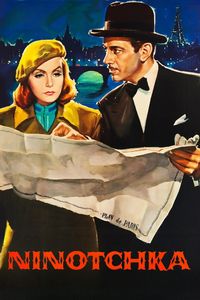
    (On Cable TV, February 2020) As unfair as it can be to judge a film by its remake, I do like Ninotchka quite a bit, but not as much as its musical remake Silk Stockings. Of course, there’s the star factor to consider: While Ninotchka has an impressive pairing with Melvyn Douglas and Greta Garbo, Silk Stockings has Fred Astaire and Cyd Charisse—a most unfair comparison. Silk Stockings has finger-snapping tunes, while Ninotchka is a straight-up comedy. It’s really too bad for Ninotchka that Silk Stockings happens to be one of the most successful musical remakes in a subgenre littered with inferior results. Still—Ninotchka, what about it? It’s a story about three bumbling Soviet men coming to Paris to get back a piece of artwork, but being seduced by the hedonistic French lifestyle… which leads the Soviet government to send a hard-as-nail operative to clean up the mess. A perfect plan, except when she, too, falls under the charm of a Frenchman. The lead pair in nigh perfect: Melvyn Douglas approaches William Powell’s levels of pure suave charm, while Greta Garbo is a legend for a good reason. Ninotchka is one of the few comedies she’s even made (the tagline for the film was the fondly remembered “Garbo Laughs!”) and the film cleverly uses her persona as a façade against which Douglas’s charming powers crash time and time again. The bumbling Soviet emissaries are a lot of fun in the way they succumb to the pressures of Paris, but the highlight here is the interplay between Douglas and Garbo. The pro-Western jabs and Soviet rigidity are somewhat prescient of the Cold War, and do help the film feel more modern than its 1939 production date. Director Ernst Lubitsch turns in another success here, although perhaps a bit less impressive than some of his other features. Occluding unfair comparisons with its remake, Ninotchka remains a decent-enough romantic comedy, with sly one-liners and some good flirting dialogue.

  • Heaven Can Wait (1943)

    Heaven Can Wait (1943)

    (On DVD, September 2019) I started watching Heaven Can Wait reluctantly, convinced that it was going to be the original that led to the 1978’s Heaven Can Wait remake (which I really don’t like). But the Heaven can Wait original is called Here Comes Mr. Jordan and this is a completely different film. It ends up being a comedy by none other than Ernst Lubitsch, featuring Don Ameche recounting his life to the Devil in order to be admitted in Hell. As with most of Lubitsch’s films, it features a rather good script (adapted from a theatrical play, hence the strong dialogue) filled with clever touches, and an unobtrusive directing style that makes it absorbing viewing. Gene Tierney holds the female lead, with ample chemistry with Ameche when it counts. It’s a film made by people aware that there’s a jaded audience on the other side of the screen, eager to be seduced by a film but having been disappointed before. As a result, it feels as if Heaven Can Wait is constantly nodding at its audience, comforting them when it wants to and surprising them in other ways. It’s quite a likable movie, and it’s one of many that affirms Lubitsch’s strong touch on the material he directed.

  • That Uncertain Feeling (1941)

    That Uncertain Feeling (1941)

    (On Cable TV, March 2019) I don’t think today’s audiences can quite approach Ernst Lubitsch comedies with the same thrill as they did upon release: Social attitudes are not what they were, and the impish sense of the perverse that powers his comedies has often been outpaced by progressivism. But Lubitsch wasn’t just there to shock for comic value: the execution of his films was based on a solid sense of sophistication that, frankly, has rarely been equalled since. That Uncertain Feeling, for instance, takes on a comedy of remarriage as its topic, casually bandying around a divorce as if it was no big deal for a woman to leave her husband for an eccentric new man. It’s all sophisticated like many comedies of the time were, set within the upper-class Manhattan set with more romantic comic worries than money problems. Built on witty dialogue, much of the humour comes from characters acting unusually calmly to stressful situations … although That Uncertain Feeling’s biggest laughs come from having them revert to type and punch someone who aggravates them. The character work isn’t bad either—while Merle Oberon is splendid as the wayward wife and Melvyn Douglas does some great seething, Burgess Meredith is a highlight as a pianist who becomes the object of the female lead’s attention, causing chaos with gnomic utterances, misplaced dislikes, odd anxieties and a complete lack of care. It ends as we may expect, with a remarriage—both because the pretender is hopeless, but more importantly because (and here’s the heartfelt awww underpinning the comedy) our two leads never stopped loving one another. That Uncertain Feeling leaves a clear impression even in modern reviewers: it has aged quite well (perhaps helped along by a freer attitude toward divorce) and while it may not be Lubitsch’s best, it’s sufficiently clever and witty to remain interesting … and funny.

  • To Be or Not To Be (1942)

    To Be or Not To Be (1942)

    (Youtube Streaming, November 2018) The famed “Lubitsch touch” referred to director Ernst Lubitsch’s ability to … well, no one can quite agree about the exact definition of the Lubitsch touch, but there is something in his movies that separate them from other films of the period. So it is that To Be or Not To Be remains striking even today for the sheer number of spinning plates that Lubitsch is able to keep in the air without having them all crash to the ground. Consider that it’s a comedy set during the earliest days of the Nazi occupation of Warsaw. Consider that it mixes anti-Nazi critique with a portrayal of egomaniac theatrical actors dealing with mortal suspense and perceptions of infidelity. It’s a wonder that the film hold together at all, let alone that it manages to be hilarious and thrilling at once. Jack Benny is excellent as an actor whose ego nearly derails resistance plans, while Carole Lombard is the other half of the couple at the centre of the story. The treatment of Nazis really isn’t sympathetic, and there’s a vertiginous quality to the film when you consider that it was shot and released in the middle of World War II, as these things were still very much going on and liberation was just a distant goal. The opening sequence is terrific, which leads to a rather less interesting first act in which the pieces of the plot are slowly put together. The dialogue is slyly funny (it may take you a while to catch a joke given the dry delivery) and occasionally mordant: I almost gasped at “What he did to Shakespeare we are doing now to Poland.”—the film gets away with a lot considering that it’s a post-Code production. To Be or Not To Be does get its rhythm back in the second half as complications pile on, the danger becomes more immediate and we see the characters thinking fast on their feet in order to get out of ever-more complex situations, sometimes caused by their own doings. There’s a very appropriate Mel Brooksian quality to Jack Benny considering that Brooks would take over the role in the 1983 remake. Audacious even today, To Be or Not To Be has survived exceptionally well and remains just as funny as it ever was.

  • Trouble in Paradise (1932)

    Trouble in Paradise (1932)

    (On Cable TV, March 2018) As I dig deeper in film history, few words become as interesting as “pre-code comedy”.  The more I watch older films, the more I complain about the Hays Production Code that effectively stunted the thematic development of American cinema between 1934 and 1960 (ish). But there is a brief time, roughly 1930–1934, during which Hollywood movies, having more or less mastered the grammar of cinema, was moving toward bolder and more daring subject matter. These movies feel considerably fresher than many subsequent films in their ability to grapple with authentically adult subject matter. While I wouldn’t call Trouble in Paradise an all-time classic nor a boundary-pushing film, its Pre-Code nature makes it so that it’s just spicy enough to be worth a rewarding viewing experience. Focusing on a pair of expert thieves out to swindle a rich French heiress, this is a romantic crime comedy that works decently well on several levels. As a pure comedy, it features witty dialogue, strong characters and an amiable sense of sophisticated style. Herbert Marshall and Miriam Hopkins make for likable criminal heroes (their introductory dinner is a lot of fun), their loyalty to each other tested when Kay Francis enters the picture as a rich target. Director Ernst Lubitsch handles the elements of his film with a deft touch (indeed, “The Lubitsch touch” that could be seen in later movies such as The Shop Around the Corner), producing a well-rounded piece of work. What’s not so obvious to modern audiences since then used to moral complexity is the idea of presenting two outright thieves as romantic heroes: while it’s since been done over and over again in modern cinema, this was a bit of a sensation at the time, and the film effectively disappeared from public circulation for decades (until 1968) once the Hays Code was enforced two years later. Marvel, then, that we twenty-first century cinephiles now have access to something that many earlier audience didn’t. And marvel that, thanks to more natural non-enforced moral standards, Trouble in Paradise still plays really well today, more than eighty-five years later.