Evan Adams

  • Smoke Signals (1998)

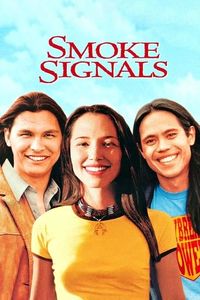
    Smoke Signals (1998)

    (YouTube Streaming, September 2021) As of 2021, September 30 is designated in Canada as a National Day for Truth and Reconciliation. A federal holiday but not exactly the kind of day fit for barbecues and celebration, it’s intended as an opportunity to reflect on the relationship, historical and present, between First Nations and other Canadians. I did my part in my own way — self-educating on related topics during the day, and pushing a landmark Native American film to the top of my evening watch list. To be fair, Smoke Signals often felt as if I was cheating — it’s so entertaining and occasionally so funny that it felt like a treat more than self-imposed viewing. Often hailed as the first widely distributed film entirely written, directed, co-produced and starring Native Americans (there were earlier examples, but none were as well known), Smoke Signals takes us on an evocative road trip, as two young men make a trek from Idaho to Arizona to gather the remains of a dead man with a complicated legacy. Adam Beach plays the dead man’s son, an aggressive young man who remembers his father as abusive before he left forever. Sitting alongside him is Evan Adams as a far meeker friend who still sees the dead man as a hero, having saved them (they were told) from a house fire as babies. Leaving the reserve is an adventure by itself, but it’s only the start of a journey that gets both protagonists to confront their own perception of what it means to be a Native American, and discover some troubling revelations about the dead man. Confidently directed with many cinematic moments, Smoke Signals is easy to watch even when it deals with tough issues. The heartfelt story is wrapped in just enough self-aware humour as to make everything easy to follow and enjoy. It’s an American film, but the ground covered here just as easily applies to Canadian First Nations. The insider’s perspective means that the film dispenses with clichés, or engages with them — it feels real and that may explain why the film has aged so gracefully, even nearly twenty-five years later. There’s a reason why Smoke Signals is still a reference in lists of Native American cinema — in fact, the lack of high-profile follow-ups is troubling. Canada has seen a small but worthwhile wave of First-Nation-led filmmaking in the past few years, and if the films themselves can be quite good, it hasn’t led to a breakout hit or cultural reference. There’s clearly some work to be done there too.
  • Indian Road Trip (2019)

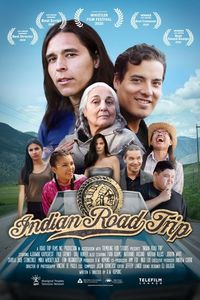
    Indian Road Trip (2019)

    (On TV, January 2021) One of the better arguments for greater inclusivity in filmmaking (not merely casting) is that different perspectives will tell stories from viewpoints other than those that have dominated cinema since its creation. Indian Road Trip, despite obvious shortcomings, is a clear example of the fun to be had when formerly marginalized filmmakers reuse familiar formulas to their own ends. The film takes a risk early on by introducing us to its two native protagonists by showing them swindling a caricatural couple of white folks out for reserve tourism. The dodgy morals of our lead characters having been established, the film follows it up by showing how disliked they are by the rest of the reserve. Their punishment? Driving an elder to her sister’s house, a short-distance trip that turns out to be far lengthier given intentional obstacles and some magical interference. Ajuawak Kapashesit and Paul C. Grenier star in writer/director Allan Hopkins’s comedy, their charisma quickly winning us over to their side as they try to complete their quest despite many deviations. While the acting talent in the film is uneven, there are a few laughs from Dale Hunter as a cranky elder, and Evan Adams as a character that keeps popping up at the oddest moments (something that even the characters eventually pick up). Indian Road Trip doesn’t take itself too seriously, and it has the freedom to be playful rather than harping on more serious themes usually associated with low-budget Canadian native films set on reserves. The comedy shines through, which is not always obvious on low-budget productions, and many more serious thematic concerns sneak in on the edges of the film’s main comic plot. The film’s low budget is the stuff of legend—much of the film was shot without sufficient post-production funding, and it took extraordinary financing arrangements for the film to be completed at all—and shows perhaps most clearly in the washed-out cinematography that flattens the impact of the spectacular shooting locations of Merrit, BC. (Which feels like a shame considering that the film makes good use of drone footage and good-to-great composition.)  It’s impossible to be too critical of such a winning effort, though: the script has its share of good moments in between mixing up a family quest, magical realism, a Tarantinoesque subplot about a criminal hunting for lost money, and the two lead’s good-natured banter. The film simply feels fun—and simply endearing despite its flaws. I’m annoyed that Indian Road Trip, like many examples of a substantial wave of enjoyable Canadian movies from First Nations filmmakers, will probably fly under the radar of most filmgoers. It’s a welcome exemplar of what’s possible when even modest budgets find their way into the hands of non-traditional filmmakers, and I hope to see more of Allan Hopkins’s work soon.