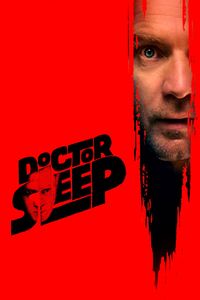
Ewan MacGregor

  • Doctor Sleep (2019)

    Doctor Sleep (2019)

    (On Cable TV, June 2020) The recent second-generation re-ignition of interest in Stephen King’s adaptations is a beautiful thing to watch: I like King and I think that history will have great things to say about him, but it’s good to see the consecration happen in real time. With Doctor Sleep, director Mike Flanagan is at his second King adaptation and he continues to prove his suitability for the material. After several well-received low-to-medium films, Flanagan is now working in the big-budget leagues, and this translates into an increased ability to play with strong unusual images (the snake-like overhead shot of a caravan sticks to mind). For Doctor Sleep to rely so much on its association with The Shining is not necessarily a good thing at first, as it puts the bar too high for the film to ever reach—and it’s a bit of a bait-and-switch in that the essential plot of the movie has little to do with The Shining. No, here we’re tracking down a bunch of evil soul-stealers as they go kidnapping and harvesting psychic energy from unusually gifted children across the United States. Against them we have Terrence (returning from The Shining decades later) and another gifted child. While Doctor Sleep is imperfect, it does have quite a few things going for it. Like many of King’s adaptations, it’s a horror film that goes well beyond the boring monster features that so often pass for horror—there’s a little bit more to it, and parts of the film bring to mind more recent TV shows that use horror as a blend in their magical realism mix—at times, especially at first, there’s a cross-country Americana vibe to the film that could have been interesting in its own right… but here it’s a prelude to a good-versus-evil battle featuring flawed characters and unusual powers. Ewan MacGregor has a good role here, helped along by a large supporting cast. In many ways, Doctor Sleep does feel like the culmination of something that has been brewing in earlier episodes. Some clever set pieces are a highlight, such as when the bad guy has tables turned on them by one of the protagonists acting like a horror movie monster. The return to the Overlook Hotel at the end doesn’t quite work—again, too strong a reference to a previous work without hope of attaining it, with a payoff that is slightly disappointing. Still, the result is worth a look, especially in how it steps away briefly from what could have been a far more conventional story. We can thank King for that, and Flanagan as well.
  • Moulin Rouge! (2001)

    Moulin Rouge! (2001)

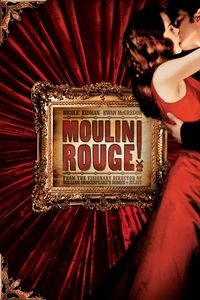
    (In theaters, September 2001) As someone who sees nearly a hundred films per year, it’s often difficult to justify seeing so many when so many of them are just crap. Then comes the odd one-in-a-hundred moment, the one that is so good, so original, so perfect that it fully justifies the rest of the dreck in theaters. That moment is the highlight of Moulin Rouge!, the introduction of the nightclub and of the Satine character, a raucous musical number featuring and blending “Diamonds are a Girl’s Best Friend”, Madonna “Material Girl”, Nirvana’s “Nevermind”, the latest “Lady Marmalade” remix and a brand-new Fatboy Slim track. You have to see it and hear it to believe it. But don’t be surprised to find yourself stuck with a silly grin during the first half of Moulin Rouge!, even occasionally shaking at how good it is. A triumphant revival of the musical with an initial hyperkinetic approach reminiscent of Fight Club, this is one unique film, a jewel in the rough for everyone who loves movies and pop songs. Gleefully using twenty-five years of pop music like a toolbox to tell his story, writer/director Baz Lurhmann does things with the raw material that will leave you breathless at his audacity. Postmodernism at its best. Top-notch editing, a wonderful screenplay and excellent musical talent will leave you gasping for more. Granted, the second half of the film is more dramatic, less impressive than the first half, but that first half is likely to be the best thing you’ll see in 2001. Even the dependence on raw sentimentalism works to some degree. Don’t miss Moulin Rouge!

    (Second viewing, On DVD, August 2002) Wonderful stuff any way you choose to see it. Boffo set designs, exceptional music, enjoyable acting and some dynamite movie moments. It doesn’t stop, and you’ll wish it never did. The DVD is stuffed with an embarrassing amount of extras, commentaries, on-set documentaries and oodles of other fun stuff, such as co-writer Craig Pearce discussing an early draft of the script which contained a character called “Baron von Groovy”. (I want to see that film!). Warning, though: While the audio commentaries are great, the film perceptibly loses a lot of its impact stripped of the music, which makes the completely-muted commentary track a very curious choice from the DVD makers (as opposed to a track where the audio plays at a greatly reduced volume throughout.) I still think it’s a fantastic film.

    (Third Viewing, On Blu-ray, November 2021) I’ll admit it – in choosing what movies to rewatch, I will give precedence to decent films with good set-pieces, but shy away from amazing movies – what if they’re not as good as I remembered them? It took me a while to get back to Moulin Rouge: Nothing could possibly match my over-the-top reaction to viewing the film’s first half-hour for the first time, which pretty much ignited my fascination with movie musicals. The music! The colours! The pacing! I was not expecting a second look to come close to that, especially after watching a few hundred musicals in the interval. Well, improbably enough, a rewatch does come close to recapturing the magic of the original viewing: Twenty years later, Baz Luhrmann’s Moulin Rouge is as vibrant, joyful and exhilarating as it was meant to be. The fizzy blender mix of 1990s pop songs remixed against a backdrop of 1900s Paris is still remarkably effective, and carries quite an audio-visual punch. It’s good enough to make even a cynic like myself embrace the film’s refreshingly uncool credo of “Truth, Beauty, Freedom and Love.”  It’s all high-gloss romanticism, and it’s worth indulging into the film’s unabashed mawkishness. The music is terrific, even though I remembered a few moments wrongly after multiple reruns of the soundtrack:  Fatboy Slim’s “Because we Can-Can” is a mere snippet in the film, and my memory completely failed me in remembering that the anthemic “Lady Marmelade” cover barely makes up a few seconds in a much more expansive number. (Conversely, the “Lady Marmelade” music video is well worth rewatching a few times, but it doesn’t include a single snippet of the film.)  Fortunately, the music numbers make the film: “Zidler’s Rap Medley” is frantic, while “The Pitch” is hilarious and “El Tango de Roxanne” heartbreaking. Ewan MacGregor and Nicole Kidman have taken a few hits over the years for their vocal performance here, but they are honestly giving it everything they’ve got in addition to their acting, and I prefer this authenticity to autotune or being dubbed by others. I may not have loved the result as much as I did in theatres twenty years ago, but Moulin Rouge hasn’t aged all that much, nor lost most of its effectiveness – if anything, it exceeded my pessimistic expectations on a re-watch: it’s still one of my top musicals of all time (OF ALL TIME!) and I may revisit it more frequently knowing that it doesn’t dull too much on a re-watch.