Faye Dunaway

  • The Champ (1979)

    The Champ (1979)

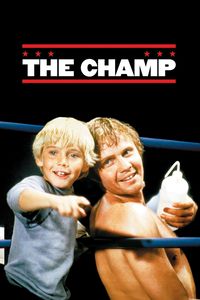
    (In French, On Cable TV, June 2020) An all-time weepie heavyweight, The Champ is director Franco Zeffirelli’s melodramatic remake of the already overdramatic 1930s Oscar-winning classic, except fine-tuned to make everyone cry by the end of the film. (No, seriously—The Champ has even been used in clinical settings to prove that it’s “the saddest movie in the world”) if you’ve seen the original, you will find that Zeffirelli has added very little other than sound and colour cinematography—he’s seemingly content to run through the same motions with even more melodrama. Jon Voight stars at his puffiest as the titular champ, while Faye Dunaway preens as his ex-wife, although it’s young Ricky Schroder who becomes the centre of attention as the boy who clearly doesn’t understand the tragedy unfolding around (and about) him. The Champ isn’t particularly good if looked at dispassionately—it’s deliberately engineered to pull at heartstrings and is absolutely shameless about the way it goes about it. The question then becomes—are you able to look at it dispassionately? Because it will use every trick in the book to prevent it.

  • Mommie Dearest (1981)

    Mommie Dearest (1981)

    (In French, On Cable TV, February 2020) Even though I’m moderately knowledgeable about movies, I’m still often surprised by the stories that I unlock in researching movies prior to these capsule reviews. Obviously, I knew of Joan Crawford, and her relatively small modern profile (especially when compared to Bette Davis, with whom she legendarily feuded), and the tarnishing of the Golden Age of Hollywood idols, and Faye Dunaway’s decline as an actress throughout the 1980s. But prior to watching and reading about Mommie Dearest, I was certainly missing on a piece of the puzzle that linked all of these things together. To put it simply: Mommie Dearest is an adaptation of a biography by Crawford’s adopted daughter, in which she revealed that her “mommie dearest” was a cold-hearted parent, a child abuser, and an overall wreck. In film history, Mommie Dearest was the first landmark in a series of books by children of Classic Hollywood stars that unbolted their saintlike public image. Many followed, but Mommie Dearest had a bigger impact than most in that much of it was corroborated, and it led to a movie whose execution, to put it charitably, maximized the tragic arc of the story. Faye Dunaway here plays Crawford as a quasi-caricatural monster, and the first half-hour of the film is the depiction of one episode of child abuse after another, as the mom terrifies her daughter in ways that are actively unpleasant to watch. (The famous “Wire Hanger” scene is one for the history books even in its French dubbed version: my cat, who can normally tolerate the worst horror movies with supreme feline detachment, had her ears pointed sideways in alarm at the screaming in the sequence… and I wasn’t necessarily any more detached.) I’m told that the film earned an unplanned reputation as an over-the-top camp classic of unintentional hilarity, but I’m not subscribing to that viewpoint. While some sequences do attain a certain comic level of scenery-chewing, there’s only so much outright child abuse that anyone can tolerate, and despite Dunaway’s unhinged performance, the character she plays is an out-and-out harridan who clearly should not have any kids. It’s that character portrait that still makes Mommie Dearest ghastly intriguing to watch today: the raw mother/daughter feud, and how it fed into the falsity of their public appearances at the time. It’s hard to say whether the book or the movie had a bigger impact on Crawford’s reputation, but I note with some interest that Crawford’s star was considerably dimmed compared to some better-behaved contemporaries. Everyone has taken sides for Bette Davis in the Davis/Crawford feud, and Crawford is now seldom mentioned without sideways glances at her personal life. I suppose that Crawford’s lesser body of work may have something to do with it (She’s distinctive in her Oscar-winning performance in Mildred Pierce and not much else), but comparing the way she’s discussed to that of comparable stars of the same period is instructive. There’s an argument to be made that Faye Dunaway’s performance here was too good for her own good: While she was a superstar in the 1970s, her filmography dimmed significantly in the 1980s following the acid reception of this film. That’s quite a lot of material for a film to touch upon, but only a few other films so clearly attack the reputation of a former Hollywood icon as savagely as this one. (Have a look at The Lives and Deaths of Peter Sellers and The Girl for further examples.)
  • The Thomas Crown Affair (1968)

    The Thomas Crown Affair (1968)

    (On Cable TV, June 2019) Even at more than fifty years of age, The Thomas Crown Affair remains the epitome of cool for several good reasons. The incredible pairing of Steve MacQueen and Faye Dunaway is reason alone to be interested, but there’s more. The film is extremely stylized, which is not something we necessarily expect from chameleon director Norman Jewison. This stylistic approach (all the way to a split-screen heist and a great soundtrack with odd choices that eventually make sense) more than compensate for some very light plotting, which seems more determined to bring the protagonists together and then drive them apart than making any kind of sense. The insurance investigator doesn’t deduce very much, as the plot manipulates her through hunches that happen to be right and the film’s ending interrupts what could have been interesting had it gone longer. But The Thomas Crown Affair is a film that revels in details, set-pieces and characters more than sustained plotting—the chess sequence is still impressive, and the sand buggy driving is made even more interesting by knowing that MacQueen did those stunts himself. The main character is emblematic of the film’s flaws and strengths, incredibly cool yet deeply flawed in interesting ways: As a highly successful businessman who turns into a criminal mastermind for thrills, he’s not exactly believable or approachable, but he is a grander-than-life archetype fit for MacQueen. The Thomas Crowne Affair is a film that could only have been made in the late 1960s (even the 1990s remake was a more controlled but less exciting take)—crammed with style and excitement, but not always so shiny under scrutiny. Still, it shows the burst of energy coursing through Hollywood at a time without falling into the excesses of New Hollywood, and that remains a good thing.

  • Bonnie and Clyde (1967)

    Bonnie and Clyde (1967)

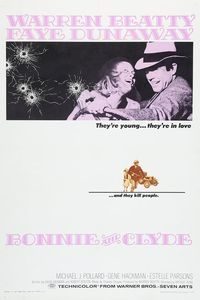
    (On Cable TV, January 2018) There’s no denying that Bonnie and Clyde still carries a strong mystique even today. It’s a reference that pops up every single time there’s a man-and-woman criminal team. It’s also a film that showed very clearly the state of Hollywood by the end of the sixties, sufficiently emboldened by the end of the Hays Code to start showing blood and gore in big-budget entertainment. I can’t quite picture how revolutionary or upsetting the film must have been at the time, with elaborately constructed scene in which people are shot in the head by criminals portrayed as heroes. Such things are, for better or for worse, far more common these days and so Bonnie and Clyde is approached differently today without the element of shock. Personal preferences certainly come into play—I had a surprisingly negative reaction to the film myself: being generally unreceptive to the stereotype of the heroic outlaw, I was unable to empathize much with the murdering anti-heroes. (I’m also Canadian, if that helps: “Peace, order and good government”)  The film does have its qualities—Warren Beatty is at the top of his young roguish persona here, and let’s not forget Faye Dunaway’s presence either. Screen legends such as Gene Hackman and Gene Wilder also pop up in small roles, although modern viewers may be disappointed at their ineffectual characters or small roles. The infamous ending remains upsetting. Bonnie and Clyde, taken on its own fifty years later, is a great deal less special than it must have been. Despite remaining a pivotal film in Hollywood history, I’m not sure that it has aged all that well.

  • Network (1976)

    Network (1976)

    (On Cable TV, November 2016) I’ll be the first to admit that the biggest problem in watching Network forty years later is being unable to distinguish between what’s a portrait of the media landscape circa 1976 and what we’ve grown accustomed to in 2016. (And, wow, has 2016 broken through the bottom of the barrel in terms of public discourse.) While the visual representation of how a TV network operated in the mid-1970s has now acquired a certain fascination, much of the context surrounding the film is now difficult to pin down. What’s more timeless is the quality of the script by screenwriting legend Paddy Chayefsky, which sounds literate and clever and off-beat at once—there’s a subplot in particular about an affair between an ambitious young woman and a much older man that plays with a mixture of world-weariness and fourth-wall leaning. The rest of the film has other delights to offer, from impassioned populist speeches about “not taking it any more” that feels truer than ever in 2016, along with a provocative counter-speech about “meddling with the primal forces of nature”. I mean, just admire this line, which would never be featured in a modern blockbuster: “There is only one holistic system of systems, one vast and immane, interwoven, interacting, multivariate, multinational dominion of dollars.” Great performances abound from actors such as Faye Dunaway (completely unlikable), William Holden and Peter Finch, along with remarkable appearance by Ned Beatty and Robert Duvall. Watching Network, it’s clear that the fabric on which it is painted has changed in ways it predicted. What I’m wondering is where we’ll ever see something as prophetic and provocative about our own times.