Franco Zeffirelli

  • Romeo and Juliet (1968)

    Romeo and Juliet (1968)

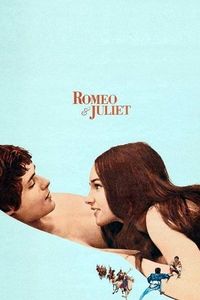
    (Second Viewing, YouTube Streaming, August 2021) I last saw Franco Zeffirelli’s Romeo and Juliet in high school in the mid-1990s, and by that, I mean in high school: it was a teacher’s best bet for teaching the Shakespeare play to a bunch of overwhelmingly Francophone teenagers in a mandatory English course, and it has stuck in my mind since then as a mostly educational film. A second middle-aged viewing doesn’t really change my mind: if you want a basic version of the play in film form, this is it. It blends an old play with a now-old cinematographic style to produce something that feels very much like a didactic presentation. (Lurhman’s vastly more dynamic Romeo + Juliet came didn’t even exist when I was shown the Zeffirelli version in class.)  What does play a little better is the banter between Romeo and his group of friends — shot with a more mobile camera and featuring the play’s best action sequences, it’s the only part of the film that rises above simply showing the play on-screen. Considering that my brain doesn’t cope very well with Shakespearian dialogue, I find myself both underwhelmed and yet satisfied by the Zeffirelli Romeo and Juliet: It’s exactly what it wants to be in presenting the play on-screen without wilder expressionistic takes. I almost expect it to be shown to the next generation of high-school students.
  • The Taming of the Shrew (1967)

    The Taming of the Shrew (1967)

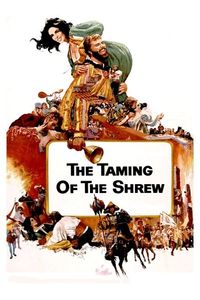
    (On Cable TV, August 2021) I’m reliably not the best audience for Shakespeare movie adaptations, and The Taming of the Shrew is an even rockier prospect given its theme of female subjugation (although the more you look, the less this stays true). But there are a few good times to be had in the 1968 Franco Zeffirelli adaptation of it, largely because it happens to feature Elizabeth Taylor and Richard Burton in the lead roles. At the time, both were the best-known couple on the planet: both exceptional actors, having begun their relationship in scandalous circumstances and often playing opposite each other in films. In here, Burton plays an uncultured lord who comes to town and sets off to tame the headstrong woman played by Taylor. Perhaps the best moments of the film are those early ones when we see the extent of her uncontrollable nature, furiously berating those around her and throwing things. Despite the doubly-dated nature of a Shakespearian play executed in mid-1960s style, there’s an unnerving contemporary quality to the loutish discourse among the male characters as they discuss their designs on the female characters. It builds up to a conclusion that plays ironically, with a speech on submissiveness undermined by a dramatic exit and a chase. Director Zeffirelli keeps things generally accessible for modern audiences, but it’s really Burton and Taylor (plus Michael York in a supporting role) who get our interest.

  • The Champ (1979)

    The Champ (1979)

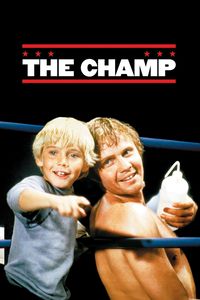
    (In French, On Cable TV, June 2020) An all-time weepie heavyweight, The Champ is director Franco Zeffirelli’s melodramatic remake of the already overdramatic 1930s Oscar-winning classic, except fine-tuned to make everyone cry by the end of the film. (No, seriously—The Champ has even been used in clinical settings to prove that it’s “the saddest movie in the world”) if you’ve seen the original, you will find that Zeffirelli has added very little other than sound and colour cinematography—he’s seemingly content to run through the same motions with even more melodrama. Jon Voight stars at his puffiest as the titular champ, while Faye Dunaway preens as his ex-wife, although it’s young Ricky Schroder who becomes the centre of attention as the boy who clearly doesn’t understand the tragedy unfolding around (and about) him. The Champ isn’t particularly good if looked at dispassionately—it’s deliberately engineered to pull at heartstrings and is absolutely shameless about the way it goes about it. The question then becomes—are you able to look at it dispassionately? Because it will use every trick in the book to prevent it.

  • Endless Love (1981)

    Endless Love (1981)

    (In French, On Cable TV, July 2019) Considering that an endless loop of “Endless Love” is the soundtrack of my nightmares, I really couldn’t wait until Endless Love (the movie) had run its course. Taking teenage romance to an obnoxious melodramatic intensity seldom seen elsewhere in fiction, this film features an obsessed male lead taking wilder and more dangerous steps to be with a particular girl, with devastating consequences. This is a film with several significant problems, but the biggest is probably a fundamental disconnect between its romantic and thriller elements. There’s an attempt her to recast a dangerously obsessive protagonist as a romantic hero and it really just doesn’t work. In fact, it’s so incongruous that at some point it’s justifiable to ask pointed questions about the filmmakers themselves and whether they’re being stupid or disingenuous in shaping the film to its final form. In any other movie, having a young man lust over a girl, setting fire to her house, going to a mental institution, being seduced by her mom, killing her father, pursuing her to Vermont and fighting her brother (even in a series of accidents) would be seen as, well, an outright villain. Or most likely a dark comedy if handled by sufficiently skillful filmmakers. Here, we’re close to full-on apologia at the protagonist just being romantic, up to and including her coming back to him at the end. You don’t need to look any further to understand how weird early-1980s films could be. It sounds like a nightmare when summarized, and it doesn’t feel any better when experienced one minute at a time. Except that you then spend two hours wondering what quirk of upbringing, touch of psychopathology or outright misanthropy from director Franco Zeffirelli would lead to such a badly ill-advised film. It’s this close to self-parody as it is that I wouldn’t mind someone actually taking one step further and making an actual parody out of it. Maybe they can even get a cameo from Tom Cruise, who here appears for the first time in a small but pivotal role.