![La mariée était en noir [The Bride Wore Black] (1968)](https://www.christian-sauve.com/wp-content/uploads//la-mariee-etait-en-noir-1968.jpg)
La mariée était en noir [The Bride Wore Black] (1968)
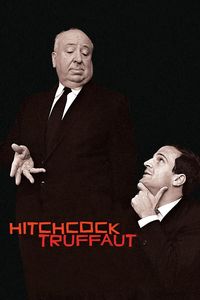
(On Cable TV, January 2021) The very strong Hitchcock echoes reflected in François Truffaut’s La mariée était en noir are almost inevitable, knowing the strong friendship between the two directors that started when Truffaut spent days interviewing Hitchcock for a book on film criticism (as detailed in Hitchcock/Truffaut). It stood to reason that Truffaut, easily one of the most American-friendly of the Nouvelle Vague directors, would try his hand at an homage sooner or later. The result is… average. To be fair, there’s quite a bit of suspense and curiosity in the film’s first few moments, as a woman dressed in black and white goes around seducing and killing men. What is the reason for her murderous rampage? Is she going to kill every man she meets? Truffaut gradually reveals the truth midway through, but the film steadily loses steam as it goes on: while we understand why, the repetitious nature of her murders gets less interesting—while the film picks up some steam in time for the final kill, the film feels too long by a quarter-hour at 107 minutes. Truffaut was reportedly very disappointed in the results, as clashes with his cinematographer (working in colour for the first time) led to challenges in making the film. What does work well, on the other hand, is Bernard Herrmann’s musical score, clearly lending some explicit Hitchockian flavour to the result. La mariée était en noir works best in small segments — the premise is on very shaky grounds, but the execution has its moments and clearly prefigures the vengeful bride sub-subgenre. It’s essential viewing for anyone with an interest in Truffaut, Hitchcock and their friendship, as well as being of some relevance to those interested in French suspense cinema.

![Le dernier métro [The Last Metro] (1980)](https://www.christian-sauve.com/wp-content/uploads//the-last-metro-1980.jpg)
![La nuit américaine [Day for Night] (1973)](https://www.christian-sauve.com/wp-content/uploads//la-nuit-americaine-day-for-night-1973.jpg)
![Les 400 coups [The 400 Blows aka Wild Oats] (1959)](https://www.christian-sauve.com/wp-content/uploads//the-400-blows-1959.jpg)
