Frank Tashlin

  • The Alphabet Murders (1965)

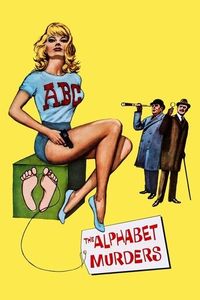
    The Alphabet Murders (1965)

    (On Cable TV, September 2021) Tony Randall is best remembered for strait-laced comedic foil roles, but as a leading man he could (and did) break out of that persona in various ways. 7 Faces of Dr. Lao is a case in point, but there’s a similar case to be made about The Alphabet Murders, which stars Randall in an overtly parodic take on Hercules Poirot, spouting bon mots and doing a bit of slapstick in service of a comedy that stops just short of cartoonish gags. Loosely adapted from Agatha Christie (who reportedly had issues with early version of the script), it transforms Poirot into a brilliant bumbler à la Clouzot, which was a hot property at the time. Randall’s French accent is far more tolerable, though. What’s more hit-and-miss is the comedy: It starts firmly in metafictional territory with Tony Randall introducing himself to the camera as Poirot, but the rest of the film is more hit-or-miss, sometime absurd and sometimes not. Director Frank Tashlin (who also led Randall in the much funnier Will Success Spoil Rock Hunter?) does try his best to keep things interesting, but he can’t quite patch up a lacklustre script. I’m not sure Randall’s the best choice either — he does better than you could expect from many of his other films, but to be blunt about it, Peter Ustinov was almost funnier than Randall in his turn in Murder on the Orient Express. Still, The Alphabet Murders isn’t a bad watch, especially for murder mystery fans… even if it doesn’t quite nail the absurdity of what could have been.
  • The Glass Bottom Boat (1966)

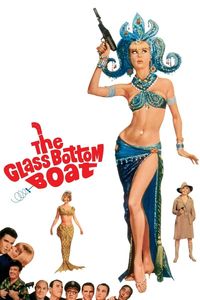
    The Glass Bottom Boat (1966)

    (On Cable TV, January 2021) It’s not always a bad thing for a film to be dated. You can very precisely identify The Glass Bottom Boat as a mid-1960s film in at least three ways. Obviously, there’s the technological element, as it’s a comedy set around the world of space exploration, specifically revolving around the iconography of the Gemini capsules that preceded the Apollo program. You could also pinpoint it thanks to the presence of Doris Day as a gaffe-prone PR person who attracts the eye of a CEO played by square-jawed Rod Taylor—Day is clearly in her later-stage persona here, too old to play ingenue like she did in the 1950s but still of a stature that would justify a star vehicle like this, along with Taylor, who was at the height of his popularity as a leading man. (As it turns out, The Glass Bottom Boat was Day’s last big box-office hit.)  Finally, there’s the naughty-nice tone of the romantic comedy, a bit freer than the Hays Code standard but not quite as vulgar as what we’d see later on in New Hollywood movies. Mix in the Cold War comedy of a military/industrial establishment and director Frank Tashlin’s cartoonish style and you’ve got something that could only have been created in the mid-sixties. It has definitely aged: the soundtrack highlights every joke twice, Day plays a character that would be embarrassing to later generations, and the blunt broad humour goes better with a big dose of period atmosphere. But it’s not that bad if you’re willing to play along. Day was a gifted comedienne no matter the circumstances, and the goofier moments (including a portrayal of an automated kitchen—complete with an antagonistic cleaning robot) are straight out of space-age silliness. Comedy notables such as Robert Vaughn, Dom DeLuise, and Dick Martin appear in various small roles, adding to the period feel. (You will probably hear Vaughn’s split-second appearance more than you’ll see it.)  It turns out that a dated film gets a few additional viewing bonuses along the way—it’s not what we’d expect to see today, but it’s a welcome throwback to an entirely different time. So it is with The Glass Bottom Boat, which has aged into a unique curio that sometimes tells us more about the 1960s than the respectable films of the time, or any attempt to re-create that period.

  • Will Success Spoil Rock Hunter? (1957)

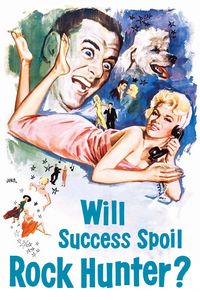
    Will Success Spoil Rock Hunter? (1957)

    (On TV, July 2020) We often think of 1950s America as this unthinking haven of conformity, and that is nonsense—people back there were as smart as today, as skeptical as today, and as intent on satirizing the excesses of the day. From the get-go, with a scene in which Tony Randall addresses the audience and introduces the film (after a commercial break), Will Success Spoil Rock Hunter? is meant to be a satire of everything bothering the screenwriters about the then-modern era, and most specifically the burgeoning advertising industry. Midway through the film, it even stops its story for another interjection directly from Randall to the audience, this time lampooning the way audiences were increasingly turning to TV rather than the movies. It also, significantly, takes aim at materialism and corporate success at a time when such values were more likely to be championed, in Hollywood or elsewhere. As a social satire, Will Success Spoil Rock Hunter? is often hilarious—although some of the references can need a handbook of the era to be understandable—I mean, it’s amusing to have a character read Peyton Place in the bathroom, or see Groucho Marx in a long-awaited cameo. Randall is quite good as the lead, although the film is perhaps equally notable for being Jayne Mansfield’s definitive film, and showcasing why she was such a bombshell (even though her appeal may not be as obvious if you’re not into vapidly-portrayed blondes à la Monroe). Seeing an older Joan Blondell in a supporting role is one of those jokes you may need a handbook for. Still, the film remains quite funny—lines like “I’ll be a writer’s subplot!” have a lovely metatextual quality decades before spoof comedies. They help the film feel substantially more modern than it is—even Frank Tashlin’s direction gets into it with imaginary sequences that weren’t the norm at the time. Will Success Spoil Rock Hunter? does suffer a bit from a lack of a clear climax, and a rather flat ending, although some of it does play into the film’s comedy. It’s an utterly fascinating film for those who would like another look at the 1950s—I put it up there with A Face in the Crowd and Sweet Smell of Success (both also from 1957, as is Silk Stockings and its “Stereophonic Sound” rant-number) as an informal cynical trilogy showing that some people in the 1950s knew exactly what the decade was about.