Fred Astaire

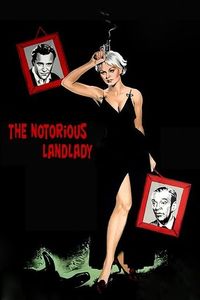
  • The Notorious Landlady (1962)

    The Notorious Landlady (1962)

    (On Cable TV, August 2021) Sometimes, a good cast is all you really need. While the script for The Notorious Landlady is decent enough, it’s the presence of Kim Novak, Jack Lemmon and Fred Astaire (in a non-dancing, non-singing role) that really makes the film a joy to watch. It begins as an American diplomat newly arrived in London goes flat-hunting and finds a rather nice place at a good price — although there’s clearly something off in the way the neighbours treat the landlady. With Novak as the landlady, Lemmon as the diplomat and Astaire as the diplomat’s superior, the cast is well-aligned to the script’s blend of comedy with just a bit of suspense: what has the landlady done, and is it likely to happen again? Disappointing shot in black-and-white at a time when that kind of light-hearted film had no reason not to be in colour (indeed, director Richard Quine’s films prior and following this one were both comedies shot in colour), The Notorious Landlady does make the most out of its cast playing roles well-suited to them. Lemmon is instantly likable as a do-gooder diplomat, while Novak is clearly not the monster that her neighbours whisper about, while Astaire is funny on his own as a senior official stuck with a very visible situation he doesn’t want. (He has the film’s best quote, one that I can see myself using at the office: “Gridley, you will learn that the higher your position, the more mistakes you’re allowed. In fact, if you make enough of them, it’s considered your style.”) The script, co-written by future-comedy-superstar director Blake Edwards, blends a fair amount of comedy, romance and criminal suspense. The Notorious Landlady is a solid film, not something that ranks as a classic, but something fit to be appreciated as a decent unassuming studio product, aimed to entertain. (I suspect that the film would be more widely appreciated had it been shot in colour, but that’s something else.)
  • Yolanda and the Thief (1945)

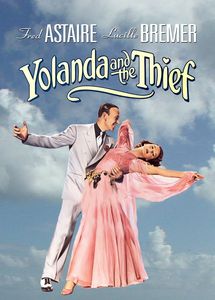
    Yolanda and the Thief (1945)

    (On Cable TV, February 2021) The farther down I get in Fred Astaire’s filmography, the more I understand why they’re not his more popular films. On paper, there should be plenty to like about Yolanda and the Thief:  It’s a 1940s colour musical featuring Astaire as a con artist making his way to a fictional Latin American country and hatching a scheme to seduce an heiress. Alas, the limits of the film become more apparent once you realize that he intends to do so by posing as her guardian angel. Such shaky narrative hooks may have worked with a more interesting execution, but they just compound the problem that Yolanda and the Thief is one of the least interesting Astaire films I’ve seen so far. Despite the gorgeous (and self-conscious) colour cinematography and expansive direction from Vincente Minelli, the film itself doesn’t seem to have the light touch and humour of other Astaire films — it’s weighed down by its own ambitious dance numbers, ironically leaving less for Astaire himself to do. Considering that Astaire is his single best asset, it almost leaves him stranded in the middle of his own film. He’s usually not bad playing a cad, but an outright thief preying upon the devout may be a step too far. It doesn’t help that Lucille Bremer is bland in the lead role—I usually like redheads a lot, but she doesn’t do much here as she should—perhaps illustrating the lack of that elusive “star quality” we all talk about. (Bremer retired from Hollywood shortly thereafter.)  Yolanda and the Thief is at its most remarkable when it delves into surreal fantasy sequences, most notably a long ballet sequence that anticipates similar film-stopping flights of fancy as The Red Shoes or An American in Paris a few years later. It’s something to see all right, but is it an Astaire kind of film? The substantially lower number of dance sequences doesn’t help, nor does the substantially less humorous narrative. But, well, it’s still another Astaire film — and one of the weirdest on record. It’s worth seeing, but don’t be in a hurry.

  • Second Chorus (1940)

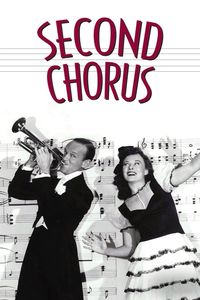
    Second Chorus (1940)

    (On TV, February 2021) The more I dig into Fred Astaire’s filmography, the more I understand why some of his movies aren’t as popular as other ones. While Astaire himself is never less than funny and amazing, the rest of the movies can’t always claim as much. Second Chorus still gets some airplay these days, but one suspects that its status as a public domain film has much to do with the circulation of its low-quality prints. It’s also a film that curiously de-emphasizes Astaire’s skills as a dancer. Instead, the premise has us believing in Astaire (then forty-one) as a twentysomething trumpeter who voluntarily flunks his courses in order to remain with the college band. His friendly competition with another trumpeter kicks into high gear when they meet a young woman and convince her to work for them as a manager, in turn causing no less than bandleader Artie Shaw to recruit her. The rest are comic shenanigans occasionally making good use of Astaire’s skills — most notably in a duet with co-star Paulette Goddard and a climactic number in which tap-dancing is combined with orchestra conducting. More of a band movie than an Astaire movie (especially thanks to Artie Shaw’s contribution), Second Chorus is pleasant to watch but hardly in Astaire’s top half. Goddard herself is far from being the best dancer Astaire’s been paired with (although she does quite well in their sole duet, the one-shot “I Ain’t Hep to That Step but I’ll Dig It”), but she’s among the cutest. Astaire does get a few more good comic scenes — including “Kamarinskaya,” in which he dresses up as a Russian for some step-dancing — but there’s a sense that Second Chorus wastes the considerable talent he brings to it. The result is fine, but just fine: there’s little in the way of pyrotechnics that he brought even to his most average efforts. But that’s what I get for watching Astaire movies in rough descending order of popularity.

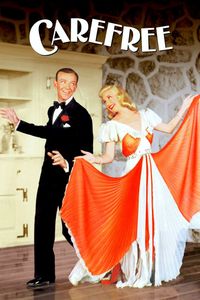
  • Carefree (1938)

    Carefree (1938)

    (On Cable TV, January 2021) As the eighth of the ten Astaire/Rogers movies, Carefree is clearly not in the same class as its predecessors. More comic than musical, it features Astaire as a psychiatrist who falls for one of his hypnotized patients. Now, a near-constant in Astaire’s filmography is a dodgy concept of romantic consent: it’s not a reflection of his personal values (Astaire is one of the few Classic Hollywood stars with a mostly spotless romantic history) as much of the social mores of the time where males were supposed to be persistent. Still, even by those historical standards, Carefree is more problematic than most: not only is there the breach of professional ethics in having Astaire date a patient (an engaged one, no less!), but the hypnosis plotting device introduces all sorts of further issues—although it should be noted that many of the comic complications stem from Astaire’s character inducing feelings of hatred in his patient… with dangerous consequences for him! Merely four musical numbers pepper Carefree, many of them in dream sequences: a choice that ends up placing too much emphasis on the plotting of the film rather than its musical interludes. While the film is remembered for having the first big kiss between Astaire and Rogers, there otherwise isn’t much here to watch. Astaire is a good lead, but the plot doesn’t have him in a role that allows for much dancing, and that reflects on the rest of the film. Oh, Carefree is watchable enough, and it does have its comic moments: in particular, there’s a sustained sequence in which Rogers (under hypnosis) keeps trying to break a pane glass that’s quite funny. But it’s also a disappointment, especially for seasoned fans of the pair. It feels like a second-tier film (if not a third tier one) in their shared filmography by being merely serviceable when compared to their demonstrated potential. It’s still worth a look, but only after better examples.

  • Santa Claus Is Comin’ to Town (1970)

    Santa Claus Is Comin’ to Town (1970)

    (On TV, December 2020) Not being a native Anglophone, I find myself with curious blind spots when it comes to “childhood classics that everyone knows.” I’m making an effort to catch up on some of it, though, and Santa Claus Is Comin’ to Town popped up on the list given the TV Channel December schedules. It did immediately remind me of Rudolph the Red-Nosed Reindeer in that it, too, is a stop-motion short animation film with a delightfully tactile feel, as the felt-made characters are moved around with physical presence. I had a big smile during the first few moments, as an immediately recognizable animated Fred Astaire (also voiced by him) plays the narrator of the piece. Running at an hour-long length, it features a fair amount of plot, certainly more than the 30-minute specials: the film is an origin story for Santa Claus, with plenty of original material to go by. It’s a fun special, and I can certainly understand how it’s now been broadcast for fifty years.

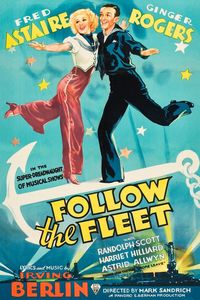
  • Follow the Fleet (1936)

    Follow the Fleet (1936)

    (On Cable TV, November 2020) I’m watching Fred Astaire films in rough decreasing order of acknowledged importance, and it’s not a bad approach—his persona is best defined by his most popular films, and once you start plumbing into the lesser-remembers ones, you can hit some weird variations on his usual characters. I’m not going to forget a drunken Astaire smashing a bar in The Sky’s The Limit, but there’s something almost equally strange in seeing him play what’s supposed to be a rough-hewn Navy sailor in Follow the Fleet: Astaire’s persona was pure ballroom, not boiler room (although, yes, I also remember that scene in Shall We Dance), and it’s a very curious choice to structure a film (a peacetime film, no less!) around him being a swabbie at the service of Uncle Sam. Somehow, Ginger Rogers makes her way into the plot as a gifted hostess employed in a San Francisco ballroom -at least until Astaire barges in and gets her fired. There’s a B-romance as well, but we’re here for Astaire and Rogers and, fortunately, Follow the Fleet delivers on the dance front: There’s a ballroom duet sequence early in the film to reassure us that they’ve still got it. Later on, the action moves to ship decks in time for an Astaire solo tap number with sailors surrounding him. The third act has the big guns: A piano solo from Astaire, a deliciously funny duet (“I’m Putting All My Eggs in One Basket”) in which Astaire and Rogers intentionally dance out of step and then—as a big finale—an anthology-worthy return to pure class in “Let’s Face the Music in Dance” where we once again have a glamorous version of the duo doing their best in front of a very stylized art-deco backdrop. Nonetheless, Follow the Fleet isn’t quite better than the sum of its parts: while there are some great moments, the film as a whole seems less funny, less tight (at 110 minutes, many of them dedicated to a lacklustre narrative) and less purely enjoyable than other 1930s films featuring the duo. I still liked it based on its individual numbers, but I also liked their other films of the decade better—most notably Top Hat, The Gay Divorcee, Swing Time and Shall We Dance. But even a substandard Astaire still has moves impossible to duplicate by anyone but Astaire: let’s treasure what we’ve got.

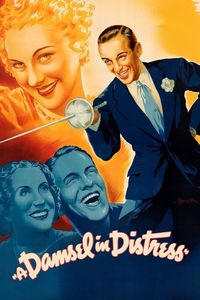
  • A Damsel in Distress (1937)

    A Damsel in Distress (1937)

    (On Cable TV, October 2020) One of the lesser Fred Astaire musicals of the 1930s, A Damsel in Distress takes us to England, where Astaire plays (as usual) a renowned entertainer trying to find love. He eventually finds it in the character of an English lady, although not without the complications that usually follow such narratives. The cast does offer some interest, with Joan Fontaine at the female lead, and comic characters played by none other than George Burns and Gracie Allen, the later being progressively funnier as a squeaky-voiced airhead. There’s the usual number and variety of dance numbers from Astaire, and while there’s nothing truly anthology-worthy here, two or three sequences still work really well: “Stiff Upper Lip” leads to a showpiece funhouse dance number, while “Nice Work If You Can Get It” leads to an Astaire drum solo played with a variety of appendages. Nearly everything about the film is perfunctory by Astaire’s high standards—Fontaine is not a particularly good dancer, the comedy is slight (aside from Burns and Allen) and the premise is a bit dull compared to other movies of the era. Those who keep a wearied eye on Astaire’s romantic persona (boiled down to “no means try again later”) will note an explicit statement of the persistence credo late in the film, where a character calls out Astaire for being too passive and to Go Get It. Modern audiences will groan at that moment—what works for Astaire would mean a restraining order and social media denunciations in real life twenty-first century. Still, A Damsel in Distress itself is not too bad, even though it is frankly one of the more easily disposable of Astaire’s black-and-white films.

  • The Story of Vernon and Irene Castle (1939)

    The Story of Vernon and Irene Castle (1939)

    (On DVD, August 2020) While it’s always great to see another new-to-me Fred Astaire film, The Story of Vernon and Irene Castle does lead me once again (but not as strongly as in The Barkleys of Broadway) to state that having Astaire play a historical character is a waste—Astaire is Astaire no matter what his character’s name is. Still, this loosely adapted biography of the title characters does let Astaire do a few things—being in a loving relationship from the get-go with frequent screen partner Ginger Rogers, for one (none of that obsessively pursuing the girl until she says yes), playing in a more realistic film and—gulp—dying at the end of the movie. That last particularity isn’t as much of a downer for two reasons: for one thing, it’s historical fact. For another, Astaire is Astaire—he still had nineteen subsequent musicals to go, and it’s not a last-minute death in a minor film that would depress viewers. The lack of characterization may actually help in softening the blow here. Still, it does highlight that of all of Astaire’s musicals (and more specifically the ten Astaire/Rogers collaboration), The Story of Vernon and Irene Castle is a more grounded film, and a duller one as well: absent the genial comedy of Astaire’s other musicals, it feels longer despite the touches of humour and dance numbers. Said dance numbers owe more to the Castles than to Astaire, meaning that they’re more restrained and not quite with the razzle-dazzle of what Astaire pulled off in previous films. While it must have felt natural to cast a great dancing duo to play the roles of famous ballroom dancers, this film stretches the limits of Astaire’s dancing persona as far as it could go in that direction. Elements of The Story of Vernon and Irene Castle would pop up in later movies (having Astaire as a pilot in The Sky’s the Limit, having Rogers and Astaire as a real-life couple in The Barkleys of Broadway), but it’s a good thing that Astaire never once headed back in that direction. I still liked the movie (it’s really hard to dislike an Astaire film), but I would rank it firmly in the actor’s lower tier.

  • The Barkleys of Broadway (1949)

    The Barkleys of Broadway (1949)

    (On Cable TV, July 2020) Fred Astaire and Ginger Rogers are reunited for the tenth and final time in The Barkleys of Broadway, playing a married Broadway couple whose bickering gets out of hand, leading to strife and separation. The film’s production history tells us that Judy Garland was first slated to play the female lead but had to bow out and was replaced by Rogers, thus providing an interesting ten-year-later epilogue to the Astaire/Rogers professional duo. In most ways, it’s a classic MGM Freed production from the good years of the unit—where the focus on Broadway presenters means that there are plenty of diegetic occasions to present song and dance numbers. We shouldn’t underestimate the fun of seeing Oscar Levant in a role tailored to fit both his musical talents (as he plays a Tarkovsky piano concerto on-screen, hands flying on the keys) and his comic persona with a penchant for acerbic bon mots. Special effects make the “Shows with Wings on” sequence worth a look, as one of Astaire’s later-career solo numbers with a gimmick. Fittingly enough for an Astaire/Rogers finale, there is some great duet dancing here. Alas, as with many musicals, the balance of comedy to drama is not ideal in the third act—it’s not as if the resolution is in doubt. Even as a rather average Astaire/Rogers film, The Barkleys of Broadway is a lot of fun to watch for musical comedy fans. It also heralds, in its own way, a few spectacular years for MGM musical comedies.

  • Three Little Words (1950)

    Three Little Words (1950)

    (On Cable TV, July 2020) The mini wave of composer biopics meets Fred Astaire in Three Little Words, which goes back to the Tinpan Alley era to present a biography of songwriting team Kalmar and Ruby. Astaire (as Kalmar) stars with Red Skelton (as Ruby) and the always-beautiful Vera-Ellen as Kalmar’s wife in what’s probably one of the healthiest on-screen romantic relationships in Astaire’s filmography. (There’s no creeping insistence in this specific romance, although the 22-year age gap remains significant.) Also notable is that Astaire does a lot more singing than dancing here—this is a biopic that’s not quite built to accommodate his usual dance performances. There’s some built-in drama (which wasn’t always the case in other composer biographies), as the two partners argue. While Three Little Words is adapted from real historical figures (ones that Astaire even knew personally), it’s difficult to see anyone but Astaire and Skelton rather than their characters. But that’s fine—both actors have a much better chemistry than you could expect from their specific comic styles, and it helps that Skelton keeps his wilder comic instincts under control here. As composer biopics go, historians tell us that Three Little Words is considered one of the most accurate depictions of their subject—although with plenty of Hollywood enhancements. But while not a bad jukebox musical in itself, it’s a bit of a disappointing entry in the Astaire filmography: it’s an early example of him trying to stretch beyond his dancing abilities (something that would become more frequent as he aged) and there’s nothing wrong with that, but it means that Three Little Words should be assessed more along the lines of a composer biopic (where it is, in fact, funnier and more charming than most) than an Astair musical (which it is not).

  • You Were Never Lovelier (1942)

    You Were Never Lovelier (1942)

    (On Cable TV, July 2020) As far as Fred Astaire movies go, You Were Never Lovelier is roughly in the unremarkable middle. The humdrum plot sees Astaire as an American expatriate in Rio de Janeiro being pressured into courting a businessman’s daughter. It’s not bad, but its origin in an earlier Spanish-language film does seem to limit its nature: rather than something custom-made for Astaire’s strengths, we have something that approximates other better Astaire films without quite giving him something particularly distinctive to do. Many (most?) of the dance sequences appear to be in the same ballroom, for instance—it’s a nice set indeed, but it does contribute to the film’s featurelessness. Fortunately, one distinction is the gorgeous Rita Hayworth, holding her own as Astaire’s dance partner and looking substantially sexier than many of his other co-stars. Astaire dances like the movie legend he is, with the requisite solo number and the courtship duet. The Latin American location adds a little bit to the result. The love story, built on false pretences, is also very familiar (especially to modern audiences having overdosed on “seducing for profit, surprised by honest love” tropes)—although—and I realize how crazy it sounds—there may be a bit too much plot to support it. Still, You Were Never Lovelier is fun viewing: its unremarkable nature is only true if you’re used to Astaire’s dancing, which remains astonishing on its own terms.

  • Dancing Lady (1933)

    Dancing Lady (1933)

    (On Cable TV, June 2020) While Dancing Lady is technically the first of Fred Astaire’s movie musicals, his fans should keep in mind that it took him a few movies’ worth of scene-stealing appearances before getting his first lead role, and so this film sees him relegated to a climactic showcase number, as himself, dancing with Joan Crawford. Not that he’s the only one making early appearances here that now overshadow the leads of the film—An early iteration of The Three Stooges also shows up, plus later star Nelson Eddy, making this film’s supporting cast far more remarkable than nominal leads Franchot Tone and Clark Gable. (I would add “…and Crawford” except that she looks absolutely spectacular here—although not a dancer of Astaire’s calibre.) As an early Pre-Code musical of the early sound era, Dancing Lady is still quite rough around the edges: even the narrative doesn’t go too far away from its Broadway inspiration by featuring a making of a musical as its narrative foundation. It feels a bit short at 92 minutes, but that’s probably because we’re expecting more Astaire. While Dancing Lady is perfectly watchable, it’s probably more of interest to Astaire fans and cinephiles tracking the evolution of the early musicals… although the Pre-Code attitude does make it more interesting than most.

    (Second Viewing, On Cable TV, October 2021) It’s very amusing to see Fred Astaire billed in a very secondary role in Dancing Lady—five years later, he would have headlined such a title and made it much better by sole virtue of integrating dancing with comedy acting. But this was his screen debut, and so Clark Gable gets the leading (non-dancing) role as a Broadway impresario trying to put on a show despite romantic complications with his leading lady (Joan Crawford) and her rich boyfriend. Much of the plot is obvious and paper-thin, rotely going over tropes of Broadway musicals without much flair nor energy. It’s seriously dull in much of its opening two-thirds—only opening up when the show gets going in the last act. Astaire fans will note that he’s playing himself (a Broadway dancer) in the film, all the way to being credited in the film’s glimpse of the playbill. The other noteworthy cameo is having the Three Stooges in a walk-on comic role. Crawford is rather impressive when going toe-to-toe with Astaire in the film’s best moments, while Gable doesn’t deviate much from his persona as the romantic non-singing non-dancing lead, letting Astaire take the leading role whenever the film switches over to the Berkeleyesque dancing sequences. It’s a good thing that Dancing Lady gets a late surge of energy, dancing and singing, because what comes before is mildly pleasant at best, and repetitive of better films at worst.

  • The Belle of New York (1952)

    The Belle of New York (1952)

    (On Cable TV, April 2020) If you run down the list of Fred Astaire musicals, The Belle of New York runs the distinction of being one of the least distinctive ones. Here, Astaire plays the playboy who falls for the holier-than-thou Vera-Ellen against a stylish backdrop of turn-of-the-century Manhattan and a fantastic illustration of love as making characters weightless. Despite the whimsical conceit, the film itself is slightly too staid to be wholly enjoyable. This doesn’t mean it’s a failure, though—compared to a few other lower-end Astaire musicals, The Belle of New York certainly has its attractions. It’s not churlish to note that it benefits from being shot in colour, and that Vera-Ellen, despite her age difference, is a better-than-average dance partner for Astaire (her “Naughty but Nice” solo dressing room number is nothing short of whew!) The film also demonstrates Astaire’s career-long intent to dance at the edge of special effects technology—here, a lot of green-screen work may not have aged particularly well (part of his face disappears in one shot), but still has quite a bit of charm. Then there’s also character actress Alice Pearce being very funny (and rather cute) in a comic relief role that even includes a brief song. Despite those elements taking The Belle of New York at least to the mid-tier, there is a sense that the film is spinning its wheels. The songs are hardly memorable, and don’t quite bolster the numerous dance numbers. From a plot perspective, the film hews a bit too close to the least admirable aspects of Astaire’s persistent-suitor screen persona, even if it does play a bit with deconstructing that archetype. I still liked it, but Astaire completists are definitely advised to keep The Belle of New York for later in their explorations of his filmography.

  • The Sky’s the Limit (1943)

    The Sky’s the Limit (1943)

    (On Cable TV, April 2020) You won’t find The Sky’s the Limit ranked very high on any list of Fred Astaire’s films, but fans may find it interesting to see him playing something slightly different than usual. The most distinctive aspect of it is that the film in unabashed wartime propaganda, and that Astaire plays a military pilot! Not a very dutiful one, mind you—he escapes his own morale-boosting tour to go have fun in New York City, meets a girl and the film gets back on the tracks of Astaire’s usual romantic comedies. While the songs and dances are sparser than usual, Astaire’s character is written, as usual, as a persistent stalker when it comes to pursuing girls. To make up for fewer musical numbers, the romance is more front-and-centre than usual, even if the match between Astaire and Joan Leslie (both of them playing characters with their first names) doesn’t quite gel. The film gets better during the pair’s first ta-dancing duet, but eventually the romance hits its usual third-act wall. This temporary break-up leads to the best sequence in the film—and one of the highlights in any serious Astaire anthology: the “One for My Baby (And One More for the Road)” number, in which Astaire’s drunk character lashes out at his frustrations at a hotel bar by tap-dancing and kicking glasses and bottles at the mirrored bar wall. It’s a shocking, violent, and completely off-persona sequence for Astaire at the time, even though it portends Astaire’s wide-ranging post-musical acting career. The film could have ended on that note, but there are still a few minutes for a wholly unsatisfying happy ending that feels trite considering the rest of the film. The Sky’s the Limit is, to be sure, an interesting film for Astaire fans asked to accept him as something else in a film that doesn’t particularly use his talents very well in service of wartime propaganda. But it’s not a particularly good film. For fans only, and even then—steel yourself the moment you see Astaire acting drunk.

  • Roberta (1935)

    Roberta (1935)

    (On Cable TV, April 2020) In assessing Roberta, it’s useful to be reminded that even if this was the third Fred Astaire and Ginger Rogers film, the pair wasn’t nearly as famous as they’d become the next year with the success of Top Hat. Their roles in the film are important but not dominant: There’s also Randolph Scott and Irene Dunn having nearly as much screentime as the busy plot tries to have two romances going at once. The disappointment continues with the relatively few musical numbers and their impact: While Roberta is professionally produced, the songs aren’t that memorable (although I do like “I won’t dance”) and neither is the choreography. While Astaire and Hermes Pan were getting up to speed, we’re still far away (well, aside from the hand-piano bit) from the high-concept sequences of Astaire films to come. If you’re a fan of those later movies, Roberta feels familiar—not terribly special, but comforting nonetheless. The plot itself is a bit dull, and is largely led by Scott and Dunne—something about an American ex-football player (Scott) inheriting a fashion house in Paris while his friend (Astaire) plays in a band. There are a few good barbs, but the plot gets shoved away quickly when Astaire and Ginger get their dancing shoes and start tap-dancing away: they’re always fun even when Roberta is determined not to give them too much time. But that would quickly change in the following months, and give us the film that ensured their long-lived popularity.