Fred Zinnemann

  • The Search (1948)

    (On Cable TV, January 2022) There’s something amazing in the way cinema can reach across decades to make period-specific points with wide universal appeal. The issue that concerned socially-conscious director Fred Zinnemann in tackling The Search is intensely specific to the end of WW2—the plight of children separated from their parents during the war, and the efforts of allied forces to reunite families. Headed by the solid Montgomery Clift, the film uses real location shooting in Germany to present the bombed-out remains of the country as backdrop to a desperate time. Atmosphere and subject matter do what the rest of the film struggles a bit to achieve, which is to remain gripping: despite the universal interest of making sure a child is reunited with their parents, Zinnemann is often more about lofty values than cinematic interest (especially at this early state of his career—although he would almost always remain a very formal director than a stylish one). Oh, The Search remains watchable—but there’s something missing to take it where it should be. Still, it still has the ability to make us care about something that happened more than seventy years ago, and that’s wonderful in itself.

  • The Seventh Cross (1944)

    The Seventh Cross (1944)

    (On Cable TV, December 2020) There are a few good reasons to watch The Seventh Cross – It’s an early film from Academy-award-winning director Fred Zinnemann, it features Spencer Tracy and it’s the first on-screen pairing of real-life couple Hume Cronyn and Jessica Tandy (the last being 1987 science fiction family comedy Batteries Not Included). More significantly, it’s one of the very few Hollywood films to talk about Nazi concentration camps as WW2 was going on, and before the true horrors of the camps were revealed. The story has to do with seven escapees from a concentration camp trying to evade capture, despite a commandant determined to bring them all back (“on crosses,” hence the title). Our protagonist (Tracy) is the seventh, the last escapee trying to get out of Germany despite a population not sympathetic to his goals. The premise is not bad, the acting talent is remarkable, the director would go on for better things and the script has a few flourishes (notably in having the narrator being one of the first dead escapees), but I found The Seventh Cross to be surprisingly uninvolving once past the first few minutes. This may be a reflection of a contemporary view of the situation: escaping Nazis would seem, today, to be of utter urgency, leading to a suspenseful film – but it seems more intent on an examination of the human spirit than out-and-out thrills. Whatever the reason, The Seventh Cross seems more interesting than purely enjoyable or entertaining today.

  • High Noon (1952)

    High Noon (1952)

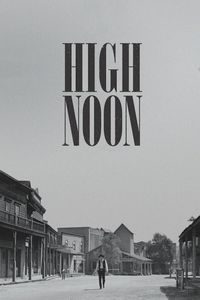
    (On TV, June 2018) There is, at first, not a lot to distinguish High Noon from countless other westerns—there’s the hero (getting married), there are villains waiting for their boss. A confrontation is coming to a small Western town, and that seems to be the extent of it. But High Noon does go farther than that—first, by taking place in near-real time, it does create more tension than a less time-compressed film, especially as our retiring hero fails to find allies in confronting the coming threat. It culminates in a classic shootout in which help comes from an unlikely place, and concludes with a highly skeptical look at some of the Western’s most cherished clichés. It helps that rock-solid Gary Cooper (looking a bit older than his prime) stars as a good man forced to take one last stand. Grace Kelly is merely fine as the newlywed bride, but Katy Jurado is more eye-catching as a source of wisdom. Keep your eyes open for smaller performances from Lloyd Bridges and Lee van Cleef. Director Fred Zinnemann keeps things stirring until the climactic shootout, and High Noon has survived admirably well even today. 

  • A Man for All Seasons (1966)

    A Man for All Seasons (1966)

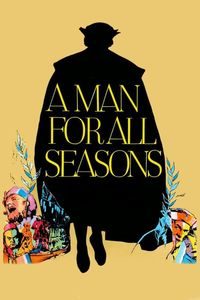
    (On Cable TV, March 2018) Holy dullness incarnate… Not all Best Picture Oscar winners are created equal, and if some are offensive and others have successfully baited the Academy for feel-good recognition, some are dull and few are duller than Fred Zinnemann’s A Man for All Seasons. An intensely specialized drama set in King Henry VIII’s time, this is nothing more than a theatre play filmed indifferently, and doomed to excruciating lengths if you’re not a fan of historical pieces made with as little flair as possible. The portrait of Sir Thomas More as a quasi-perfect person faced with a difficult choice, A Man for All Seasons is intense in costumes, religious quandaries, matter of states and despite everything it’s remarkably boring. I’m not a good public for period pieces to begin with (especially those who use old English), and this film left me colder than I would have thought possible. As with other underwhelming Oscar Winners (and there’s a long list of those), the best I can do is sigh, scratch A Man for All Seasons off the list and say that I don’t have to watch it again.