Fritz Lang

  • The Blue Gardenia (1953)

    The Blue Gardenia (1953)

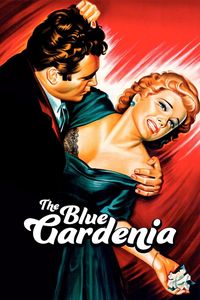
    (On Cable TV, June 2021) One of the reasons for the continued popularity of film noir decades after its heyday is how it enabled female characters to be empowered. The femme fatale was deadly, but she was an active participant in her fate — and such strong female characters weren’t always found in other genres. The Blue Gardenia may not be the ideal film to illustrate this thesis, but it does something that few other films did at the time — play with the idea of violent retribution for sexual assault while on a date. The conclusion zig-zags a bit as to the identity of the killer, but the core idea does remain the same. In many ways, the execution of The Blue Gardenia is strictly professional — director Fritz Lang knew what he was doing, and this film marked the first of three journalism-focused movies. The film’s hurried production schedule didn’t allow for much refinement, but the spirit of noir remains intact and enjoyable here through the touches of romance, investigation and drama. Raymond Burr shows up as the unrepentant womanizer who earns a fatal fire poker to the head, while Anne Baxter plays the conflicted lead who may or may not have been at the other end of that fire poker. Still, the details may be what makes The Blue Gardenia so much fun — a clear-eyed depiction of dating for young single urban women at the beginning of the 1950s that fills in what other movies wouldn’t touch. By wallowing in darkness, noir could be more reflective of the times in which it was set, and you can see the impact of this frankness in the way The Blue Gardenia is still relevant and enjoyable well into the twenty-first century.
  • Cloak and Dagger (1946)

    Cloak and Dagger (1946)

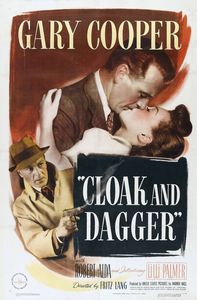
    (On TV, June 2021) In sitting down to watch Cloak and Dagger, I thought I was going to see the 1984 spy thriller (or so the DVR listing reassured me), but I ended up with the 1946 WW2 spy thriller. I’m not complaining — while I do want to see the 1980s film someday, I was only too happy to see Gary Cooper taking on the Nazis and seducing a European resistance member. Based on OSS activities during the war, Cloak and Dagger also touches on the Manhattan Project, perhaps one of the first narrative films to do so. Along the way, it almost invents the James Bond formula, what with its suave agent, world-trotting settings, serial seductions and world-threatening plot in the balance. (If parts of the film feel familiar, it’s because the ending sequence has been parodied in Top Secret!)  Directed by Fritz Lang, you can see how the film is digesting noir cinematography (with many, many sequences set at night) and bridging WW2 propaganda films with later spy thrillers (which, come to think of it, would be a fascinating link to explore). It’s not all that far away from The Third Man or the Greenfield/Lorre geopolitical thrillers of the late 1940s. While I’m not Gary Cooper’s biggest fan, he’s well suited to the role here, gradually evolving from a meek atomic scientist to a dangerous spy (one brutal death along the way) with his usual stoic demeanour. For a film I wasn’t expecting, I found quite a bit to like in Cloak and Dagger, perhaps the most intriguing being the similarities with the Bond formula.

  • Clash by Night (1952)

    Clash by Night (1952)

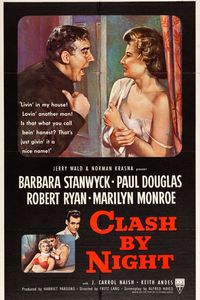
    (On Cable TV, February 2021) On paper, Clash by Night feels like a must-see film: An intense small-town drama directed by Fritz Lang, featuring a late-career performance from Barbara Stanwyck and one of the first featured turns from Marilyn Monroe? Who can resist that? Alas, the film itself is not quite as gripping. While the drama’s bubbling into melodrama can be momentarily intense, the film feels poorly paced, with numerous lulls, overdone moments and an unsatisfying conclusion. The relatively small stakes (in a small coastal town setting) don’t add much more, and you can almost feel Lang itching to take the film firmly into noir crime thriller territory, while being held back by the material stemming from a realistic Broadway play. In other words, Clash by Night feels far from being even the sum of its parts — not a particular highlight for its time, and a minor entry in everyone’s filmography.

    (Second viewing, On Cable TV, August 2021) It’s not so easy to assess films that competently do something that you just happen to not like very much. So it is that Clash by Night does have a clear intention in mind, as it follows a woman coming back to a small town after years living in the big city. The film is clearly split in two acts, and the melodrama inherent in the premise means that no one will be all that happy with the ending. It’s a story about picking between a dangerous but exciting man and a safe but dull one, set against a small fishing community. As the lead, Barbara Stanwyck here clearly demonstrates why she’s widely considered one of the best actresses of Classical Hollywood, and then there’s a younger Marilyn Monroe doing well in a supporting role. Robert Ryan and Paul Douglas play the poles of masculinity that the lead gravitates to. The small-town atmosphere is effective and clearly weaved into the plotting. Fritz Lang’s direction is straightforward, and perhaps less beholden to the film noir style he was using in other movies at the time. That drama is strong (fittingly for a film adapted from a play) even if it frequently dips into what twenty-first century viewers will see as melodrama with a woman making poor choices and creating all sorts of problems for herself. Of course, that’s the point of the film: the lack of temporal unity is deliberate, as are the theatrical anguish, overdone antagonist and manipulative elements of the conclusion. All of which may explain why I end up appreciative but generally cool to the results – Clash by Night is a fine melodrama with good performances, but I’m having a hard time mustering any enthusiasm about it.

  • While the City Sleeps (1956)

    While the City Sleeps (1956)

    (On Cable TV, December 2020) The more I discover lesser-known movies from the 1950s, the more I realize that, despite the conformist fairytale that many would like to make you believe about the decade, it was filled with social criticism, technological doubts and satires about the post-WW2 order. While the City Sleeps benefits from the outsider’s gaze of director Fritz Lang: it is at its core a crime drama that becomes an excuse to examine the growing power of media in American society. When a media magnate dies as a serial killer terrifies the city, the directors of the three divisions of his empire (newswire, newspaper and television) are encouraged to find the killer first in order to secure a prestigious new job. As an excuse to study the tensions between personal gain and news ethics, While the City Sleeps exploits its plotting for all it’s worth: the directors scheme and draw audacious plans that directly put others in danger in an attempt to seize the headlines (and accessorily catch the killer). A great cast complements the story – Dana Andrews at the protagonist, a suitably slimy Vincent Price as an underestimated heir, George Sanders as one of the competing directors and a great-looking Ida Lupino as a clever writer. It all amounts to an absorbing film, clearly going beyond film-noir clichés to attempt an ambitious study of how personal greed can corrupt institutions meant to be trusted by the public. It’s suitably cynical at a high level, but can rely on a likable protagonist to anchor the film. Lang’s Hollywood career was not perfect, but I don’t recall truly disliking any of his films during that period. While the City Sleeps is no exception.

  • Die 1000 Augen des Dr. Mabuse [The Thousand Eyes of Dr. Mabuse] (1960)

    Die 1000 Augen des Dr. Mabuse [The Thousand Eyes of Dr. Mabuse] (1960)

    (In French, On Cable TV, August 2020) The only thing more amazing about Dr. Mabuse getting a second sequel nearly forty years after the first film is that the same director, the legendary Fritz Lang, was around to helm it. Updating the Mabuse mythos to the Cold War era (all the while following the previous two films), The Thousand Eyes of Dr. Mabuse is a satisfying follow-up: Mabuse seems more credible than in his silent film debut, and the action does end up updating the car chase of the second instalment to then-contemporary standards. I found it surprisingly interesting, and a further link between the original Mabuse and the supervillain archetype that became more popular in films during the 1960s. I don’t completely like it (some of the plotting is just ridiculous) and it can’t hope to touch the original in terms of historical importance, but The Thousand Eyes of Dr. Mabuse is probably the easiest one to watch these days. That it happened to be Lang’s final film rather puts a full-circle bow on his career.

  • Secret Beyond the Door… (1947)

    Secret Beyond the Door… (1947)

    (On Cable TV, June 2020) Fritz Lang directed many thrillers during his Hollywood career, and while there are better ones than Secret Beyond the Door…, it’s a film that mashes together some very interesting influences. The link between the Bluebeard legend and the domestic thrillers of the 1940s seemed inevitable, considering the peril that a new husband may represent for his new wife. The result is far more melodramatic than many of Lang’s more straightforward thrillers, what with the overdramatic narration, strong musical cues and an undisguised subject matter. Stylistically, it tries to blend together the soft touch of domestic thrillers of earlier years (Suspicion, Rebecca) while going to noirish stylistic elements. It does get almost ridiculously intense, as the woman (and the audience!) is absolutely completely resolutely certain that the husband is out to kill his new wife like his previous ones. But calm down—it’s not going to go there, not really. The ending provides the thrills and the romantic resolution, wrapping up a movie that may be just a touch too strident along the way, but still manages a rather good impression.

  • Beyond a Reasonable Doubt (1956)

    Beyond a Reasonable Doubt (1956)

    (On Cable TV, April 2020) Director Fritz Lang ended his American career with late noir Beyond a Reasonable Doubt, and it’s not a bad way to go out. It does have a lot of things I like—a newspaper setting, an author as a protagonist (played by Dana Andrews), a cynical view of humanity, and a corker of a final twist. The high-concept premise (framing oneself for a murder in order to expose the insanity of capital punishment) initially looks like the dumbest possible idea anyone could ever have, but it’s somewhat redeemed by a few more twists and turns along the way. It’s definitely noir, and that ending certainly highlights it. If I keep talking about the final twist, well, there’s a reason for it: it’s contrived, but it makes Beyond a Reasonable Doubt go from interesting to spectacular in only a few beats, and then wraps it all up after a mere 80 minutes.

  • Fury (1936)

    Fury (1936)

    (On Cable TV, February 2020) Some social issues movies still resonate through the ages, and there’s something still very unnerving about Fury’s depiction of mob justice in a small community—the collective unconscious of the group demanding sacrifice and stopping at nothing—certainly not proof—to get it. There’s certainly something eerie in seeing director Fritz Lang, freshly escaped from Nazi Germany, taking on the project as his first American film. Spencer Tracy brings his everyman quality to the protagonist, accused of kidnapping and left for dead by a mob seeking vengeance. Fury still strikes a nerve despite constraints imposed by the Production Code and limited technical means—even in politically charged 2020, where performative political discourse quickly descends to personal accusations, it’s far too close to plausibility to be comfortable. Lang brings an outsider’s perspective to something—lynching—that was still very much part of American culture at the time, and does so in just a way to make the matter feel atemporal—maybe it’s still quiet, but the impulse toward mob justice is still very much there.

  • Scarlett Street (1945)

    Scarlett Street (1945)

    (On Cable TV, February 2020) I do like Scarlett Street quite a bit, but I have a feeling I would have liked it even more if I had seen it not so shortly after 1944’s The Woman in the Window, of which it’s practically a remake with the same director, stars and themes. Here too, Edward G. Robinson plays a middle-aged man whose artistic impulses lead him to meet a dangerous woman (again; Joan Bennett) who asks him for a murderous favour that eventually takes everything from him. But if you’re not aware of The Woman in the Window, then Scarlett Street does play a bit better. It’s a steady slide from one slightly greedy action to a worse one, and things just keep escalating for our poor protagonist, who thought he could just indulge himself without anyone knowing. The hand of fate weighs heavily, and director Fritz Lang films it all in shadowy style. One thing that Scarlett Street does better than its predecessor, however, is not blink at the last moment—in true noir fashion, there’s no waking up from the nightmare that comes from corruption. You’d be hard-pressed to find many better early noirs, and both Robinson and Bennett are used to great effect here. I’m nearly sure that seeing this again in a few years, without first watching its predecessor, will make it even more effective.

  • The Big Heat (1953)

    The Big Heat (1953)

    (On Cable TV, February 2020) At first, I couldn’t quite see in The Big Heat why it has earned such high regard as a film noir. I mean—sure, the film opens with a murder, and there’s a cute barfly dame being antagonistic toward our protagonist… but what about that protagonist? A veteran policeman, a solid husband with a loving wife, a wonderful little girl and a happy middle-class life? Where was the real noir? I shouldn’t have asked (or should have guessed that the happy home life only highlighted what he had to lose), because by the middle of the movie the plot explodes all domestic bliss, turning our protagonist into a vengeful rogue with a gun and no badge to stop him. The barfly is dead, and an even more dangerous woman enters the picture, her face half-scarred from burns. That’s the point where The Big Heat becomes noir, turning into a two-fisted anti-corruption tale that’s well handled through unobtrusive direction by Fritz Lang. It gets noirer the longer it goes on, culminating in an action-filled climax where all the pieces have a role to play. Glenn Ford is simply perfect as the lead character, with some able support from Gloria Grahame as a vengeful moll and Lee Marvin as the Big Boss. While the story clearly harms its protagonist, the ending offers a semi-unusual return to normalcy for him as he picks up the badge again. Noir rarely allows for the possibility of it being a detour into madness, but The Big Heat was a late-period entry in the genre, and remains successful largely because it does not clearly begin nor end in typical fashion.

  • Der müde Tod [Destiny] (1921)

    Der müde Tod [Destiny] (1921)

    (YouTube Streaming, September 2019) There are a few ways to approach Fritz Lang’s Destiny, and some of them are more exasperating than others. As a film for contemporary viewers, it’s sometimes a struggle to watch—it’s not only silent cinema, it’s mid-period silent cinema, meaning that it doesn’t have the best technical qualities, staging, effects or acting. It’s frequently interrupted by loquacious title cards, and even at 99 minutes feels like a much longer sit. As such, it’s not the kind of film to recommend to a casual viewer, or even a silent-curious viewer—there are far better introductory movies of that era for contemporary viewers. Even compared to its contemporaries, Destiny is an odd duck—it’s a collection of four romantic stories loosely held together by a framing device revolving around death personified. All four stories take place in radically different settings: a medieval European town for the framing story, then in Arabic, Venetian and Chinese backdrops. As such, Destiny becomes a marginally better pick for those who are interested in the history of fantasy films—its openness to the world is intriguing, and you can see here the first attempts to present a fantastical vision on screen with something approaching a thematic unity in its depiction of love and death. The special effects are primitive, but they’re in service of the story, and they led to further development—rights to the film were purchased by Douglas Fairbanks, leading to the better-known 1924 version of The Thief of Bagdad. Destiny is definitely film history 201 material (well, maybe 301), but it does have its qualities even when it’s borderline-boring for modern viewers.

  • Das Testament des Dr. Mabuse [The Testament of Dr. Mabuse] (1933)

    Das Testament des Dr. Mabuse [The Testament of Dr. Mabuse] (1933)

    (On Cable TV, August 2019) I’m not going to dismiss The Testament of Dr. Mabuse entirely, because there’s quite a bit of interesting material here from writer-director Fritz Lang. Unfortunately, you do have to wade through more than two hours of deadly pacing issues and silliness in order to get there. The pacing is, alas, an artifact of its time—By 1933, the German film industry hadn’t universally let go of silent movie conventions, including the concision allowed by spoken dialogue. There’s a lot of repetitiveness to this second Mabuse story, going over the same plot points in excruciating detail. It leads to a somewhat underwhelming ending, blowing its biggest explosions about fifteen minutes before the end and leaving us with an underwhelming climax. There’s also an intrusive use of the supernatural (even as a suggestion) in a story whose point is to remain grounded in some kind of reality. The film does anticipate a slew of schlocky horror sequels in giving Mabuse an enthusiastic adept fit to power a sequel, but otherwise keeps with the spirit of the original. Perhaps the most interesting thing about the film is the way it portrays 1930s Germany struggling to keep up with a super-criminal dedicated to chaos. There are also some interesting visuals along the way, as befit a filmmaker of Lang’s stature. Still, it’s a bit of a slog to get through The Testament of Dr. Mabuse and I’m not sure I’d recommend it to anyone but 1930s completists.

  • Frau im Mond [Woman in the Moon] (1929)

    Frau im Mond [Woman in the Moon] (1929)

    (On Cable TV, August 2019) If you’re watching Woman in the Moon for straight narrative qualities, you’re not going to have a good time—true to form for silent movies, it’s stultifying long, narratively rough, filled with what we now recognize as clichés, and scientifically ludicrous by today’s standards. On the other hand, this is a mandatory watch for anyone interested in the (pre)history of science-fiction movies. Directed by Fritz Lang, it’s very much a companion piece to Metropolis. Written by his then-wife Thea von Harbou (who was, one notes, an authentic SF writer adapting her own work), it’s one of the very few authentic Science Fiction movies of the first half of the 20th century. It clearly intends to seriously explore what space travel could look like from the best theories of the time, and this seriousness carries in a treatment of characters that is typically overdone by modern standards, but more ambitious than many of the cut-rate horror masquerading as SF until the genre became self-aware in the 1950s. Space buffs will clearly recognize the film’s prescient use of engineering refinements that would be used in the real space race: multi-stage rockets, countdown to launch, water used as launch heat dampeners and zero-G adaptations. The science gets wonky the moment they land on the moon (which here has a breathable atmosphere), but that too could be defended by some of the wilder scientific extrapolations of the time. I wouldn’t call Woman in the Moon a particularly entertaining film, but it’s fascinating from a historical perspective.

  • Le mépris [Contempt] (1963)

    Le mépris [Contempt] (1963)

    (On Cable TV, July 2019) There are a few things colliding in Le Mépris. Writer-director Jean-Luc Godard shows us what happens when a marriage crashes into a film production, comparing the nitty-gritty of making a movie and the heightened melodrama of a suddenly disintegrating relationship. The film stars Brigitte Bardot in of her most dramatically challenging roles, as her picture-perfect sex-appeal bolsters her role as a woman who realizes that her husband is trying to sell her to a film producer in an attempt to get more money. Cue the titular but no less furious contempt. The anti-romantic plot thread is perhaps best exemplified by a very long sequence midway through the film in which the married couple argues in measured terms throughout their apartment—the kind of sequence that makes film students think about the use of space and character separation. The other subplot, about the multilingual production of a movie based on The Odyssey, is far droller: Featuring no less than Fritz Lang in an amusing role as the film director, it also stars a young Jack Palance as a hard-driving film producer who may or may not be interested in Bardot’s character. The banter here is far funnier than expected, what with a poor translator trying her best efforts to bring together a cast and crew speaking four languages, Lang arguing about the meaning of The Odyssey, and metatextual glimpses at a movie production. The blend of two tones and styles is provocative, especially when they literally involve a car crash at the climax, resolving a few plot threads in far too convenient a manner. Much of Le mépris is interesting; much of it is long—ultimately, it’s up to the viewer to pick and choose their favourite parts.

  • The Woman in the Window (1944)

    The Woman in the Window (1944)

    (On Cable TV, June 2019) There are two distinct sections in classic noir film The Woman in the Window. The first takes up most of the film and is an exemplar of the form. The second is the film’s final two minutes, and it destroys what we think of a noir movie. I’m eager to discuss it in spoilerriffic details, but first we’ll have a few general comments about the film’s bulk. (Any readers unfamiliar with the film are advised to go see it—no, really, it’s worth a look—before proceeding any further.)  Edward G. Robinson reinvented himself in the role of a meek professor finding himself in the middle of a terrible situation, forced to kill the lover of the woman he just met, and then arrange a coverup that goes awry. Joan Bennett is quite good as the titular woman, beguiling enough (wow, that see-through blouse!) that she can lead men to murder and deception. Dan Duryea is the third highlight of the film, playing a would-be blackmailer who cranks the tension even higher. Director Fritz Lang brings some moviemaking savvy to the film, but the result seems uncomfortable with the implicit dark humour of the screenplay as ironies mount and surround the protagonist. For much of its duration, The Woman in the Window is pitch-perfect noir as our meek protagonist simply finds himself at the wrong place and the wrong time, and keeps making desperate decisions that run against his better judgment and make the situation worse. It all leads to a climactic sequence in which he swallows enough pills to bring down a horse … and wakes up at the beginning of the film, having imagined it all. Do note that there are enough clues and foreshadowing here and there to make the ending somewhat organic and premeditated rather than tacked on: our protagonists openly muses about degrees of murder in the opening segment, then talks about the siren call of adventure with his friends before falling into slumber. The problem with the film may be one of anticipated codes: What we know of noir as it developed after 1944 is that its protagonists don’t get an easy way out: they suffer the whims of a capricious universe that sends temptations, mobsters and femmes fatales their way, and even having a solid moral compass may not be enough to save them from ruin. Still, there is a feeling that the happy ending is not deserved, that it cheapens the dramatic buildup, that it runs counter to the very foundations of noir. Whether it’s good or not is immaterial—although film historians will be quick to point out that the film was a commercial success and that its immediate remake, Scarlett Street (released a year later and featuring the same director, stars, plot) with a far more unforgiving ending, isn’t as remembered as the original. Few stories, all mediums combined, ever try to attempt the “it was all a dream” stunt for good reasons, and The Woman in the Window is a study in why.