Gena Rowlands

  • The High Cost of Loving (1958)

    (On Cable TV, October 2022) The very distinctive Jose Ferrer directs and stars in 1950s American Dream satire The High Cost of Loving, another film that proves that the people of the semi-mythical 1950s were not blind to the flaws of the emerging post-WW2 social order. Here, Ferrer plays an upwardly mobile executive who experiences turmoil at work even as his wife announces that she’s pregnant. There’s a little bit of farce, as the protagonist convinces himself that the company is about to fire him, decides to go out with a flamboyant gesture… then has to take it back once it turns out he’s instead being groomed for a significant promotion. Ferrer is an intriguing director—the first few minutes of the film are entirely without dialogue, as a married couple lovingly goes through their familiar morning routine without even having to talk. Gena Rowlands has her screen debut here in the role of the protagonist’s wife. The High Cost of Loving is not a particularly big movie, but I’m not sure you could call it unambitious: in its own quiet way, it highlights the building neuroses and anxieties of the average suburban husband/executive quite efficiently, and it clearly joins other 1950s satires that remind twenty-first century audiences that the decade wasn’t nearly as docile and unquestioning as we now think it was.
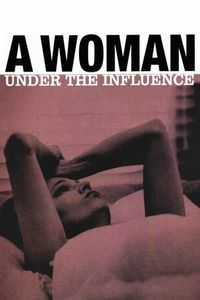
  • A Woman Under the Influence (1974)

    A Woman Under the Influence (1974)

    (Criterion Streaming, August 2021) I don’t particularly like A Woman Under the Influence, but I have to recognize that writer-director John Cassavetes has achieved something remarkable with the film, something as of yet not quite duplicated. It’s essentially a slice-of-life narrative of a housewife with a mental illness, but it defies any attempt to make the narrative (or the illness) fit in easy Hollywood conventions. Our protagonist, in a rather brave performance from Gena Rowlands, has a lot of problems, and they’re not the cute Hollywoodized version of a mental illness. It escapes easy categorization, and it’s not neatly resolved or even managed by the end of the film. Her husband, in another bravura performance by Peter Falk, is not the saint to her sinner — he’s ill-tempered, ill-suited to take over the kids when she is sent away, ill-prepared to deal with what’s going on with her. In other words, A Woman Under the Influence avoids most attempts to transform it into something that can be neatly squared away after the credits roll. There’s a painful realism to it, and while that still makes it a remarkable movie nearly fifty years later, it’s also the kind of film that gets practically zero repeat value: it ends on such a note that few will get the impression of a conclusion. Clearly a product of the New Hollywood, it’s practically impossible to imagine something this being backed by a major studio today — sure, I’d see independent films tackling something close to it… and then be ignored by nearly everyone.