George A. Romero

  • Diary of the Dead (2007)

    Diary of the Dead (2007)

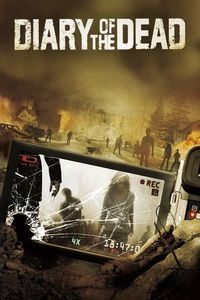
    (In French, On Cable TV, May 2020) To reuse a quote, directors can either retire as geniuses, or work long enough to be seen as derivative hacks. So it is that while George A. Romero pretty much co-invented the modern zombie film in (whew) 1968’s Night of the Living Dead, forty years later he was stuck following the found-footage craze for Diary of the Dead. The story is intensely familiar, as the dead rise and start snacking on the living. In this film, the living are film students filming everything that’s happening, and they’re not that different (nor smarter) than countless other sacrificial groups of characters in other zombie movies. Diary of the Dead falls into the same traps than other found-footage films—the weird camera placement, surprisingly good angles and lighting and inexplicable determination to keep shooting no matter what. Romero throws in some philosophy, humour and nihilism, but much of the film plays in the same way as countless straight-to-video found-footage zombie films. While it’s better executed than most of them, Romero is here outclassed and eclipsed by so many imitators that even above-average Diary of the Dead feels dull.

  • The Crazies (1973)

    The Crazies (1973)

    (In French, On Cable TV, September 2019) Considering that much of the 2005–2015 decade felt like an overdose of zombie movies in theatres under every permutation, including a remake of The Crazies, I hope to be forgiven if I’m less than impressed by the original 1973 film. Cheap and dirty, this George A. Romero film does take its cues from Night of the Living Dead, but delivers its nightmare in colour and early 1970s atmosphere. Taking place in dingy government offices and the homely décors of small Midwestern towns, The Crazies portrays the earnest response when a deadly biological weapon contaminates the water system of a small town—government is early on the ground and all too eager to contain the threat by all means necessary, which means that our heroes in the quarantine zone don’t get much of a chance. It’s all gloomy and fatalistic and not much fun at all and, of course, that was the mood in the early 1970s. There’s an inherent grittiness to the result that works decently, but overall, it does feel like something that’s been done later in more successful ways. The film may have been ahead of its time, but that doesn’t make it any easier to watch today.

  • Creepshow (1982)

    Creepshow (1982)

    (On Cable TV, November 2016) Horror anthology Creepshow may be uneven and thirty-five years old by now, but it does have a few things still going for it. Among them is a charming throwback to fifties horror comics, along with the tongue-in-cheek, slightly-sadistic sense of humour that characterized it. Another would be seeing Stephen King hamming it up as a rural yokel gradually colonized by an alien plant. Yet another would be Leslie Nielsen is a rather serious role as a betrayed husband seeking revenge. Creepshow also notably adopts a number of comic book conventions decades before comic-book movies, under the cackling direction of horror legend George A. Romero. A very young (but not young-looking) Ed Harris pops up in a minor role, while Hal Holbrook and Adrienne Barbeau have more substantial roles in another segment. Finally, “They’re Creeping Up on You” cranks up the ick-factor to eleven for those who are bothered by cockroaches—you’ve been warned. Otherwise, well, it’s hit-and-miss. Neither the laughs nor the chills are always evenly balanced, and there’s a repetition of themes and effect even in five vignettes—at least two, and maybe even three, end on a note of “the dead rise for revenge!” Some of the special effects look dodgy (although this is more forgivable in a semi-comic context) and one suspects that had a similar film been made today, the direction would have been quite a bit more impressionistic. Still, Creepshow is not a bad grab bag thirty-five years later, and it does sustain viewing satisfaction until the end. As with most anthology movies, it’s perhaps best appreciated in small doses, a segment a night.