George C. Scott

  • The Exorcist III: Legion (1990)

    The Exorcist III: Legion (1990)

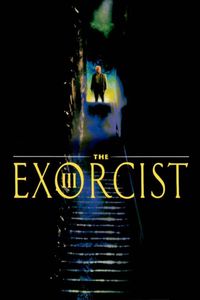
    (In French, On Cable TV, January 2021) The good news is that The Exorcist III: Legion is quite a bit better than its ridiculous predecessor… but that’s not saying much considering that The Exorcist II is widely hailed as one of the worst sequels of all time (certainly one of the sharpest quality drop-offs between original and follow-up). This one, written and directed by William Peter Blatty (who wrote the screenplay for the first film, based on his own novel), does get closer to the spirit of the original by having a good-versus-evil face-off that often plays in conversation, tying it with Catholic mythology and a contemporary horror such as a serial killer with demonic affiliations. The Exorcist III does turn weird very quickly, though, with plenty of oddball moments that are nonetheless constrained into an overall vision rather than just a grab bag of strange stuff. George C. Scott (as Good) and Brad Dourif (as Evil) are somewhat fun to watch as they respectively try to outdo each other, but the film is perhaps a bit too sedate to accommodate such moments without creaking. Despite some scenes that work more through suggestion than schlock, the film is curiously talky and unevenly interesting. Furthermore, well-documented studio interference forced the inclusion of a climactic exorcism scene (ensuring that the studio got what it paid for as an entry in the series) despite Blatty’s initial intentions—and while the shift in tone is noticeable, I’m not convinced it necessarily made the film any worse. Still, by avoiding the unexplainable looniness of its predecessor, The Exorcist III: Legion merely settled for being an ambitious but underwhelming horror film—which is still quite a bit better than many other examples of the genre.
  • A Christmas Carol (1984)

    A Christmas Carol (1984)

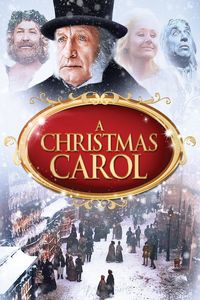
    (On Cable TV, December 2020) Surprisingly, some of the best depictions of Scrooge and the classic Dickens story A Christmas Carol have come by way of television movies – the 1999 Patrick Stewart one, for instance, or even this 1984 George C. Scott version. While visible shot on a smaller budget and with a simpler visual style, this version succeeds based on performances (Scott being a leading one), atmosphere and a certain straightforwardness at only 100 minutes running time. Quite faithful to the original, its deviations are few and acceptable – it sticks to the smallest amount of fantasy possible to tell the story, and director Clive Donner finds a balance between establishing atmosphere and being efficient about the narrative. If you’re in the mood for an efficient, old-school presentation of a classic, this version of A Christmas Carol is it – it still feels modern enough to be easily watchable (something that’s not always true of the black-and-white versions, alas) while sticking close enough to the foundation to avoid the distinctiveness of other versions.

  • The Yellow Rolls-Royce (1964)

    The Yellow Rolls-Royce (1964)

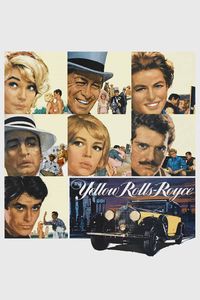
    (On Cable TV, September 2020) There are two ways of making a movie about an inanimate object, and The Yellow Rolls-Royce has picked the worst one. The best way is to depict the object as a character that has a beginning and an end, with several related trials along the way—it gets purchased, used, damaged, repaired, liked, lost, etc. The second way is far looser and consists in loosely stringing a few unconnected stories that all happen to feature the object. The Yellow Rolls-Royce would have been a lovely excuse for a multi-decade story about a car. Unfortunately, it ends up being the common thread between unconnected stories, taking us from the English aristocracy to a vacationing mobster and his moll, to revolutionaries in Nazi-occupied Yugoslavia. There is very little connective tissue nor progression between the three stories, which appears to be excuses to get as many stars in the film. To be fair, the cast is quite good: Rex Harrison and Jeanne Moreau get the ball rolling, as the Yellow Rolls-Royce is purchased by a pompous English aristocrat as a birthday gift for his wife. George C. Scott, Shirley MacLaine and Alain Delon push the ball even further in Venice, as romantic shenanigans complicate a summer holiday. Finally, the film hits its stride alongside Ingrid Bergman and Omar Sharif as she, a rich American widow, helps him, a resistance fighter, cross a national border and fight the Nazis. The Yellow Rolls-Royce can be worth a look if you’re a fan of these actors, or if you choose to focus on the third story and the very beginning of the first. Otherwise, it does feel like a disappointing mishandling of a potent premise. Too bad—I’m sure there’s still a heck of a movie to be told about the life of a car.

  • Firestarter (1984)

    Firestarter (1984)

    (In French, On TV, April 2020) 1980s Stephen King adaptations span the scale from terrible to terrific, and Firestarter lands right in the middle of it, meaning that it’s both mediocre and bland. Anyone who has read the novel will be disappointed at how much of the humanistic material has been stripped away, leaving in its place a blunt blend of paranoid thriller, paranormal powers, secret government experiments and endangered children. Some of it does work, mind you: the father-daughter relationship is effectively sketched, and Firestarter remains more interesting than it could have been because it doesn’t settle for a simple chase narrative. Special effects are not bad for a lower-budget mid-1980s film, with some spontaneous combustion out of thin air. A very young Drew Barrymore stars, and much scenery is chewed by George C. Scott. Still, while much of what works here is taken straight from the novel, the film itself simply refuses to go anywhere beyond a mediocre middle-of-the-road adaptation. There’s little life to Mark L. Lester’s direction, and aside from a climax that appropriately burns everything up, the film has trouble sustaining the pacing that a thriller should have. I suppose that King fans weren’t too disappointed in Firestarter back in 1984—after all, no less than seven King adaptations were released in 1983–1985. Not all of them could be complete successes.

  • Patton (1970)

    Patton (1970)

    (On Blu Ray, September 2018) There is a delicate art in making a biography film of a contentious figure, and Patton’s enduring success proves that it hit the right spot. It gets going with an iconic sequence in which we get a greatest-hits version of General George Patton’s speeches set in front of a gigantic American flag, quickly running us through his philosophy before the action starts. Then the film takes only a segment of his life (his involvement in World War II), skipping over tedious “young-Patton” episodes to present him in his full-fledged form. Patton himself is shown fairly, with enough perspective to put the character in dimension. The film definitely toys with the idea that some intolerable personalities can be essential in critical situations, with Patton being the prime example of a warrior archetype only happy in combat and unsuited to the subtleties of everyday life. George C. Scott is magnificent in the title role, credibly portraying a flawed but bigger-than-life character. (Karl Malden gets a good role as Omar Bradley, which isn’t surprising considering that Bradley not only wrote one of the film’s inspirational books, but also actively served as a consultant on the film.) Long movies often feel interminable, but Patton manages to sustain interest even through a nearly three-hour running time—a good script (co-written by Francis Ford Coppola) with good dialogue and memorable scenes help a lot, as well as some impressive war-driven mayhem and explosions. The tank battles in Africa are very impressive, and still mark one of the few times where armoured warfare has been credibly portrayed on film. It amounts to a highly enjoyable film, perhaps light on the horrors of war but strong on a fair portrayal of a character than even people who disagree with the subject matter would appreciate.

  • The Changeling (1980)

    The Changeling (1980)

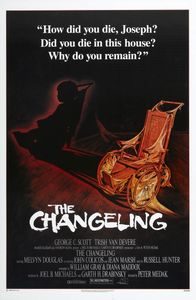
    (On Cable TV, May 2017) Some horror movies age strangely, few of them like The Changeling. A Canadian production (explaining why it still plays frequently on Canadian cable TV stations eager to fulfill their CanCon requirements), The Changeling is successively dumb, boring, intriguing then ridiculous. A terrible opening sequence features one of the least convincing familial trauma sequences ever shot, as a snow plow slams into a car, killing the protagonist’s entire family. This is followed by an interminable first act in which our protagonist (a refreshingly older man decently played by George C. Scott) experiences the same kind of spooky stuff than in nearly all haunted house movies made since then. This, however, is followed by a genuinely intriguing third quarter in which the protagonist’s investigation reveals a mystery closer to The Ring’s vengeful ghost than anything else—the film’s standout sequence has to be the one in which a well is discovered under a house, revealing something crucial. Then, well, the film kind of loses it: the wheelchair sequence is almost too dumb for words (which doesn’t stop it from looking even dumber on-screen) and the film goes back to autopilot right in time for a run-of-the-mill finale. While it doesn’t amount to a film that demands a look even today, The Changeling does have enough quirky (some good, some bad) moments to make it an interesting watch. Horror historians will probably find more to see in this film, especially how it compares to other haunted-house movies of the era.