George Hamilton

  • Jack of Diamonds (1967)

    (On Cable TV, September 2021) As much as we’d like to pretend that we watch movies for their intrinsic worth, that doesn’t always stay true once you get into classic films and the way they show things according to the standards of their times. Every era has its highlights, and the 1960s remain distinctive for their comedies. Something like Jack of Diamond is not a hidden gem. It is, at best, a perfunctory, competent exercise (thanks to director Don Taylor) in a familiar formula — that of a likable jewel cat-burglar whose only crimes are really against rich insurance companies and spoiled actresses such as Zsa Zsa Gabor. The film quickly sets up a mythology of famous thieves — the titular Jack of Diamond, played by a trim and not-so-tanned George Hamilton, his mentor the Ace of Diamonds, and a mysterious female competitor who quickly becomes as much of a rival as a love interest. As I wrote: familiar formula, but Jack of Diamond has the charming quality of having been executed in the 1960s, right at the cusp of the New Hollywood and mid-century modern class. As such, it still has a classical quality, but its colour cinematography (slightly blurry, as the film hasn’t been seriously restored) that brings it closer to the modern age. It’s not that good and the ending feels like a let-down, but it’s occasionally fun to watch Hamilton as a suave cat burglar, especially when the sparks start to fly with his distaff competitor played by Marie Laforêt. It’s not a great film, but Jack of Diamonds is a good period piece and something that can be watched easily enough.

  • The Sons of Katie Elder (1965)

    The Sons of Katie Elder (1965)

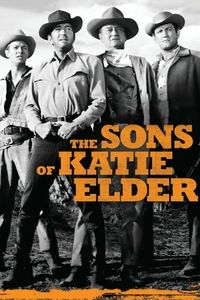
    (YouTube Streaming, August 2021) I’ve been scratching my head for a few minutes in order to find something to say about The Sons of Katie Elder, and it’s harder than you’d think. It’s a western, in colour, from a period in Hollywood history where the studios were running on empty — repeating familiar formulas without quite understanding why audiences were getting tired of them. The film, to be clear, is not a dud: it’s competently-made, with an effective hook (four brothers come back home for their mother’s funeral, and start fighting the resident evil businessman) and some big names on the cast. I’m not a fan of John Wayne, but there’s also Dean Martin to keep things interesting—plus George Hamilton and a young Dennis Hopper. On the other hand, The Sons of Katie Elder is a western film in a very traditional mould, riffing off some questionable frontier justice ideas. It’s watchable, but not particularly memorable. And that, perhaps, is the most lapidary review of all — what else is there to say when the result provokes so little reaction?

  • Where the Boys Are (1960)

    Where the Boys Are (1960)

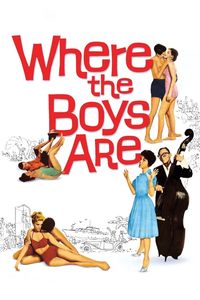
    (On Cable TV, February 2021) I’m uncomfortable calling Where the Boys Are a sex comedy, even though it’s most commonly described as such. For one thing, the moniker “sex comedy” as applied to 1960s films means something very different than when applied to its much coarser post-1975 equivalent: Even in movies squarely taking a look at the changing nature of sex in a liberating society, 1960s sex comedies were usually charmingly restrained by today’s standards. The second, most fundamental objection is that Where the Boys Are may start as a sex comedy with boys and girls heading to Fort Lauderdale in order to you-know-what, but the film steadily slides into a dramatic register, with a sobering ending that kicks the joy out of nearly all of the characters thanks to a rape sequence (largely off-screen, but still disturbing) that punctuates an increasingly disillusioned arc. If you think that circa-1960 films were innocent, you may be confusing the execution with the fundamentals: As our characters, both male and female, head to the beach, everyone is acutely aware that boys prey on girls and that nice girls must learn to say no — the girls who escape the worst have developed defences against common come-ons, honed by constant practice. If that’s not a damning, timeless lesson, I’m not sure what is. It does put Where the Boys Are in an uncomfortable spot, though: if you stopped watching at the three-quarter mark, you’d probably recall the film as an amiable, naughty, clever sex comedy examining the burgeoning spring break culture among college students heading south for a week of fun. There’s some truly funny material here, whether it’s physical comedy, girls accumulating more and more floor-sleepers in their hotel room every passing night, some satirical material about “dialectic jazz” and unusually kind police officers. The cast is also pretty good, what with a slim George Hamilton, lovely Paula Prentiss, cute Yvette Mimieux and funny Connie Francis, along with Dolores Hart playing band leader to this clever merry bunch. But then there’s the letdown of the film’s last few minutes that, ironically, saps the comedy but sharply increases the interest of the film for modern viewers—as a shining demonstration that people of the 1950s–1960s, despite the neutered contemporary depictions of their times, knew perfectly well what it was all about and what was going on. It feels like an inevitable tragedy that the films inspired by Where the Boys Are, most notably the Beach party series, were considerably lighter to the point of fluffiness — but they made money and offended no one.

  • Two Weeks in Another Town (1962)

    Two Weeks in Another Town (1962)

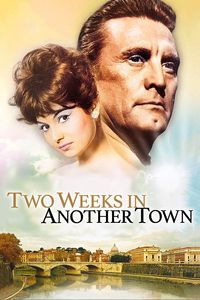
    (On Cable TV, April 2020) If you want to see the results of the Hollywood-on-the-Tiber era, during which Hollywood studios headed to Rome’s Cinecittà in order to take advantage of lower production costs and a studio built by Mussolini, then watch any of the dozen sword-and-sandal epic of the era. If you want a film about that filmmaking era, however, there’s Two Weeks in Another Town to bring back, a decade later, many of the main creative forces behind The Bad and the Beautiful in a thematic follow-up examining how Hollywood stars lived in their little Roman bubble far away from California. There are differences, obviously—Two Weeks in Another Town is in colour, and not quite as purely entertaining in its examination of Hollywood. But it does star Kirk Douglas as a washed-up actor trying to find a new place for himself in the movie industry, and a behind-the-scenes fictionalization of a difficult film shoot. Douglas is surrounded by notables such as Cyd Charisse (who’s not given enough to do), Edward G. Robinson (as a director at the end of his rope), and George Hamilton hilariously cast as a brooding artiste-type actor. While the film is interesting, it also has plenty of misplaced cues and darker themes that ensure that it’s not a feel-good film despite its hopeful ending. Studio meddling is apparently to blame for not delivering the core vision, but even in its adulterated form, the film features themes of suicide, professional uselessness, jealousy and isolation—all of which clash with the Dolce Italia atmosphere occasionally showcased. It’s a shame that some terrible rear-projection work takes away some of the late-film scene’s emotional effectiveness. Let’s just say that Two Weeks in Another Town gets about three-quarter of the way there—it’s interesting to give us a glimpse at an episode of Hollywood history, but not as great as it could have been had it figured out what it wanted to say and found a more disciplined way of telling it.

    (Second Viewing, On Cable TV, June 2021) The “Hollywood on the Tiber” era is one of the most interesting episodes in film history – Hollywood going to Rome in order to take advantage of fiscal incentives and Cinecitta, a top-notch studio built by Mussolini as a propaganda instrument. Hence the slew of swords-and-sandals films of the early 1960s and the numerous American films somehow set in Rome in the 1960s. Two Weeks in Another Town is one of the few productions of that era to be about itself, as our troubled protagonist (Kirk Douglas, reliably fascinating as always) gets a new chance to help a friend complete a Hollywood production shooting in Rome. There are glimpses at moviemaking, dramatic situations alluding to the reality of how movies were made at the time, and characters almost entirely portraying a fictional film’s cast and crew. The rather good cast also helps, what with Douglas playing a recovering alcoholic former star actor, Cyd Charisse as his ex-wife, a young and trim George Hamilton as a rising actor, and Edward G. Robinson as an aging director. On paper, there are plenty of reasons why Two Weeks in Another Town shouldn’t work, starting with the lead character: Who should care about a former movie star putting back together his life after alcoholism? Who should care about Charisse’s character when she barely has any dialogue? The film was apparently cut short by fifteen minutes by the studio, and those seams are more blatant when you start looking at the dramatic structure of the film. But, fortunately, there’s quite a bit more to it – the focus on filmmaking is strong enough (similarities with The Bad and Beautiful are all over the place, from its theme to a shared team of creative leads) and the glimpse at the Hollywood on the Tiber era is frequently charming enough to create a bit of longing for what it must have been at the time. It’s also hard to go wrong with Douglas in the middle of it all – Two Weeks in Another Town probably wouldn’t have worked with another actor.
  • The Power (1968)

    The Power (1968)

    (On Cable TV, September 2019) It just takes a few moments in producer George Pal’s The Power, as the title pulses in unison with a heartbeat, to realize that we’re headed into weird science-fiction thriller territory. The strangeness soon intensifies as a government man walks into a respectable-looking laboratory in which human endurance tests push volunteers to their frontiers of pain … for space science! (This is unnerving, but never actually portrayed as evil. Nor is our sadistic scientist portrayed as anything but the story’s hero. And you won’t believe the set design. But let’s move on.)  But for sheer plotting contrivances, wait a few minutes as a conference begins and an overly dramatic scientist states that a questionnaire has revealed the existence of a super-powered human sitting around the table. Even a convincing demonstration of power doesn’t bring the audience closer to guessing who’s the superhuman. Of course, this wouldn’t be a horror/SF hybrid without superpowers being used for evil, and soon the nature of reality takes a turn (in a rather charming late-1960s way) as the bodies start piling up. I shouldn’t be too hard on the story, which is adapted from a Frank M. Robinson genre SF novel. But this little-known movie adaptation takes things in uncanny directions, with eerie moments sandwiched between inelegant exposition and classic suspense movie thrills. It doesn’t make a shred of sense (why would a super-smart person, even evil, let himself be detected, let alone go on increasingly baroque ways of killing off everyone around him?) but there are a few good moments along the way. Heck, we even get to attend a swinging sixties party in between the chills and thrills. And ho boy, what about that cimbalom score. A surprisingly normal-looking George Hamilton (by later super-suntanned standards) stars as a dashing scientist, with some assistance from bouffant-coiffed Susanne Pleshette at a scientist used as love interest and a dapper-thin Michael Rennie as a government agent. There are dozens of ways The Power could have been made differently—funnier, scarier, smarter, more believable. But none of those more restrained way would have had the dash of craziness that the result does. The last few minutes are an audibly delightful mixture of the entire film’s highlights mixed with proto-psychedelic imagery and a plot twist that explains a few things. Good movie? Not really. Worth a look? Almost certainly … but you must expect some weird stuff by late-1960s MGM standards—it’s no accident this one landed in 1968, just as Hollywood was beginning to stretch its muscles in terms of what it could be doing outside the constraints of traditional filmmaking.