George Pal

  • The Wonderful World of the Brothers Grimm (1962)

    The Wonderful World of the Brothers Grimm (1962)

    (On Cable TV, December 2020) An intriguing artifact from one of the corners of film history, The Wonderful World of the Brothers Grimm is not only a George Pal fantasy spectacle, but a rare feature film to have been shot in panoramic Cinerama – a film process that recorded and projected on three separate screens, as to immerse the audience in wraparound experience. No, the gimmick didn’t last a long time, and yes, trying to fit that to a TV screen can lead to some very strange visual artifacts. Still, it’s one of those curios made for technical appreciation as much as for plot: while the story weaves the life of the real Brothers Grimm with short fanciful interpretations of their tales, viewers may be more interested by cinematography that attempts to take advantage of the near-surround screens of the Cinerama process. Some scenes are long wide takes where the camera doesn’t move; others make a conscious effort to move through space to wow audiences. Little of this works on the small screen, but that’s fine – sometime, just seeing what The Wonderful World of the Brothers Grimm tries to do can be entertaining in itself. As for the narrative, well, it’s a clumsy, almost endearing fantasy from times where fantasy tropes literacy wasn’t as commonplace: At least, with fairytales, we’re attaching the plot devices to familiar childhood material. The stop-motion animation sequences remain impressive, while in between Barbara Eden and Yvette Mimieux, at least there’s something more than special effects to see. (Otherwise, there’s a young and sprightly Russ Tamblin playing the hero, with comic relief from a short appearance from Terry-Thomas.) I’m ambivalent about whether to recommend The Wonderful World of the Brothers Grimm as a purely narrative experience – on a TV screen, the compromises of Cinerama filmmaking make it almost impossible to watch without noticing the making of the film more than focusing on its substance. Still, even budding film historians will get a kick out of seeing an alternate future never taken for cinema.

  • Tom Thumb (1958)

    Tom Thumb (1958)

    (On Cable TV, May 2020) Producer George Pal was the SFX wizard of his time, always picking projects that pushed back the state-of-the-art in matters of cinematic spectacle. As the first project he directed, Tom Thumb isn’t that big of an anomaly in his career—we remember the Science Fiction films Destination Moon, War of the Worlds and The Time Machine, of course, but he also produced (sometimes directed) some more family-friendly fantasy films like this one. An attempt to combine effect-heavy blockbuster filmmaking with the very different demands of a musical comedy, Tom Thumb may not have stood the test of time as well as Pal’s other films, but it’s still worth a look. Various techniques, such as oversized object trick photography and stop-motion animation, all help sell the illusion of the VFX side, while catchy songs do the rest on the musical side. The demands of special effects clearly constrained the final result, since the film clocks in on the much-shorter side for musicals at only 98 minutes. Ascendant stars Terry-Thomas and Peter Sellers have supporting antagonist roles in here, while Russ Tamblyn seems in his element as the hero. While the seams on the special effects are now obvious, that’s part of the fun as well. Thankfully, this Tom Thumb doesn’t stick too close to the fairytale: the entire thing is bouncy, lighthearted and a joy to watch, which is not the case with all adaptations of that source material.

    (On Cable TV, March 2021) A wild blend of musical comedy and special effects, Tom Thumb takes considerable liberties with the original story to deliver a rounded old-school Hollywood experience, albeit with a heavier dose of spectacle than most films. Helmed by event-filmmaking legend George Pal, it starts with the proposition that special effects are the point of the film, and then go on to deliver a (thin) story and (ambitious) musical numbers, one of them even incorporating extensive stop-motion animation. Having a feature film with a tiny character means quite a bit of trickery and while much of that has already been done better in the years since, there’s still a charm and an earnestness to the results here that’s hard to dismiss. Good song backed by a spirited performance from Russ Tamblyn (with some supporting work from British comedy legends Terry-Thomas and Peter Sellers) help sell the entire package. Comparisons with some of Disney’s family pleasers aren’t misplaced, even though Tom Thumb is often more interesting is bits and pieces rather than as an entire film.

  • Atlantis: The Lost Continent (1961)

    Atlantis: The Lost Continent (1961)

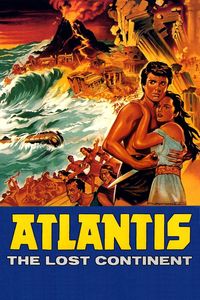
    (On Cable TV, April 2020) After several spectacular science fiction films, legendary director-producer George Pal goes back in time to Atlantean mythology in Atlantis: The Lost Continent, which purports to tell the Greek-classics-inspired story of how Atlantis was destroyed. Before we get there, however, our Greek hero must travel to Atlantis, witness its retro-science fictional technology, experience its sword-and-sandal excesses (sometimes via stock footage from other films) and then run away as the third act’s climactic destruction sequence wows audiences. But what may have looked like a nice change of pace on paper ends up considerably blander than expected. It feels less like a Pal spectacle than a Hollywood-on-the-Tiber epic with funny hats. Fortunately, the film gets better as it makes its way to the expected third-act ending destruction sequence with landscape-altering earthquakes and lava flows. The rest, unfortunately, is surprisingly dull—and ludicrous at times, starting with some very bad science. Clearly, Atlantis: The Lost Continent is not the best known of Pal movies, and understandably so: despite the different setting, it lacks that spark that made his other films special. Alas, the rest of his filmography wouldn’t get any better—the 1950s were truly his best decade, and this is the film that would announce his downward path.

  • The Great Rupert (1950)

    The Great Rupert (1950)

    (On TV, March 2020) Look at that — The Great Rupert is almost a movie made for me! Jimmy Durante and a pet squirrel rendered to life thanks to George Pal’s special-effects work! Admittedly a family film made to wow Christmastime audiences, The Great Rupert is rather cute and harmless. The plot has a hyper-intelligent squirrel helping out an impoverished family by redistributing a cache of money stashed by a miserly neighbour. Part of the film’s attraction is Pal’s animation work—this was his first film as a producer, right before Destination Moon made him the first Science Fiction/Fantasy film mogul. The stop-motion special effects are charmingly quaint by now, and there’s Durante’s distinctive comic styling (even if subdued and scarce) to bring a touch of further interest to the rest. Now in the public domain, it’s not difficult to find a copy of the film to stream—although getting a high-quality one may require more work. The Great Rupert is not that good of a movie, but it does have a few distinctions going for it—I mean, there aren’t that many movies featuring squirrels as main characters.

  • When Worlds Collide (1951)

    When Worlds Collide (1951)

    (On Cable TV, February 2020) The scientific basis of When Worlds Collide is garbage, but the film itself is interesting in a few ways. The most striking of these is that it’s an early example of the disaster movie subgenre, with the Earth being threatened by a collision with another celestial object. (Hence the garbage thing—in adapting an early Science Fiction novel from 1933, the film posits a rogue star with an accompanying planet where survivors can land and colonize, which is patently absurd. But while modern SF has a more refined bestiary of celestial objects with the potential to hit our planet, the premise of Earth being slated for destruction remains irresistible across the ages—descendants of When Worlds Collide include 1978’s Meteor, 1998’s Deep Impact and Armageddon, as well as 2009’s near-spiritual remake 2012. So, it is rather fun to go back to the 1950s and see how they did it, with the special effects of the time and the specific period detail. The melodrama and social/political conditions of the time may not have impressed reviewers at the time, but they’re now a charming time capsule—you could try a retro-themed version of the same story today and still not quite capture what the film does. If nothing else, the film’s producer George Pal thinks big and sets up the kind of spectacle that Hollywood would increasingly turn to as the 1950s advanced and television started being a competition for audiences. (It’s significant that 1950–1951 represents the birth of the Science Fiction genre at the movies, in between this, Destination Moon and The Day the Earth Stood Still.) Now, the specifics of the film are certainly to be quibbled with—I vehemently disagree with the idea that 99% of the population needs to die to save the rest, even if the film features plenty of biblical references in “support” of this idea. (Also, the odds are that the film’s happy ending is momentary—alien microorganisms will kill everyone within weeks—but let’s keep the illusion intact!) The point of seeing When Worlds Collide is that it is quaint, dated and yet timeless in Hollywood terms. Good or bad almost doesn’t mean anything here—the spectacle is what’s always worth watching.

  • The Power (1968)

    The Power (1968)

    (On Cable TV, September 2019) It just takes a few moments in producer George Pal’s The Power, as the title pulses in unison with a heartbeat, to realize that we’re headed into weird science-fiction thriller territory. The strangeness soon intensifies as a government man walks into a respectable-looking laboratory in which human endurance tests push volunteers to their frontiers of pain … for space science! (This is unnerving, but never actually portrayed as evil. Nor is our sadistic scientist portrayed as anything but the story’s hero. And you won’t believe the set design. But let’s move on.)  But for sheer plotting contrivances, wait a few minutes as a conference begins and an overly dramatic scientist states that a questionnaire has revealed the existence of a super-powered human sitting around the table. Even a convincing demonstration of power doesn’t bring the audience closer to guessing who’s the superhuman. Of course, this wouldn’t be a horror/SF hybrid without superpowers being used for evil, and soon the nature of reality takes a turn (in a rather charming late-1960s way) as the bodies start piling up. I shouldn’t be too hard on the story, which is adapted from a Frank M. Robinson genre SF novel. But this little-known movie adaptation takes things in uncanny directions, with eerie moments sandwiched between inelegant exposition and classic suspense movie thrills. It doesn’t make a shred of sense (why would a super-smart person, even evil, let himself be detected, let alone go on increasingly baroque ways of killing off everyone around him?) but there are a few good moments along the way. Heck, we even get to attend a swinging sixties party in between the chills and thrills. And ho boy, what about that cimbalom score. A surprisingly normal-looking George Hamilton (by later super-suntanned standards) stars as a dashing scientist, with some assistance from bouffant-coiffed Susanne Pleshette at a scientist used as love interest and a dapper-thin Michael Rennie as a government agent. There are dozens of ways The Power could have been made differently—funnier, scarier, smarter, more believable. But none of those more restrained way would have had the dash of craziness that the result does. The last few minutes are an audibly delightful mixture of the entire film’s highlights mixed with proto-psychedelic imagery and a plot twist that explains a few things. Good movie? Not really. Worth a look? Almost certainly … but you must expect some weird stuff by late-1960s MGM standards—it’s no accident this one landed in 1968, just as Hollywood was beginning to stretch its muscles in terms of what it could be doing outside the constraints of traditional filmmaking.

  • The War of the Worlds (1953)

    The War of the Worlds (1953)

    (On Cable TV, July 2019) Science Fiction movies of the 1950s often featured aliens invading Earth, but none of them were as expansive as The War of the Worlds in showing us a big-scale invasion. Led by producer George Pal, it loosely takes the classic novel H. G. Wells novel as inspiration for a widescreen depiction of an international invasion, even if the story stays focused quite tightly on a Californian scientist and his distaff counterpart. Surprisingly sombre at times (seeing WW2 footage used to portray city devastation is sobering enough, even without realizing that the film was released less than a decade after the war), and downright horrifying enough to give nightmares to my younger self (young boy not yet jaded by horror plus that shot of a soldier being disintegrated to a green skeleton equals unhappy memories), The War of the Worlds is at its best when adapting the Wells novel to the realities of the 1950s—even in a twenty-first century where Steven Spielberg delivered his own take on the story in 2003, this version is often fascinating as a pure period piece. Alas, some things don’t work as well. The initially super-competent female character played by Ann Robinson starts out fascinating, then degrades throughout the film until she becomes a shrieking simpleton right in time for Gene Barry’s character to rescue her during the film’s biggest suspense sequence. The Technicolor cinematography is striking, although it’s taken a bit too far when the alien tripods show three-coloured cells in their tools. Still, you have to admire the audacity of the film’s intention in showing a global engagement and its lovely period California setting. Both explain why The War of the Worlds remains worth a look now, despite the now-creaky special effects and the outdated social values.

  • Destination Moon (1950)

    Destination Moon (1950)

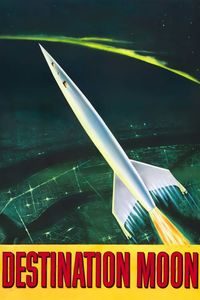
    (On Cable TV, May 2018) Among Science Fiction readers of a certain age, Destination Moon is famous as “The Heinlein movie”—that is, the movie that famed SF author Robert A. Heinlein went to Hollywood to write. Chapters of his biography are dedicated to his Hollywood adventure, and the episode is greatly enhanced by the recognition that for the time and nearly two decades until 2001: A Space Odyssey, Destination Moon remained the purest hard-SF story ever brought to the big screen. (Well, aside from some truly dumb decisions at the end of the first act that seem motivated by ideology rather than any kind of logic.)  Focused on showing how humans could go to the moon and come back, this is a film that eschews aliens, monsters and fantastic situations in order to focus on the nitty-gritty procedural details of space travel. Completed more than a decade before humans went into space and nineteen years before Americans actually landed on the moon, Destination Moon certainly looks dated now, but it remains relatively competent in pure technical details, and its sober treatment of the subject makes it an oddity in the otherwise lurid 1950s SF filmography. A number of legends are found in the credits: Heinlein aside, the film was produced by George Pal and visually informed by noted artist Chesley Bonestell. Much of the film’s heavy exposition is handled through a Woody Woodpecker cartoon, echoing the similar Mr. DNA sequence in Jurassic Park. I’m not particularly charmed by Destination Moon (aside from the film having very little narrative energy, I’m really not happy about the antigovernment pro-business screed at the beginning of the film), but I’m reasonably happy at having seen it at least once. 

  • The Time Machine (1960)

    The Time Machine (1960)

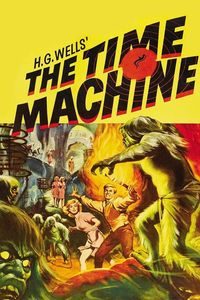
    (On DVD, December 2017) The bad news is that The Time Machine isn’t particularly faithful to the H.G. Wells novel, but the good news are that the film is at its most fascinating when it does diverge significantly from the source material. While the film suffers a partial lobotomy in not really taking an interest in Wells’ social-class parable about the Eloi and Morlocks (instead presenting the Morlocks as straight-cut monsters) and isn’t geared toward the melancholic far-future envoi of Wells’ narrative, it does make up for these deficiencies by strong period content. Diverging from the novel in order to update our Victorian-era protagonist on the evolution of the twenty-first century up to the film’s release, The Time Machine touches upon both World Wars and a nuclear holocaust, inserting them where the original novel could only imagine. The film being from 1960, this means that we get twice-filtered atmospheric content, as we look at the late 1950s look at Victorian England look at the far future. Whew. It may be scientifically indefensible (I rather liked the way our protagonist ends up in 1966 right on time for a nuclear war … and then outruns a lava flow) but it is interesting in its own way. Director George Pal concocts an entertaining blend of SF concepts, then-ground-breaking special effects and intriguing set design. Rod Taylor makes for a likable square-jawed hero, while Yvette Mimieux is fetching enough as promoted-to-love-interest Weena. Special-effect evolution aside, this 1960 version is significantly better than the dull 2002 remake.