George Roy Hill

  • A Little Romance (1979)

    A Little Romance (1979)

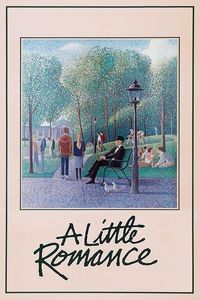
    (On Cable TV, April 2021) There is so much unadulterated syrupy-sweet sentiment in A Little Romance that while watching the film I had the time to develop obesity, cavities and diabetes. Consciously twee, it’s a romance featuring an American 13-year-old (Diane Lane, in her film debut) and a French 13-year-old (Thelonious Bernard), under the watchful eye of an older man (late-career Laurence Olivier). The backdrop is Paris, and then Venice, but if the leads are teenagers, the audience for the film is clearly meant to be adult, as the themes have more to do with the purity of an ideal teenage romance than anything else. Director George Roy Hill keeps things so light and unlikely that the film is best seen as a fantasy of sorts. A Little Romance probably works well with its intended audience in their most receptive mood, but if you happen to fall outside that segment… well, the sugar is overwhelming.

  • The Sting (1973)

    The Sting (1973)

    (On Cable TV, June 2018) If The Sting doesn’t play quite as well today as it did back in 1973, it’s largely its own fault—it was so influential that, having birthed an entire sub-genre of con movies, it finds itself imitated to the point of irrelevancy. This is not to say that the film isn’t worth a look—in between Paul Newman and Robert Redford in the main roles (Redford being a touch too old, but who cares), some playful directing by George Roy Hill, and a rather charming recreation of mid-thirties Chicago, The Sting was and remains a top-notch crowd-pleaser. Where it fails is in keeping a sense of surprise. Even without having seen the film before, the ending is utterly predictable … not because it’s badly written (in fact, it was quite surprising to audiences at the time), but because the basic tenets of the entire ending have been endlessly duplicated by other lesser conman movies since then. Of course, the conman is in perfect control of the plot. Of course, the con is so big as to envelop even the structures in which the con operates. Of course, you have to confuse and whisk away the victim without them even suspecting the truth. Of course, even the authorities aren’t. Surprise: zero. But… Pleasure: quite high. Mixing memorable ragtime music, fancy scene transitions and even fancier title cards, The Sting is made for fun. It’s early enough in the post-Hays code to be cheerfully amoral, but not quite dedicated to the darkness that engulfed Hollywood cinema in the early seventies.