George Segal

  • The Hot Rock (1972)

    The Hot Rock (1972)

    (On Cable TV, September 2021) The amiable good humour of Donald Westlake’s Dortmunder novels carries rather well to the big screen in The Hot Rock. It’s a comedy, but it doesn’t go for the obvious laughs: instead, the fun comes from the mounting absurdity of the situations, and the way nothing is truly threatening or dramatic. Robert Redford stars as master thief Westlake, recently released from prison but almost immediately recruited into a scheme to steal a previous stone on behalf of its original African nation. Putting together a crew for the heist proves simpler than completing it, and much of the film’s distinction in the pantheon of heist movies is how complications eventually force the execution of not just one heist, but four of them with escalating degrees of difficulty. A little bit of plot helps put it all together with an extra curlicue at the end. It’s all quite amusing, and the period detail of early-1970s New York City does add quite a bit to the result. Redford is in fine form, with some good support from George Segal and Zero Mostel. The Hot Rock is the kind of film that has a tendency to disappear from popular memory, not because it’s bad but because it’s just good enough to entertain without making much of a mark. It can, however, be quite a bit of fun to revisit for a simple evening’s entertainment.
  • California Split (1974)

    (On Cable TV, September 2021) I don’t gamble and I’m not often a Robert Altman fan, so my expectations going into California Split ran low. This is, after all, a very Altmanesque film (complete with overlapping dialogue made possible by the then-innovative technique of using eight-track mixing) about two gamblers meeting each other and going through the highs and lows of the lifestyle. Surprisingly, though, I quite liked the result. From a clever opening sequence mixing an instructional tape with ironic counterexamples, the script has a sure-footed take on the toll and exhilaration of full-time gambling, taking us to casinos and pawn shops along the way. It helps to have two capable actors anchoring the cast: George Segal as the gambling apprentice, but especially Elliott Gould as the inveterate devotee to a life spent chasing the next sure thing. The atmosphere of mid-1970s Los Angeles and Reno is nicely portrayed, and the typically Altmanesque cacophony is used to good effect when it comes time to represent the confusion of a gambler on a multi-hour binge. Interestingly enough, California Split resists the temptation to offer a moral lesson— while one of the protagonists may have had a moment of clarity, the other clearly intends to keep on doing what he’s been doing not-that-successfully. It all comes together for a film that’s still quite entertaining, with a filmmaking technique that feels appropriately modern at times.

  • Bye Bye Braverman (1968)

    (On Cable TV, August 2021) If you’re looking for a plot premise for Bye Bye Braverman, here it is: Four men (all writers, none happy) learn about the death of their friend, so they get together to attend the funeral, then go back to their homes. That’s it. Clearly, this (an adaptation of a novel) isn’t meant to be a narrative-heavy experience. You can even argue that it’s not meant to be particularly dramatic, as grand epiphanies are nowhere to be found, and the characters all more or less end up at the same place at the end of the film as at the beginning, with interpersonal conflicts still left intact. What’s left is dialogue, character and atmosphere: Taking place in the New York City Jewish community, Bye Bye Braverman is largely made of the four articulate characters riffing off each other, snarkily commenting on the funeral, various encounters along the way to and from the funeral, and the protagonist (played by George Segal, sometimes showing glimpses of a funnier persona) reflecting on life and death in fantasy segments. Directed by Sidney Lumet, it’s generally well-handled, but at the end of the entire thing, we’re left wondering what’s the point of the film: with adequate dialogue, low stakes, non-existent character development and mild comedy, Bye Bye Braverman struggles to justify its existence. It does a bit better as a late-1960s slice-of-life period piece taking place in the likable company of frustrated NYC Jewish writers, but not that much. Call it a piece of Lumet’s filmography if you really need to see it.

  • The Owl and the Pussycat (1970)

    The Owl and the Pussycat (1970)

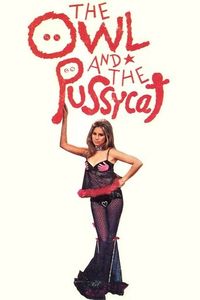
    (On Cable TV, August 2021) As a romantic comedy premise, it’s hard to get more down to the basics than The Owl and the Pussycat, with two mismatched people forced together and then into romance despite their differences. Of course, the details are what makes or breaks the result. Fortunately, there’s quite a bit to chew on here, starting with the grimy atmosphere of circa-1970 New York City at a time when it was clearly deteriorating. The rain, dirt and seedy atmosphere act as background as a bookish writer (George Segal, playing the snobbish intellectual with a certain flair) causes a part-time prostitute to lose her apartment and ends up with her taking over his life in retribution. Of course, the real appeal here is the female character — played with a lot of vitality by Barbra Streisand (who has seldom looked better even in a multi-decade career), who really takes the film over from her male co-star. It’s all in good fun even as the film does through the now-standard motions of a romantic comedy. Some potential is left unrealized, but the dialogue (as befit a theatrical adaptation) is fast and vivid all the way to an expected ending. The familiar tropes aren’t necessarily a problem when they’re handled as gracefully as they are here, with the period detail adding even more interest to a film that works almost solely on dialogue and a modest amount of physical comedy. Streisand looks amazing, Segal realizes his comic potential and New York City looks suitably dangerous — all assets adding much to something that already works quite well on the page. You can even see here the paths that led Streisand both to her comic dervish role in What’s Up Doc?, and her turn as an older escort in Nuts.

  • The Terminal Man (1974)

    The Terminal Man (1974)

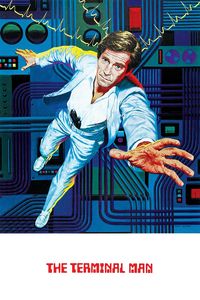
    (On Cable TV, November 2019) Michael Crichton’s techno-thriller novel The Terminal Man may date from the prehistory of computers as a social force, but it’s still well worth reading for its breathless anticipation of issues that still preoccupy commentators nearly fifty years later. Its film adaptation, on the other hand … is something else. If you’re expecting a hard-edged exciting adaptation in the style of a realistic thriller, then get out now because writer-director-producer Mike Hodges is after something else entirely: an impressionistic, surreal, vague and slooow. In keeping with the prevailing New Hollywood aesthetics of the time, The Terminal Man is grimy and depressing, not having much to offer except death as a conclusion. It was, inevitably, a resounding flop upon release. It’s probably better regarded today in that the visual aspect of the film is quite strong, and we don’t necessarily bat an eye when 1970s films fly off in their own self-absorbed bubble. Some moments seem to share kinship with sequences of The Shining, but that may just be two visual filmmakers (who knew each other) working in parallel. Even star George Segal looks lost at times as the homicidal protagonist. As a piece of art-house visual exercise, The Terminal Man may be tolerable to some. As an adaptation of a novel with a strong narrative, however, it’s dull and underwritten.