George Tillman Jr.

  • Soul Food (1997)

    Soul Food (1997)

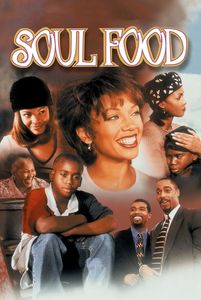
    (On TV, May 2021) The overarching thesis in Soul Food is one I can get behind: No problem in life can’t be solved by food. Dysfunctional family? Food. Relationship problems? Food. Sudden absence of the matriarch? Food. Police arrest? Food. Financial strains? Food. Knife fight? Food. Kitchen fire? Food. Well, Food and a united family, which goes back to food in the film’s mythology. (Or rather: food, family and a stash of money.)  No, Soul Food is not meant to be that profound. But as a depiction of a family threatening to come apart absent the Sunday ritual of bonding over food, it’s well-intentioned, pleasant and heartwarming to watch. There’s a good sense of the relationships between the characters, and the actors (headlined by Vanessa Williams, Vivica Fox and Nia Long) go rather well in inhabiting the roles. Writer-director George Tillman Jr. has a clear idea of where he’s going, and the film finds a happy medium between comedy and drama in the final stretch. Like food itself, Soul Food is familiar, unchallenging and a bit heavy on the grease but sometimes exactly what you need.

  • The Hate U Give (2018)

    The Hate U Give (2018)

    (On Cable TV, July 2019) The personal rarely meets the political as clearly as in The Hate U Give, a surprisingly effective movie about a teenager having to confront a system of systemic violence that leads to the death of her friend. Adapted from a young adult novel by Angie Thomas, the film first takes us deeply in the inner world of one sixteen-year-old black teenager as she has to juggle two identities; one at home, with her complex family, and another at an upscale school, making sure she’s not too black for the privileged white crowd. If you suspect that a synthesis of her identities is in order, you’d be right: it all comes crashing together as a childhood friend of hers gets shot by a police officer right next to her during what should have been a routine traffic stop. The Hate U Give is impressive on several levels, and one of them certainly is the density of the themes it tackles (racism, obviously, but also fitting in, the impact of childhood on teenagers, education, trying to improve a neighbourhood rather than fleeing … and so on.), and the effectiveness of the way it clearly indicts social forces for contributing to personal struggles. It’s a sophisticated film, fully up-to-date on the dense tapestry of issues affecting today’s teenagers—it’s never one thing, and you can’t pick at something without something else being affected. Amandla Stenberg is terrific among a strong supporting cast, and the script is so good at creating her character that we’re really sorry when bad things start happening—the protagonist clearly deserves better. Director George Tillman Jr. build to a climax that is perhaps a touch overdone, but still remarkably effective. I’d call it like a Spike Lee film for teenage audiences, vigorous and clever, except that this feels like a diminutive moniker—The Hate U Give is perfectly capable of standing up for itself without comparisons: it’s got its own take on a familiar story, a style of its own, and just as appropriate a set of demands. I liked it quite a bit more than I expected, and would have no problem calling it one of the best dramas of 2018.