
Gérard Depardieu

  • Hélas pour moi (1993)

    Hélas pour moi (1993)

    (On Cable TV, February 2021) I had a surprisingly good time watching Hélas pour moi, but that came from an early decision to declare narrative bankruptcy on the film. Anything billed as a “poetic drama” in its log-line is usually a lost cause anyway — the only reason why I had a look at the result was because it was a late effort by writer/director Jean-Luc Godard. It only takes a few minutes into the film to realize that it’s not going to be understandable in any kind of conventional sense: it’s a film that plays on emotions, impressions, visual flourishes and allusions to philosophy and classical literature. Title cards separating the film in chapters or offering odd bits of narration only make the entire film feel even more hermetic if you’re not the director. Over time, I’ve come to make peace with the idea of film as an artistic expression of individual filmmakers (although the inherent elitism of film production costs leading to a class of film gatekeepers still rankles me), even if that does not mean that I’ll like the result. As the languid, pretentious, consciously self-absorbed nature of Hélas pour moi became obvious, I stopped trying to make sense of the film and let it wash over me. To be fair, there’s plenty to look at even if you’re not attempting to make sense of it — a young and trim Gérard Depardieu is the film’s headliner, but Laurence Masliah looks absolutely terrific here at times (the sequence in which she is introduced, off-focus to better feature her wild red mane is just… wow) and Aude Amiot looks nice as well. Are watching French girls a substitute for a strong narrative? Yes, if that’s all the film has. Still, Hélas pour moi does have a few good moments: thanks to Godard’s veteran eye, parts of the film can be appreciated even if you refuse to try to make sense of it. (I was tempted at times to see the film as a parody of a pretentious arthouse film, but it wasn’t worth the effort.)  I’m far, far from recommending the result, but it’s possible to find something to appreciate in nearly anything if you’re creative enough.
  • Jean de Florette (1986)

    Jean de Florette (1986)

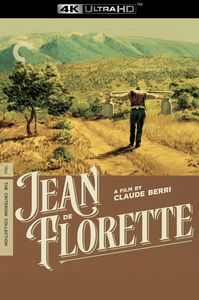
    (On TV, January 2021) If you want to talk about the big guns of 1980s French cinema, Jean de Florette imposes itself as a must-see: As the first half of a massive project (along with sequel Manon des sources) going back to early-20th-century Provence as a backdrop to a melodramatic tale of deception and revenge, it features lush cinematography, big stars and the approval of the French establishment. Adapted from a book written by no less than Académie Française member Marcel Pagnol, it seemingly spares no expenses going back in time to a small village where water is a scarce commodity. Gérard Depardieu stars as a family man coming back to his deceased mother’s farm with big plans to raise rabbits. But that plan depends on having access to water, and as luck would have it, the locals have other plans: Distrustful of the educated, optimistic outsider, two of them conspire to hide an invaluable spring on his farm. The legendary Yves Montand capstones an illustrious career as the antagonist, with some able assistance from Daniel Auteuil as a co-conspirator. Spending two hours watching a likable protagonist’s plans being thwarted by the small-mindedness of rural locals may not be anyone’s idea of a good time, but there’s a compelling quality to the narrative; the pacing is faster than you’d expect and the film is meant to be seen as the depressing Part One of a larger work preparing for the release offered by Manon des sources. Depardieu, Montand and Auteuil each provide exceptional performances in their own way, and the setting provides the rest. Shot in a yellow/green palette punctuated by brown, it’s often a spectacular film even when abstracting the narrative. Historically, the film fits in a national strategy of exploring France’s past through movies, and it’s hard to imagine a better depiction of that time and place. (Even if, to French-Canadian ears, the accents often play as a caricature of a certain kind of Frenchman—Montand is particularly ripe for imitation.)  I was honestly surprised by Jean de Florette—I watched it out of obligation, and ended up enjoying it. (But I’m writing this after the far more engaging Manon des sources, so keep the necessity of watching both in mind.)

  • Les compères [ComDads] (1983)

    Les compères [ComDads] (1983)

    (On TV, January 2021) A few minutes into Les compères, the premise seemed familiar. A quick search confirmed my doubts: this was the original French film on which the mid-1990s Billy Crystal/Robin William vehicle Fathers’ Day was based. The starting point is distinctive enough to be noticeable: After her son goes missing, a woman separately contacts two ex-lovers with a plausible chronological claim to their paternity, and asks them to investigate. But the narrative fun begins when the two meet and realize the trick played on them. It all becomes a vehicle for comic actors, and the French version arguably does better than the American remake in using its headliners: Here we have Pierre Richard in his usual gaffe-prone neurotic persona, paired for the second time with Gérard Depardieu (younger and thinner than we’ve grown used to), who here plays a macho journalist. The rest of the film is almost immaterial—of course they’ll find it, and, of course, the point of it all is Richard and Depardieu sparring. The nature of Les compères as a vehicle means that there’s some repetitiousness to the proceedings, but that only counts as a problem if you’re not entirely happy with the two leads. Otherwise, you get what’s on the tin: Richard goofing up, Depardieu rolling his eyes and just enough plot to give us a feature-length comedy based on that interaction.

  • La chèvre [Knock on Wood aka The Goat] (1981)

    La chèvre [Knock on Wood aka The Goat] (1981)

    (On TV, January 2021) French comedian Pierre Richard makes good use of his circa-1980s awkward persona in La chèvre, playing a gaffe-prone bad luck magnet asked to track down the daughter of a French politician gone missing in Mexico. We’re clearly not far from Le Grand Blond movies here (the characters are named the same and act the same yet otherwise aren’t supposed to be the same—call it an added comic flourish) but the added wrinkle at the time was pairing him with a relatively younger and definitely thinner Gérard Depardieu as a glum private detective reluctantly tagging along. Much of the comic nature of the film has to do with Richard getting into absurdly unlikely trouble and Depardieu groaning. Of course, the narrative has the comically stupid character figuring things before his more traditional partner, all the way to the unlikely goal of their partnership. La chèvre is a crowd-pleaser that succeeds at its comic goals—If you like Richard’s screen persona at the time, it’s built on his comic skills, and the addition of Depardieu provides a straight man to heighten the unlikely nature of the trouble he gets himself into (something that’s missing from many of Richard’s solo efforts). The pairing proved to be so effective that it was repeated twice more, albeit not quite so successfully. While La chèvre can’t escape a certain number of stereotypes by sending Frenchmen in Mexico, it’s not hard to watch, and it ends on a somewhat good note.

  • Cyrano de Bergerac (1990)

    Cyrano de Bergerac (1990)

    (On TV, December 2019) Twenty-first century Gérard Depardieu may not strike anyone as an ideal Cyrano Bergerac—what could an overweight old actor with a scandalous past have to do with a dashing figure known for his wit, grace, charm, and sword-fighting abilities? The point of Cyrano is that he’s an ideal figure if it wasn’t for his unusually pronounced nose and the story keeps revolving around that idea. But peak-era circa-1990 Depardieu is not the figure we know thirty years later—his performance here is a good part of the reason why I consider this to be the finest adaptation (so far) of Cyrano de Bergerac on the big screen. As far as I’m concerned, Cyrano is part of the classics—you don’t judge an adaptation of it on its plot or characters, but on the way it brings them to life. On that measure, writer-director Jean-Paul Rappeneau does well—helped along by Depardieu’s earnest take on the character, a strong visual sense and some great historical recreation. As much as I like Steve Martin’s Cyrano-adjacent comedic take Roxanne, this is the real deal right here, and it’s played as the romantic tragedy that it is.

  • Astérix et Obélix: Au Service de sa majesté [Astérix and Obélix: God Save Britannia] (2012)

    Astérix et Obélix: Au Service de sa majesté [Astérix and Obélix: God Save Britannia] (2012)

    (On TV, November 2019) The history of big-screen adaptations of the Belgian comic book series Astérix et Obélix is long and inconsistent, going from all-time classics (the first few animated films) to regrettable failures (the live-action Olympic Games one). Fortunately, Astérix et Obélix: Au Service de sa majesté seems to have learned a few lessons from the Olympic-sized debacle of its predecessor, and delivers a rather good take on the mythos, helped along with writer-director Laurent Tirard’s confident execution and state-of-the-art special effects. Adapted from the classic albums Astérix chez les Bretons and Astérix et les Normands, it features the irreducible Gauls heading across the Channel to help the Britons defend themselves against the invading Romans. If you’ve read the albums, much of the film is a greatest hits of their best jokes, from the wonderfully observant translation jokes to the pirates getting demolished once again and a jolly rendition of the invention of tea. Anchored by Édouard Baer and Gérard Depardieu (with plenty of French celebrity cameos), the main duo is back at the forefront and everything is right again. Astérix et Obélix: Au Service de sa majesté is hardly a perfect film—the cartoonish humour register is well done, but may grate—but it’s a great deal better than its predecessor, and an honourable entry in a storied tradition.

  • Astérix aux jeux olympiques [Asterix at the Olympic Games] (2008)

    Astérix aux jeux olympiques [Asterix at the Olympic Games] (2008)

    (On TV, November 2019) There were four live-action movies based on the Asterix comic books between 1999 and 2012, and there’s a fair case to be made that Astérix aux jeux olympiques is the worst of them. Sure, the first film had some issues in terms of how to integrate comic book exaggeration in a live-action setting. But the script was generally serviceable, and that’s more than we can say about this third instalment. The most fundamental of its mistakes is to make an Astérix and Obélix story in which both main characters are supporting players in another plot having to do with fairly minor characters. The detour to Greece for the titular Olympic Games is (in keeping with the original comic book) an excuse to parody the modern Games, but they keep adding more subplots that have little to do with the putative heroes of the film. Much of the film is spent wondering when we’ll ditch the useless characters and go back to the lead duo. The chariot race that composes much of the third act does bring some much-needed energy back into the film, although that’s not a constant—whenever you puzzle over some lame joke, scene or one-off character interrupting the flow of the action, head over to the film’s Wikipedia page and you will realize that you’ve just seen a celebrity cameo from someone you’ve never heard of as a future viewer hailing from a future distant enough from 2008, which is already starting to happen in 2019. But Astérix aux jeux olympiques keeps the worst for last, as rather than wrap things up neatly with a quick banquet scene, it drags on for another 5–10 minutes for the sole purpose of bringing back an annoying character from the previous film (played by infamous showboater Jamel Debbouze) as well as other celebrity cameos. Enough. By that time, we just want it to be over. The special effects are better than the previous film, but not used judiciously or even tastefully. The direction isn’t particularly strong, and while it’s fun to see French-Canadian Stéphane Rousseau in a leading role, the amount of screen time he gets is an issue when the main characters of the series are sidelined. At least Clovis Cornillac and Gérard Depardieu are not bad as Astérix and Obelix, with no less than Alain Delon as Julius Caesar. Still, there’s not enough to offset the tremendous waste that is the misguided script and the overindulgent execution.

  • Astérix & Obélix contre César (1999)

    Astérix & Obélix contre César (1999)

    (On TV, October 2019) Adapting a comic book to the big screen is a tricky exercise, even more so when it’s working from an exuberant source such as the Astérix and Obélix series. As someone who grew up on the series, the idea of attempting to adapt the comic violence, over-the-top gags and fantastic visuals of the comic seems hopeless. Astérix & Obélix contre César, as the first live-action adaptation of the series, clearly underscores how difficult it is. On the positive side, the film does manage to present an authentic Astérix adventure, complete with the wild cast of characters in the protagonist’s village. The state of computer-generated imagery circa 1999 is just barely enough to give an idea of what’s possible, while looking unfortunately dated twenty years later. A still-young Gerard Depardieu is featured as Obélix, along with Christian Clavier as Asterix. Roberto Benigni, then at the height of his international fame, showboats annoyingly in a villain role. The film works, but barely: other than the weirdness in trying to fit a fluid comic style in live-action, the film also frequently loses itself in useless subplots, and becomes actively irritating when it repeatedly tries to pairs up (despite objections from other characters) the fifty-something Depardieu with a much-younger love interest. Writer-director Claude Zidi doesn’t embarrass himself (the bar being low enough), but the approach here is rougher than in other later classic comics adaptations along the lines of Lucky Luke, Le Marsupilami or Gaston Lagaffe. (None of them were all that successful, but more so than here.) Considering what was available in 1999, it’s an honest half-success.

  • Le dernier métro [The Last Metro] (1980)

    Le dernier métro [The Last Metro] (1980)

    (On Cable TV, September 2019) Distinctive for being one of writer-director François Truffaut’s last movies, Le dernier metro takes us backstage in Nazi-occupied Paris, as the story draws a love triangle between a theatrical actor who moonlights as a Resistance member, his opposite leading lady who owns the theatre, and her Jewish husband hiding underneath the stage. Executed with clever period detail, Le dernier métro borrows from theatrical lore, Nazi occupation atmosphere and romantic suspense to deliver a film that’s as rich as it’s long at 131 minutes. Featuring no less than Catherine Deneuve and Gérard Depardieu at their youngish peaks, feeling as if it misses an entire third act, the film culminates in a scene that straddles dreams and the theatrical stage, with a lack of a dramatic finale that weirdly plays in the film’s favour. Le dernier métro may not be one of Truffaut’s top-tier film, but it’s good enough to be worth a look, knowing that it’s not going to play out conventionally.

  • Green Card (1990)

    Green Card (1990)

    (In French, On Cable TV, August 2019) Part of the point of casting known actors is to transfer some of the emotional impact of earlier films into a new one, and I certainly experienced some of that going into Green Card. The film, a romantic comedy about two strangers technically marrying for personal gain (a green card for him, a coveted apartment for her) features Andie MacDowell and Gerard Depardieu as romantic lead. While I like McDowell a lot (and not necessarily for her average acting skills), I’m not so fond of Depardieu—although some of this may be tainted from his rapidly declining twenty-first century personal image and reputation. As of 1990, however, forty-something Depardieu could still pass an acceptable romantic lead … but it’s up to the film to convince us of that. And while there’s nothing particularly surprising in Green Card, writer-director Peter Weir does know how to handle a movie. As we move through the expected set-pieces (sometimes with cleverly handled expectations—I defy anyone sitting midway through the piano sequence not to expect his character to be a fraud), the film does play the attraction game savvily. The actors also do their best. MacDowell remains limited in her range (although her character here is written as more restrained), but Depardieu does earn audience sympathies, and having Bebe Neuwirth show up for a few scenes certainly helps. It all leads to a conclusion that does manage to reassure Americans about their immigration system (a few lines have unique relevance in 2019), while providing a sufficiently distinctive romantic climax to keep audiences happy. This is not a particularly good movie, but it plays better than I thought it would, and Depardieu does make it work.

  • 102 Dalmatians (2000)

    102 Dalmatians (2000)

    (In French, On TV, February 2019) There are times when I’m tempted to keep reviews strictly factual and let readers figure out the rest. In talking about 102 Dalmatians, for instance, is it really useful to say anything but “this is a sequel to the live-action Disney animal comedy film featuring Glenn Close”? There’s a lot packed in that statement. It implies a continuity of tone, and if you know about live-action Disney comedies of the mid-nineties then there’s not a lot more left to say. Glenn Close is remarkable as usual, but clearly slumming in a cartoonish role. (At least she gets a chance to try out-acting Gérard Depardieu.) Nothing in the film, from script to production design, is meant to be even halfway realistic. The dogs will predictably outwit their human opponents. It does without saying that the previous film’s villain, introduced as being reformed, will snap back to form. (If I was of a more analytical disposition at the moment, I’d probably look at 102 Dalmatians’ troubling portrayal of a former villain going back to evil action, reinforcing contemporary society’s prejudices against those who have suffered from mental health issues or narcotic addition, always considered at risk of relapse.) There is, to be fair, a bit of imagination on display in production design terms, but much of the film feels like a straight rethread of the original, and the innovations aren’t much of an improvement. I mean: what’s with “Digga Digga Dog”, the Snoop Doggy Dog inspired theme rap song? At least it’s catchy.