Ginger Rogers

  • Storm Warning (1951)

    Storm Warning (1951)

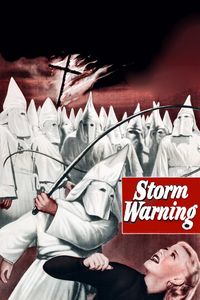
    (On Cable TV, March 2021) The more I dig into Hollywood films (especially the not-so-well-known ones), the more I realize that racism and anti-racism are as American as anything else you’d care to mention. From slavery to the Civil War (fought over preserving racism!) to the Klu Klux Klan (both the original and the revival) to modern white supremacist movements, the United States has often featured both systemic racism and organized reaction to it. A further contribution to this theory is found in Storm Warning, a suspense film in which the KKK (revival edition) are squarely designated as the villains in a small-town murder thriller. Surprisingly enough for such a hard-edged topic, the film stars no less than Ginger Rogers, Doris Day and Ronald Reagan in very serious roles — with Reagan stepping into the film midway through as a crusading district attorney: not a bad film to have on one’s filmography back when Republicans were not running platforms of institutionalized racism. Things being said, there’s a distinction to be made between a noble subject and a less-than-successful execution, and Storm Warning is often better in summary than in execution: the plot is a bit conventional, but worst of all is that the racism of the KKK is not highlighted very strongly. The film seems to presume that the audience knows all about the KKK and doesn’t really touch that topic, leading to a curiously all-Caucasian film about an incredibly racist organization that barely features what they’re best known for. At times, regrettably, you could have replaced the KKK with any other backwoods organized crime outfit and much of the film wouldn’t have played very differently. What a wasted opportunity. But then again, it’s useful to remind ourselves that the film dates from 1951, a time when even the major studios were cutting black-performer numbers from their musicals because Southern USA theatres refused to play such movies. 1951 was a time before desegregation, before the civil rights era, before Loving vs. Virginia, before, well, the latest iteration of racism in American discourse. It’s an ongoing fight, and progress is being made—but even in its watered-down version, Storm Warning is a reminder that the fight should have been over a long time ago—and that many people are now as evil as the KKK was.
  • Carefree (1938)

    Carefree (1938)

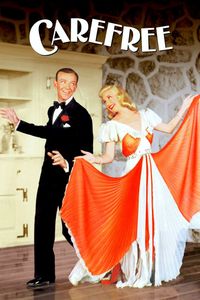
    (On Cable TV, January 2021) As the eighth of the ten Astaire/Rogers movies, Carefree is clearly not in the same class as its predecessors. More comic than musical, it features Astaire as a psychiatrist who falls for one of his hypnotized patients. Now, a near-constant in Astaire’s filmography is a dodgy concept of romantic consent: it’s not a reflection of his personal values (Astaire is one of the few Classic Hollywood stars with a mostly spotless romantic history) as much of the social mores of the time where males were supposed to be persistent. Still, even by those historical standards, Carefree is more problematic than most: not only is there the breach of professional ethics in having Astaire date a patient (an engaged one, no less!), but the hypnosis plotting device introduces all sorts of further issues—although it should be noted that many of the comic complications stem from Astaire’s character inducing feelings of hatred in his patient… with dangerous consequences for him! Merely four musical numbers pepper Carefree, many of them in dream sequences: a choice that ends up placing too much emphasis on the plotting of the film rather than its musical interludes. While the film is remembered for having the first big kiss between Astaire and Rogers, there otherwise isn’t much here to watch. Astaire is a good lead, but the plot doesn’t have him in a role that allows for much dancing, and that reflects on the rest of the film. Oh, Carefree is watchable enough, and it does have its comic moments: in particular, there’s a sustained sequence in which Rogers (under hypnosis) keeps trying to break a pane glass that’s quite funny. But it’s also a disappointment, especially for seasoned fans of the pair. It feels like a second-tier film (if not a third tier one) in their shared filmography by being merely serviceable when compared to their demonstrated potential. It’s still worth a look, but only after better examples.

  • Follow the Fleet (1936)

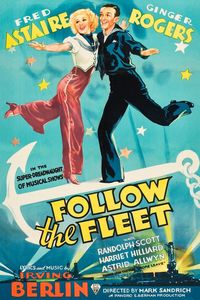
    Follow the Fleet (1936)

    (On Cable TV, November 2020) I’m watching Fred Astaire films in rough decreasing order of acknowledged importance, and it’s not a bad approach—his persona is best defined by his most popular films, and once you start plumbing into the lesser-remembers ones, you can hit some weird variations on his usual characters. I’m not going to forget a drunken Astaire smashing a bar in The Sky’s The Limit, but there’s something almost equally strange in seeing him play what’s supposed to be a rough-hewn Navy sailor in Follow the Fleet: Astaire’s persona was pure ballroom, not boiler room (although, yes, I also remember that scene in Shall We Dance), and it’s a very curious choice to structure a film (a peacetime film, no less!) around him being a swabbie at the service of Uncle Sam. Somehow, Ginger Rogers makes her way into the plot as a gifted hostess employed in a San Francisco ballroom -at least until Astaire barges in and gets her fired. There’s a B-romance as well, but we’re here for Astaire and Rogers and, fortunately, Follow the Fleet delivers on the dance front: There’s a ballroom duet sequence early in the film to reassure us that they’ve still got it. Later on, the action moves to ship decks in time for an Astaire solo tap number with sailors surrounding him. The third act has the big guns: A piano solo from Astaire, a deliciously funny duet (“I’m Putting All My Eggs in One Basket”) in which Astaire and Rogers intentionally dance out of step and then—as a big finale—an anthology-worthy return to pure class in “Let’s Face the Music in Dance” where we once again have a glamorous version of the duo doing their best in front of a very stylized art-deco backdrop. Nonetheless, Follow the Fleet isn’t quite better than the sum of its parts: while there are some great moments, the film as a whole seems less funny, less tight (at 110 minutes, many of them dedicated to a lacklustre narrative) and less purely enjoyable than other 1930s films featuring the duo. I still liked it based on its individual numbers, but I also liked their other films of the decade better—most notably Top Hat, The Gay Divorcee, Swing Time and Shall We Dance. But even a substandard Astaire still has moves impossible to duplicate by anyone but Astaire: let’s treasure what we’ve got.

  • Gold Diggers of 1933 (1933)

    Gold Diggers of 1933 (1933)

    (On Cable TV, September 2020) In some ways, Gold Diggers of 1933 is very similar to the other top musicals of the period: It was a time, only a few years out of the silent film era, when you could still feel the giddiness of film producers in wowing audiences with dazzle-dazzle singing and dancing. The story takes place on/near Broadway, as many musicals of the time did, in order to provide audiences a familiar frame of reference as to how the music was integrated in the film. Recognizable names such as Ruby Keeler, Ginger Rogers and Dick Powell are in the cast, as the story focuses on four women trying to marry rich and make it big. Perhaps more interestingly to modern audiences, it’s a pre-Code film, meaning that it features scantily-clad women and a playful attitude toward risqué subject matter that wouldn’t fly even two years later. (Indeed, its direct sequel Gold Diggers of 1935 would be far tamer in that regard, the Hays Code having taken over Hollywood by then.) While Mervyn LeRoy directs the comedy material of this musical comedy, the dance numbers are directed by Busby Berkeley, whose touches become more and more apparent as the film goes on. “We’re in the Money” kicks things off with a memorable tune sung by Rogers, “Pettin’ in the Park” is pure pre-Code hilarity, but the film really reaches its apex during “The Shadow Waltz,” especially during a moment where the dancers carry neon-lit violins and the overhead camera shot practically turns to animation. “Remember My Forgotten Man” concludes things with fewer pyrotechnics, but more striking result. Worth noting is how, in a decade known for escapism, the Great Depression is an integral part of the plot (and the songs, given that “We’re in the Money” imagines an end to the Depression), giving us a tiny glimpse at life outside Hollywood fantasies. Being like the other musicals of the time isn’t a bad thing when most of them still hold up nicely today, and Gold Diggers of 1933 does have a few added qualities.

  • Once Upon a Honeymoon (1942)

    Once Upon a Honeymoon (1942)

    (On Cable TV, August 2020) You really can’t go wrong with a combination of Cary Grant and Ginger Rogers, especially not in Once Upon a Honeymoon, a propaganda romantic comedy film (!) in which Grant (as a journalist) helps Rogers (playing a burlesque performer passing as a high-society woman) unmask her fiancé as a Nazi. Travelling through Germany, her fiancé seems curiously involved in every country that falls to the invading German forces, eventually forcing her to work for the American government in unmasking him. Once Upon a Honeymoon was clearly meant as propaganda considering how, despite its jolly tone, Rogers’ character ends up murdering her Nazi fiancé at the climax for the picture (he had it coming – it was self-defence) and everyone laughs it up as the only good Nazi being a dead Nazi. (They’re right, but it’s still a bit jarring considering how Grant makes funny faces in the middle of it all.) That ending sequence is the cap on what is indeed a bit of an uneven film, shifting between serious thriller and fluffy romantic comedy at the drop of a hat and then over again. It’s a certainly a curio in that Grant tries to play his character both as a romantic lead and a thriller hero. I’m not sure there were that many romantic comedies taking aim at Nazis, and I’ll always welcome one more. I’ll probably have another look at Once Upon a Honeymoon eventually, knowing what to expect.

  • The Major and the Minor (1942)

    The Major and the Minor (1942)

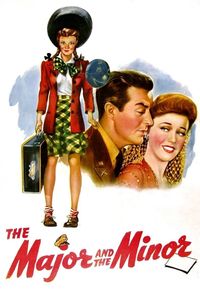
    (On Cable TV, August 2020) I’m on a long road to see most of writer-director Billy Wilder’s movies, so it was inevitable that I’d eventually make my way to his English-language debut feature sooner rather than later. After all, The Major and the Minor is a perfectly entertaining romantic comedy, featuring none other than Ginger Rogers and Ray Milland. The fun gets started when the twentysomething protagonist, out of cash for a ticket home, dresses up as a little girl and doesn’t convince the ticket takers. Chased through the train, she finds refuge in the cabin of an officer and, from there, follows him to the military academy where romance blooms. While this was the first American film directed by Wilder, it was far from his first script, and his comfort in writing good, zesty yet comfortable material shines through: Despite a premise that doesn’t really hold up (there’s a limit to how much two tresses can make Rogers pass as a twelve-year-old), the dialogue is great and even the familiar engine of romantic comedies feels rejuvenated. The Major and the Minor is quite funny, and it does wait its own sweet time to deliver the romance promised throughout the picture—the mark of a great filmmaker.

  • The Story of Vernon and Irene Castle (1939)

    The Story of Vernon and Irene Castle (1939)

    (On DVD, August 2020) While it’s always great to see another new-to-me Fred Astaire film, The Story of Vernon and Irene Castle does lead me once again (but not as strongly as in The Barkleys of Broadway) to state that having Astaire play a historical character is a waste—Astaire is Astaire no matter what his character’s name is. Still, this loosely adapted biography of the title characters does let Astaire do a few things—being in a loving relationship from the get-go with frequent screen partner Ginger Rogers, for one (none of that obsessively pursuing the girl until she says yes), playing in a more realistic film and—gulp—dying at the end of the movie. That last particularity isn’t as much of a downer for two reasons: for one thing, it’s historical fact. For another, Astaire is Astaire—he still had nineteen subsequent musicals to go, and it’s not a last-minute death in a minor film that would depress viewers. The lack of characterization may actually help in softening the blow here. Still, it does highlight that of all of Astaire’s musicals (and more specifically the ten Astaire/Rogers collaboration), The Story of Vernon and Irene Castle is a more grounded film, and a duller one as well: absent the genial comedy of Astaire’s other musicals, it feels longer despite the touches of humour and dance numbers. Said dance numbers owe more to the Castles than to Astaire, meaning that they’re more restrained and not quite with the razzle-dazzle of what Astaire pulled off in previous films. While it must have felt natural to cast a great dancing duo to play the roles of famous ballroom dancers, this film stretches the limits of Astaire’s dancing persona as far as it could go in that direction. Elements of The Story of Vernon and Irene Castle would pop up in later movies (having Astaire as a pilot in The Sky’s the Limit, having Rogers and Astaire as a real-life couple in The Barkleys of Broadway), but it’s a good thing that Astaire never once headed back in that direction. I still liked the movie (it’s really hard to dislike an Astaire film), but I would rank it firmly in the actor’s lower tier.

  • The Barkleys of Broadway (1949)

    The Barkleys of Broadway (1949)

    (On Cable TV, July 2020) Fred Astaire and Ginger Rogers are reunited for the tenth and final time in The Barkleys of Broadway, playing a married Broadway couple whose bickering gets out of hand, leading to strife and separation. The film’s production history tells us that Judy Garland was first slated to play the female lead but had to bow out and was replaced by Rogers, thus providing an interesting ten-year-later epilogue to the Astaire/Rogers professional duo. In most ways, it’s a classic MGM Freed production from the good years of the unit—where the focus on Broadway presenters means that there are plenty of diegetic occasions to present song and dance numbers. We shouldn’t underestimate the fun of seeing Oscar Levant in a role tailored to fit both his musical talents (as he plays a Tarkovsky piano concerto on-screen, hands flying on the keys) and his comic persona with a penchant for acerbic bon mots. Special effects make the “Shows with Wings on” sequence worth a look, as one of Astaire’s later-career solo numbers with a gimmick. Fittingly enough for an Astaire/Rogers finale, there is some great duet dancing here. Alas, as with many musicals, the balance of comedy to drama is not ideal in the third act—it’s not as if the resolution is in doubt. Even as a rather average Astaire/Rogers film, The Barkleys of Broadway is a lot of fun to watch for musical comedy fans. It also heralds, in its own way, a few spectacular years for MGM musical comedies.

  • Tom, Dick and Harry (1941)

    Tom, Dick and Harry (1941)

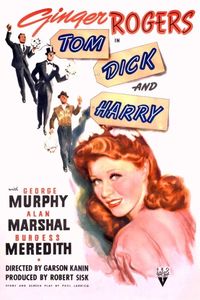
    (On Cable TV, May 2020) There was a clear risk that Tom, Dick and Harry’s familiar premise (a young woman must choose between three different suitors) would have produced a very familiar romantic comedy, but the Oscar-nominated script goes a few extra steps to ensure that the film would be something better than the average. For one thing, it’s far more visually imaginative than other similar movies of the time, from an interesting opening credit sequence that plays with anagrams to extended daydream sequences in which our heroine imagines visions of her future life with her suitors in a dollhouse. Ginger Rogers, who won an Oscar for Kitty Foyle during the shooting of this film, seems to enjoy a purely comic role and looks good with a great hairdo. Some good dialogue underpins a familiar tale, albeit one that goes to the wire before delivering a conclusion. I do have issues with that ending—not so much how it ends as the way it goes about it in a way that could have been more graceful and hopeful. Still, some of the film’s period details can please and surprise: while the newsreel mention of Hitler is a bit wild for a romantic comedy, the film does provide an interesting depiction of the life of a telephone operator—and even throws in a fun split screen to depict a three-way phone conversation. But all of that pales in comparison to the examination of social mores at the time—Tom, Dick and Harry is not just about having the richest guy throw himself at the heroine, but her making a choice about which one is the most appropriate.

  • Rafter Romance (1933)

    Rafter Romance (1933)

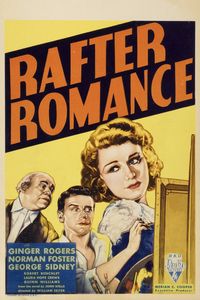
    (On Cable TV, April 2020) Even by the multi-decade standards of Hollywood romantic comedies, Rafter Romance’s premise remains built on an impressive contrivance: Due to financial problems, two strangers (Ginger Rogers and Norman Foster) agree to share an attic apartment sight unseen, one by day and the other by night. Despite never meeting, the two end up in an antagonistic relationship by playing pranks on each other. But as these things happen, the two eventually meet and fall in love, while not knowing that they’re sharing space with each other. It’s all quite amusing, if not revolutionary—and at 72 minutes, quite short as well. Part of the film’s charm is that it dates from the Pre-Code era, what with a man and a woman sharing an apartment, some bare legs, good-luck swastika (yes, yes), suggestive language and other things that would not be out of place in a far more modern film. Rafter Romance was, for decades, a lost film—its rights having been ceded to their producer and not kept in the RKO library. It took TCM’s efforts to find, restore and show the film again. While it’s not a great film, it is definitely the kind of romantic comedy that’s well worth having again in the collective film library of the world.

  • Roberta (1935)

    Roberta (1935)

    (On Cable TV, April 2020) In assessing Roberta, it’s useful to be reminded that even if this was the third Fred Astaire and Ginger Rogers film, the pair wasn’t nearly as famous as they’d become the next year with the success of Top Hat. Their roles in the film are important but not dominant: There’s also Randolph Scott and Irene Dunn having nearly as much screentime as the busy plot tries to have two romances going at once. The disappointment continues with the relatively few musical numbers and their impact: While Roberta is professionally produced, the songs aren’t that memorable (although I do like “I won’t dance”) and neither is the choreography. While Astaire and Hermes Pan were getting up to speed, we’re still far away (well, aside from the hand-piano bit) from the high-concept sequences of Astaire films to come. If you’re a fan of those later movies, Roberta feels familiar—not terribly special, but comforting nonetheless. The plot itself is a bit dull, and is largely led by Scott and Dunne—something about an American ex-football player (Scott) inheriting a fashion house in Paris while his friend (Astaire) plays in a band. There are a few good barbs, but the plot gets shoved away quickly when Astaire and Ginger get their dancing shoes and start tap-dancing away: they’re always fun even when Roberta is determined not to give them too much time. But that would quickly change in the following months, and give us the film that ensured their long-lived popularity.

  • Shall We Dance (1937)

    Shall We Dance (1937)

    (On Cable TV, March 2020) As much as all Astaire/Rogers romantic comedies are to be treasured forever, not all of them are created equal, and Shall We Dance is definitely in the lower tier. The plot is just as typically irrelevant as in their other films, except that it’s convoluted and uninteresting. Worse, the musical numbers tend to be underwhelming and forgettable. Only a few—like the roller-skate sequence—stick in mind and few of them are anthology pieces. One interesting exception is the “Slap that Bass” sequence (never has a ship’s engine room has been so clean, nor so art deco!), which showcases Astaire’s ideal of racial integration in a way that’s more easily digestible than other attempts involving blackface.  The relationship between both lead characters also seems healthier than the norm for Astaire films—something probably motivated by the growing rapport between the two. Still, there are plenty of missed opportunities and underwhelming execution here: the pacing is slow, it takes a long time to see the two leads dancing, there isn’t much of a romantic duet, and the comedy is lacking. Shall We Dance is still worth a watch (1930s Astaire on an off day is still superhuman), but it does fall short compared to their other movies of the time.

  • Flying Down to Rio (1933)

    Flying Down to Rio (1933)

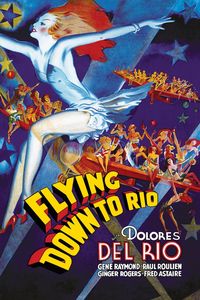
    (On Cable TV, February 2020) Everyone’s got to start somewhere, but for any viewer since 1934 it’s still a bit strange to see Fred Astaire in a supporting role in his first feature film Flying Down to Rio. It wasn’t his first feature film, but only by a technicality: A month earlier, Astaire showed up on screens for a single scene (playing himself) in Dancing Lady. Considering that there wasn’t anything to play in the earlier film, you can consider his supporting character role in Flying Down to Rio to be his first movie role as an actor—and more significantly, the first of his legendary pairings with Ginger Rogers. Any Astaire fan can clearly see that Hollywood didn’t know what to do with him yet—being relegated to a romantic subplot is something, but the way the camera captures his dancing (full frame but not full body, often obscured by others and relegated to the background, clearly not commanding the screen like he would in later films) is somewhat atypical for him. Still, Flying Down to Rio’s breezy fun still makes up for the less-than-reverent place given to Astaire: as a slightly naughty Pre-Code musical comedy that can escape to the exotic atmosphere of Rio de Janeiro, the film often feels significantly more risqué than the rest of Astaire’s career—the “Just a Gigolo” number is amusing, and his later films would most definitely not feature a dark-haired beauty lead actress in a two-piece bikini. One more thing distinguishes this early effort from Astaire’s later romantic-cad persona—his character shows up as a fiancé rather than going through the persistent-suitor routine… and I count this as an improvement of sorts. Aside from Astaire, Flying Down to Rio has a few other assets: the lead couple’s romantic adventures are entertaining, lead actress Dolores Del Rio is underused, Etta Moren is lovely as “the colored singer” (this is a direct quote from the credits) and the film ends on a very high note with an early special-effects showcase featuring a line of dancers on planes flying high above Rio. Still, the film’s most convincing asset here remains Astaire, who makes the most out of a secondary role and clearly shows his chemistry with Rogers. No wonder that by the following year, The Gay Divorcee would launch a long series of classic Astaire films, with or without Rogers at his side.

  • Vivacious Lady (1938)

    Vivacious Lady (1938)

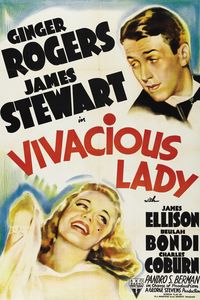
    (On Cable TV, January 2020) In retrospective, there was a different James Stewart for every decade. While he never abandoned the likability that made him one of Hollywood’s biggest stars, Stewart played to different strengths every decade. His best 1930s persona was that of the young romantic lead, a bit naïve, pursuing women more sophisticated than his character and over his head most of the time until came a conclusion that made good use of his good nature. In this light, Vivacious Lady is an almost prototypical Steward feature for the 1930s—not the best, but one of Stewart’s earliest starring roles and one that’s just as representative of what he was doing then as anything else. Here he plays a shy intellectual who falls in love with a Manhattan nightclub singer (Ginger Rogers) and marries her after a whirlwind romance. If that setup seems implausible, keep in mind that it’s a mere prelude for the real plot of the film—returning home to his parents, his job, and small-town prejudices. Forced in increasingly contrived situations (such as introducing her as his newest student), Vivacious Lady deftly plays with comic situations and character types, setting up situations to make us anticipate the result, then subverting them slightly for a surprise. Stewart is quite good in the leading role, but Ginger Rogers is just as good opposite him—she gets a few of the film’s biggest laughs, and she shares a slapping/counter-slapping sequence with Frances Mercer that quickly escalates into one of the film’s best scenes. The third act is a bit weaker than the rest, as it finally has to pull all of the subplots together. Still, Vivacious Lady is a pretty good screwball comedy, and it happens to star two of the best-remembered stars of the 1930s. Rumours have it that Rogers and Stewart had an affair while shooting the movie, and some of that energy is clearly perceptible on-screen.

  • Stage Door (1937)

    Stage Door (1937)

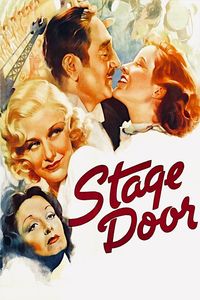
    (On Cable TV, October 2019) The links between Hollywood and Broadway remain an enduring source of fascination, especially in the early years of sound cinema where stage shows could finally be portrayed on film with some fidelity. Consider Stage Door, which takes us to a 1930s boarding house dedicated to young women trying to find a place in showbiz: an ideal environment to feature many young actresses, and to riff on themes of interest to movie audiences without quite talking about movies. To modern viewers, much for the initial attraction of the film will be its cast. Not only do we have Katharine Hepburn, Ginger Rogers, and Lucille Ball in leading roles, but Ann Miller (who was, amazingly only 14 at the time) is unmistakably recognizable in a smaller role. But as Stage Door begins, it’s the quality and the snark of the free-flowing dialogue between the ensemble cast that holds our attention. The women here have fast wits and some of the film’s best moments consist in merely hanging out in the building’s foyer with them as they chat about their careers, their dates and their shared dislike of the house’s food. Hepburn is magnificent as a haughty upper-class girl wanting to make it as an actress and becoming far more sympathetic in the process. She’s not the only one that changes quite a bit along the way, as the film goes from fast-paced comedy to drama somewhere around the beginning of the third act. Despite the sobering (but not entirely unpredictable) shift, that change of pace works rather well and provides to the film a dramatic heft that a purely comedic approach may have lacked. It certainly improves the ultimate impact of the result, with Stage Door surviving admirably well even today.