Gordon Parks

  • Thomasine & Bushrod (1974)

    (On Cable TV, June 2022) Both obvious and transgressive, Thomasine & Bushrod is a film that would benefit from being more widely known. Existing at the intersection between Blaxploitation, revisionist western and the New Hollywood standard of criminal-lovers-on-the-run, it feels at once like a far more modern film than it is, and yet a film that could only come from the 1970s. Much of the story can be fairly summed up as “black-cast Bonnie and Clyde western” and that’s already intriguing enough. It gets better once you realize that the film was directed by Gordon Parks, Jr. (of Superfly and Three the Hard Way fame), that it’s written by co-lead actor-producer Max Julien, and that its viewpoint character is clearly the woman lead played by the magnificent Vonetta McGee. As I write this, the hottest black-cast film of 2021 is The Harder They Fall, which prides itself on being a revisionist black western with strong female roles – so it’s interesting to dig back fifty years and find another very similar film that doesn’t often show up in discussions. Now, let’s be honest — Thomasine & Bushrod is more interesting than good: Despite the overt progressive intentions of the film, the execution often falls back on obviousness, formula and last-minute reversion to tradition. The film’s stated intention to steal from the rich white in order to give back to the poor black is undermined by a moralistic ending that harkens back to the requirements of the Production Code, and also makes the film undistinguishable in this regard from many, many other outlaw-lovers-on-the-run films brought to screens around that time. The film itself does remain worth a watch, though – it still feels daring, McGee looks superb and the film occasionally gets a great moment or two. Thomasine & Bushrod is certainly worth adding to anyone’s deep knowledge of 1970s cinema, just as Blaxploitation was momentarily opening a few unusual doors for black representation in film.

  • Shaft’s Big Score! (1972)

    (On Cable TV, April 2022) The original Shaft was a defining moment in Blaxploitation’s history, but it’s useful to remember that it was put together on a threadbare budget – producers weren’t sure that there was such a thing as a market for black-cast thrillers, and director Gordon Parks had to stretch his production money to make it look good. One year later, with Shaft’s Big Score!, it was obvious that there was money to be made from the character, and this sequel visibly has more money to play with – all the way to a climax involving a warehouse and an exploding helicopter. (Alas, even quadrupling the budget couldn’t get Isaac Hayes back to score the sequel.)  Parks being freer to execute his vision, the cinematography is more impressive as well – wide-scoped, more frequently outdoors, not quite as grimy as the first film. The flip side of that more assured approach, however, is that the rough-hewn charm of the original is lessened, along with its novelty: Shaft is an established quality here, and he behaves as if everyone is expecting more of the same from him. I’m curiously ambivalent about Shaft’s Big Score! – as someone who found the original film more scattered, gritty and unpolished than its reputation suggests, I appreciate the better production values of the sequel… but can’t deny its mechanical impression.

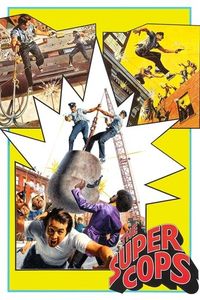
  • The Super Cops (1974)

    The Super Cops (1974)

    (On Cable TV, September 2021) If you want to talk about a blast from the past, have a look at The Super Cops, a rather joyous police comedy set in the desolate urban landscapes of early-1970s New York City. The plot has to do with two overeager buddy-cops taking down criminals and making busts by the dozen, earning the enmity both of their fellow cops, street hoodlums and internal affairs. While the setting is almost apocalyptic (NYC was in a terrible shape at the time), the tone of the film is considerably jollier than its setting, as our two fast-talking cops have a lot of fun while busting criminals, seizing drugs and making fun of their corrupt colleagues. The tone is resolutely upbeat, with plenty of references made to Batman & Robin along the way. Unbelievably enough, it’s based on a true story — but as the careers of those two real-life policemen shows (both were arrested for various reasons later on), viewers are justified in being skeptical of anything presented at face value. The result is… interesting, and not that far away from blaxploitation, considering that it’s directed by Gordon Parks. As of 2021, the film has a strange quality, exulting at the actions of two (white) policemen that can be seen as problematic in a broader context of drug legalization and community engagement. But as I said — The Super Cops is a blast from the past: unlike historical period pieces made today looking backward, we don’t get to choose what comes out of those older films.