Gore Vidal

  • Paris brûle-t-il? [Is Paris Burning?] (1966)

    Paris brûle-t-il? [Is Paris Burning?] (1966)

    (On TV, December 2021) I thought I had seen most of the big WW2 epic movies, but as it turned out, there was at least one more waiting for me—Paris brûle-t-il?, an epic French-American co-production re-creating the last moments of Paris’ Nazi occupation. Adapted from an eponymous book by Larry Collins and Dominique Lapierre, the script is from the legendary duo of Gore Vidal and Francis Ford Coppola. The ensemble cast is nothing short of amazing, what with such notables as Orson Welles, Kirk Douglas, Robert Stack, and Anthony Perkins on the American side, with Jean-Paul Belmondo, Alain Delon, Leslie Caron, Simone Signoret and Yves Montand on the French side (plus Gert Fröbe on the German side, among so many others). Few of them have more than a few scenes given the scattered chronicle structure fitting weeks of complex diplomatic and military manoeuvers in less than three hours. Shot in black-and-white (reportedly to accommodate green-fake Nazi flags draped over mid-1960s Paris, but also to integrate period footage), the film is rarely more striking than when it re-creates combat in eternally recognizable Paris neighbourhoods without the crutch of CGI. There’s a reason why the 1960s were the heyday for expansive re-creation of WW2: the conflict wasn’t as fresh, but the people were still there to make sure it was credible. Unexpectedly engrossing, Paris brûle-t-il? is an admirable dramatization of an episode of WW2 that could have gone differently, but ended up showcasing some enduring images of victory over the Nazis. It’s just about essential viewing for WW2 cinephiles, and the amazing cast certainly helps keep you interested in even the slightest new character.
  • Caligola [Caligula] (1979)

    (YouTube Streaming, August 2021) Even in the vast universe of wild movies in cinema history, there has never been and will never be anything quite like Caligula. Produced at the end of the 1970s by pornography mogul Bob Guccione with the intention of bridging the mainstream movie world with the “porno chic” movement of the permissive decade, this is a film that has both well-known actors (Malcolm McDowell, Helen Mirren) and pornographic footage. Even knowing all about Caligula’s reputation, I still blinked whenever the X-rated material showed up on-screen, gradually pushing back the familiar limits of what we’re used to seeing on-screen: Nudity: Yes. Erect phalluses: Yes. Graphic Oral Sex: Yes. Full penetration: Yes. Ejaculation: Yes. And that’s not even getting into the far less entertaining gore and violence. But wait, because the film’s production is one for the history books as well. Offering perhaps the purest example of how movies are written thrice, we here have a script by Gore Vidal (!) meaning to explore the concept of total power leading to total corruption, being handed over to exploitation director Tinto Brass meaning to show luridly how a corrupt individual becomes even more corrupt once powerful, being handed over to producer Guccione, who shot the X-rated footage that was then added after the main actors had left the film, blending everything into a bizarre mash-up of sex, violence and some remaining satire. Caligula is fascinating, but it’s not a good film: The many hands that rewrote the film just end up producing an incoherent historical drama with jolts of hard-core sex. On the other hand, it does offer the irresistible trivia that Mirren once starred in a film with unsimulated sex — and she still to this day seems amused by it, which is appropriate considering that her character is probably the most appealing in the film. Still, it’s a surprisingly dull movie, and its length is made even worse by the way the film repeatedly stops to highlight hardcore sex with no relationship to the plot. A unique viewing experience and a wild filmmaking history don’t always end up equalling a good film. The idea that there will never be another film like Caligula is frankly more of a relief than something to mourn. Fun fact: Midway through watching Caligula, the police came knocking at my door… but the explanation (it turns out that leaving a fully-lit garage door open at 1:30 AM in my quiet neighbourhood will get the police to come knocking to ask if everything is all right) is not quite as satisfying as the fun fact itself.

  • Suddenly, Last Summer (1959)

    Suddenly, Last Summer (1959)

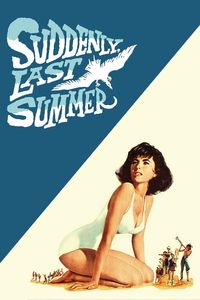
    (On Cable TV, June 2021) It strikes me that a good way to distinguish between new classic movie fans and veteran ones is to ask them about Suddenly, Last Summer: Novice film fans, not having seen the film, are likely to be astounded by the top talent assembled here: Elizabeth Taylor, Montgomery Cliff and Katharine Hepburn on the acting front, with Joseph L. Mankiewicz at the direction and none other than Gore Vidal and Tennessee Williams penning the script, how can it be anything than terrific? Then there are the veteran classic movie fans who, having seen the film, are simply shaking their heads while saying, “You should see it before getting excited.” The most important name here is probably Tennessee Williams, since his specific sensibilities dominate the film’s narrative in such a way as to influence everything else. True to form for Williams, the story he’s telling is a melodrama with a central (but faceless) character who’s as homosexual as could be at the time. If I understand the film’s production history, the Williams one-act play was then adapted for the screen by Gore Vidal, leading both to accuse the other of sabotaging the result. No matter who wrote it, director Mankiewicz went for maximal melodrama in executing it, with Hepburn being an enthusiastic participant in the result — her role as a family matriarch is heightened opera the moment she descends on-screen in an enclosed throne, and the flowery soliloquies she delivers would have been ridiculous from any other actress. Cliff does his best to keep up as the audience’s representative in understanding the profoundly dysfunctional family in which he’s been asked to intervene, but he routinely gets overshadowed by Hepburn’s arch overacting and Taylor’s ability to take her dialogue right up to eleven even with a heaving low-cut dress. The score is another intrusive participant, underlining every sordid revelation with a heavy note. It’s quite wild, and the narrative never stops one-upping itself, eventually reaching for a cannibalistic conclusion reinforcing the era’s prejudice against homosexuals. What’s more, I’m glossing over the rape, incest, and intended lobotomy as a way to keep the family secret — as I’ve said, it’s a wild movie, and one that’s more impressive for how quickly it becomes untethered from reality than for producing the results that the cast and crew would have preferred. By sheer happenstance, I followed up Suddenly Last Summer by the viewing of homosexuality-in-Hollywood-history documentary The Celluloid Closet, and I’m fortunate that this was the order I watched both films because The Celluloid Closet’s description of Suddenly Last Summer’s ludicrousness would have been too wild to believe if I hadn’t just watched the film. There are plenty of landmark movies in classic Hollywood history, and if Suddenly Last Summer is really not one of them, I still feel as if I just graduated to another stage of understanding Hollywood history simply by having watched it. Incredulously.

  • I Accuse! (1958)

    I Accuse! (1958)

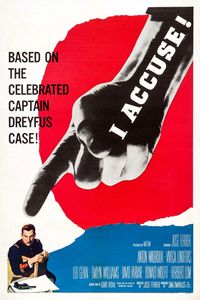
    (On Cable TV, May 2021) The Dreyfuss affair is one of those all-time classic scandals, blending treason, false accusations, antisemitism and (later on) public embarrassment for the French government, its military, the exile of a well-known writer and much more. It lasted roughly twelve years from 1894 to 1906 and led to several films, including the 1937 Academy Award-winning The Life of Émile Zola, and the somewhat lesser-known film I Accuse! two decades later. There are a few differences between the two — the 1958 film is presented in colour, focuses far more on Dreyfuss than Zola, and stars José Ferrer rather than Paul Muni. Simply changing the performer does a lot — while Muni’s specialty was being a chameleon as per the requirements of his role, Ferrer (a Francophile who also played such icons as Cyrano de Bergerac and Toulouse-Lautrec) is a far more distinctive presence: a star rather than a character actor. He also, significantly, directed the film from a script by Gore Vidal. This (plus the incorporation of new information about the case that was not available in the 1930s) gives I Accuse! a sufficient distance from the previous film to make it a worthwhile watch. It is, admittedly, a bit detached and overlong at times — Vidal’s cerebral screenplay plus Ferrer’s journeyman direction doesn’t quite ignite the material. But it’s still watchable without trouble, even if a more definitive recounting of the entire scandal, free from Production Code restraints and lingering national embarrassment, still awaits.

  • The Best Man (1964)

    The Best Man (1964)

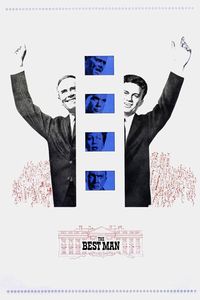
    (On Cable TV, January 2021) I’m an avowed good audience for any movie that takes a peek and a poke at the American political process—especially now, in the dark days of January 2021, where American democracy is under attack from within with plenty of bad faith, outright lying and self-serving cowardice against authoritarianism to go around. The Best Man takes us back to the not-so-innocent 1960s, at that quasi-mythical event so beloved of pundits: a contested primary where every vote is on the line to decide who’s going to represent a major political party to the presidency. Henry Fonda makes the best use of his innate likability as an intellectual candidate with plenty of hidden baggage—not as much the multiple affairs, but a mental health episode that would be damaging if revealed to the public, as his chief rival, a venal opportunist, intends to do to secure the nomination. (This anticipates what happened to Vice-Presidential nominee Thomas Eagleton in 1972, dropped from the Democratic ticket to disastrous effect after his own history of mental health issues became known—which, in retrospect, became something of a karmic retribution for Eagleton’s then-anonymous quip denouncing the nominee’s “amnesty, abortion, and legalization” agenda. But I digress.)  A film of pure backroom deals and untoward pressure put on delegates, The Best Man is a political junkie’s dream. It ends up tackling some interesting issues for the time and Gore Vidal’s script pulls few punches considering the constraints under which studio films operated at the time. (It’s known as the first major American film to use the world “homosexual.”)  William Schaffner’s direction is taut (watch that twirling camera later on!), the black-and-white cinematography is appropriate, and the atmosphere of a political convention is cleverly re-created through good mise en scene and stock footage. While politics have changed, and one of those changes is the likely disappearance of contested conventions, some other aspects of the film remain curiously contemporary. I defy anyone to hear one of the final lines of dialogue, “you have no sense of responsibility toward anybody or anything. And that is a tragedy in a man, and it is a disaster in a president,” and not be reminded of a recent disastrous president with no sense of responsibility toward anything or anything.