H. G. Wells

  • Island of Lost Souls (1932)

    Island of Lost Souls (1932)

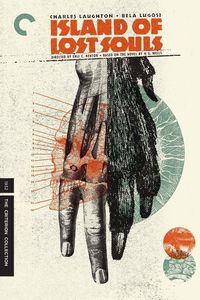
    (On Cable TV, April 2021) By now, I don’t really need another reminder about the vitality of Pre-Code movies, but Island of Lost Souls is an eloquent example of how movies of that era can feel modern — you wouldn’t see anything like this until the 1960s. The source material practically begs for grown-up treatment: H. G. Wells’ The Island of Dr. Moreau may be 125 years old at this point, but it’s still a potent exploration of disturbing ideas and visuals, with enough material questioning the idea of a creator and social conditioning to still feel dangerous to authorities both religious and secular. Such material demands artistic freedom, and filmmakers in 1932 certainly tried to get away with a lot — Island of Lost Souls is shot like a horror film, with horrible revelations and the still-surprisingly downbeat finale that the material required. The great Charles Laughton plays Dr. Moreau with his typically compelling style, making him a far more interesting figure than the bland antagonist played by Richard Arlen. But if you’re looking for one reason to see the film, just one — it’s got to be Kathleen Burke as “Lota, the Panther Woman” — clearly coded to be a wild, animalistic figure, she looks amazingly modern with long curly dark hair and a demeanour that’s nowhere near how “proper” actresses were directed at the time — she’s like a piece of 1980 cinema thrown half a century back in time and it’s no wonder if she still has a following nowadays. Skeptics beware: Island of Lost Souls is still surprisingly good—It’s not such a heresy to say that there still hasn’t been a better screen adaptation of Wells’ source material, especially considering the debacle that was the 1996 Marlon Brando film.

  • The War of the Worlds (1953)

    The War of the Worlds (1953)

    (On Cable TV, July 2019) Science Fiction movies of the 1950s often featured aliens invading Earth, but none of them were as expansive as The War of the Worlds in showing us a big-scale invasion. Led by producer George Pal, it loosely takes the classic novel H. G. Wells novel as inspiration for a widescreen depiction of an international invasion, even if the story stays focused quite tightly on a Californian scientist and his distaff counterpart. Surprisingly sombre at times (seeing WW2 footage used to portray city devastation is sobering enough, even without realizing that the film was released less than a decade after the war), and downright horrifying enough to give nightmares to my younger self (young boy not yet jaded by horror plus that shot of a soldier being disintegrated to a green skeleton equals unhappy memories), The War of the Worlds is at its best when adapting the Wells novel to the realities of the 1950s—even in a twenty-first century where Steven Spielberg delivered his own take on the story in 2003, this version is often fascinating as a pure period piece. Alas, some things don’t work as well. The initially super-competent female character played by Ann Robinson starts out fascinating, then degrades throughout the film until she becomes a shrieking simpleton right in time for Gene Barry’s character to rescue her during the film’s biggest suspense sequence. The Technicolor cinematography is striking, although it’s taken a bit too far when the alien tripods show three-coloured cells in their tools. Still, you have to admire the audacity of the film’s intention in showing a global engagement and its lovely period California setting. Both explain why The War of the Worlds remains worth a look now, despite the now-creaky special effects and the outdated social values.