Hal Holbrook

  • Wild in the Streets (1968)

    Wild in the Streets (1968)

    (On Cable TV, November 2020) You can often learn more about an era by looking at its middle-grade genre movies than its masterpieces: the id is closer to the surface, and the lack of even trying for timeless relevance can ground the work into the obsessions of the moments. So it is that American Pictures International’s B-grade Wild in the Streets spins one simple but mind-boggling statistic—that in the late 1960s, “52% of the US population was under 25”—into a wild satirical comedy in which a lowering of the voting age leads to the youth taking power. [Note: According to the data I could find, the share of the under-25 as a percentage of the total US population peaked at 45.8 in 1967, with the median age of the US population at an all-time low in 1970 at 28.1 years—in other words, take the film’s central statistic with a grain of salt.] It’s a film that starts out crazy with a capsule demonstration of a rotten family situation, and then wilder and wilder until the end. Clearly made to court the youth audiences, Wild in the Streets is unabashedly crammed with musical numbers, teenage heartthrobs and pointed barbs at older people: Christopher Jones is compelling in the lead role of a teenage rock superstar turned president of the United States, Shelley Winters is thoroughly detestable as the protagonist’s abusive mother, while Hal Holbrook is a likable actor in an ingrate role as a politician (also abusive toward his kids) who gets swept by the youth wave—and Richard Pryor has a small role as a teenage activist! Music is a big part of the film, and for good reason — “14 or Fight” is insanely catchy, far more than the film’s lead anthem “The Shape of Things to Come.” Given the film’s outright satirical aims, it’s no surprise if it ends up taking a real issue (the drive to lower the voting age to 18 across the United States during the late-1960s) and pushing it to extremes. You’re really not supposed to take it seriously: By the film’s last third, anyone over 30 is pushed in mandatory retirement, and sent to re-education camps where they are kept docile with a permanent done of LSD. And then the pre-teen set takes aim at the “older” teenagers… but I’ve said too much. In reflecting a funhouse version of the youth movement that peaked in the alte-1960s, Wild in the Streets does remind us of the incredible demographic forces that were such a strong engine for change in the Sixties—something often buried deep under the headlines and news clips of the era. It does have a good sense of humour about itself (as the coda suggests, the teenagers aren’t getting away with anything here), a really good energy (as per its Academy Award nomination for Best Editing) and enough craziness to make the satire worthwhile. It’s surprisingly fun and teaches us quite a bit about 1968 without the dourness of the then-emerging New Hollywood.
  • The Group (1966)

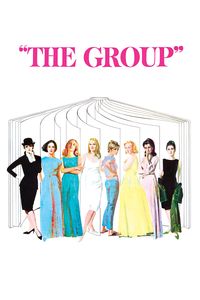
    The Group (1966)

    (On Cable TV, June 2020) In adapting Mary McCarthy’s bestselling novel to the screen, The Group runs into a few problems, most of them having to accommodate an ensemble cast of eight women, plus the men who usually make trouble in their lives. Even at 150 minutes, it’s a bit of a challenge—especially since the story spans years from 1933 to 1940 and multiple heartbreaks as the eight women don’t quite achieve their idealistic goals after graduation. It’s not exactly the most riveting of premises, but seeing Sidney Lumet’s name as director drew me in, and the rest of the film gradually grew on me. The film is clearly a 1960s feminist drama—the well-educated, intelligent protagonists have dreams of intellectual lives that are gradually ground down by the demands of marriage, children and household. You could pretty much tell the same story about just any graduate class since then. It does feel melodramatic and overdone by today’s standards, but you can feel how daring The Group could have been to a mid-1960s audience. As you’d guess from the premise, men don’t come across particularly well here—and bring much of the drama. With such a large cast, some of the names are familiar: Candice Bergen, Hal Holbrook and Larry Hangman, most notably. Director Lumet manages the action effectively with the succinct script he’s given—among other things, there’s an interesting visual device of typewritten alumni letter updates typed on screen as context. With such a sprawling melodrama, there was bound to be something interesting for everyone—in my case, having a look at a drunken playwright and a literary agency. Nowadays, The Group would be best adapted as a TV series—in trying to retain the novel’s details, the film does rush through a lot and delivers mere bites of drama. Still, it does have an impact.

  • Magnum Force (1974)

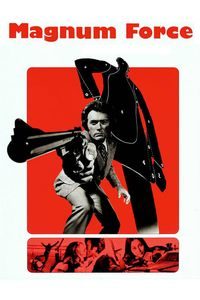
    Magnum Force (1974)

    (On DVD, April 2018) Considering how the first Dirty Harry movie made nearly everyone uncomfortable with how it glorified the vigilantism of its protagonist, there is something almost hilarious to see sequel Magnum Force try to distance itself from this position by pitting Harry Callahan against even worse rotten cops. From the first few moments of the film, with a credit sequence lovingly focus on the titular gun, it’s clear that this sequel regrets nothing and doubles-down on its assets. (Unsurprisingly, it was written by noted gun aficionado John Milius.) Here an entire group of killer cops is uncovered and while Callahan does get a few choice words about their methods, the film wants you to know and understand and appreciate that he’s nothing like those killer cops because reasons, that’s why. Or rather Callahan will gun down those that he determines to be bad rather than being told by some other guy. Or something. Perhaps it’s better to pretend that Callahan is the good guy and appreciate what he does in order to catch the designated bad guys. To be fair, Magnum Force does have its moments. The film isn’t as polished as the mean thrills of the original, but it does have Clint Eastwood (always an asset), Hal Holbrook as a no-fun superior antagonist, a detecting sequence that sees Callahan in a shooting contest with his enemies, and an interesting motorcycle chase climaxing on an aircraft carrier. The atmosphere of mid-seventies San Francisco is always worth a look even though the film itself is hum-drum. Magnum Force does build upon the first movie, though, so you might as well keep going through this one if ever you have the choice.

  • Capricorn One (1977)

    Capricorn One (1977)

    (On DVD, September 2017) I’m not that fond of anything bolstering moon landing hoax conspiracy theories, and Capricorn One (despite technically being about a faked Mars landing) is one of the codifiers of that particular delusion. But let’s not blame a glum seventies thriller for contemporary idiocy—and let’s recognize that the film, one of veteran writer/director Peter Hyams’s first popular successes, still has a modest kick to it. Much of Capricorn One’s first half is a procedural thriller explaining why and how a Mars landing would be faked, and the reasons why the astronauts would go along with it. Then, landing successfully faked, it switches gears to a more familiar conspiracy thriller, keeping a trio of desert chases for its third act. The conspiracy itself doesn’t make a lot of sense (although it is good for a few vertiginous moments, such as the lengthy shot that gradually pulls away from a helmet to encompass the studio in which everything has been broadcast) but the film does get better with its thrills as it goes along. Highlights include a first-person runaway speeding sequence through a city that feels viscerally dangerous, and an extended air chase sequence toward the end that rivals anything produced since then. Hyams is a canny filmmaker, and it shows through a film that occasionally feels as gripping as it must have been back then. There are also a few good actors: Hal Holbrook is remarkable as a man who ultimately has to fake everything in order to keep his dream alive, whereas Elliott Gould is in fine form as an unlikely action hero. (For more of Gould as a dashing lead, have a look at the rather good Canadian-made thriller The Silent Partner, also released the same year.)  O.J. Simpson and James Brolin also show up as astronauts, even though they’re severely underwritten. While Capricorn One could have been tightened up considerably, it’s decently enjoyable as it is. I’m not asking for a remake, though.