Halle Berry

  • B*A*P*S (1997)

    B*A*P*S (1997)

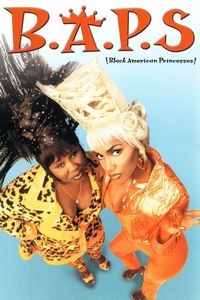
    (On TV, May 2021) Sometimes, silliness is all you need. In B*A*P*S (Black American Princesses), we have two feisty young black women somehow finding their way to a rich white man’s Beverly Hills house, upsetting the neighbour’s habits and prejudices. It’s all executed according to silly farce, what with stereotypes crashing into one another, but director Robert Townsend does get to mount a stealth attack on white orthodoxy, sending the down-to-earth exuberance of its protagonists crashing against the staid manners of their new surroundings. You can easily tell who’s good and who’s not from the way they embrace black culture — all the way to the well-mannered butler with a secret fondness for black TV shows. Martin Landau plays the charmed ailing white millionaire, but the stars of the show are clearly Halle Berry and Natalie Desselle as the titular BAPs as they set out to improve Beverly Hills culture with their own flair. Berry looks surprisingly good as a blonde, although I also liked Troy Byer (who also wrote the screenplay) as a no-nonsense lawyer. The silliness of the film’s execution is less interesting than its overall status as a racially subversive dismantlement of the white establishment. (I’m sure someone, somewhere, already wrote at length about how so-called “dumb” black comedies à la B*A*P*S and How High are far more interesting as tools of systemic racial derision.)  No, the film is not always that clever or witty in its moment-to-moment execution — I’m sure that there’s a better movie to be made from the same material (from Byer’s public disappointment with the results, the original screenplay is probably worth a look), but let’s highlight for a moment the worth of a black-written black-directed black-starring comedy openly espousing black values as explicitly opposed to the white Southern California establishment. While contemporary reviews were harsh (even Roger Ebert, normally a sympathetic audience for this kind of film, hated it), I suspect that more recent assessments are kinder to it — indeed, B*A*P*S seems to have become a bit of a fondly-remembered cult classic in the meantime, which sounds about right for the kind of silly film it appears to be.
  • Introducing Dorothy Dandridge (1999)

    Introducing Dorothy Dandridge (1999)

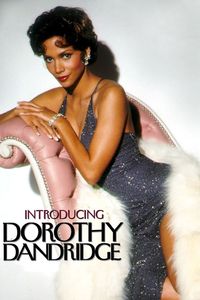
    (In French, On Cable TV, October 2020) Halle Berry was clearly making a bid for respectability in made-for-HBO biopic Introducing Dorothy Dandridge, so closely was she trying to be Dandridge in this feel-bad biography. As an observer of Classic Hollywood and a confirmed fan of Dandridge’s rare but precious appearances on the big screen, this film was a bit of a sour treat for me—While it often delivers a credible portrait of Classic Hollywood on a modest budget, it also portrays a few beloved figures with scorn for what they did to Dandridge… and it’s hard to disagree. First up, though: Berry is magnificent as Dandridge, one of the first black actresses to earn some renown in 1950s Hollywood. It certainly helps that director Martha Coolidge goes out of her way to re-enact as much of Dandridge’s highlights as she can—watch these scene comparisons for proof. As one would expect, the film does confront the racism that Dandridge encountered—both overt and more pernicious. The film’s biggest criticisms are reserved for two figures that I respect a lot for their film work—Harold Nicholas (of the Nicholas Brothers dancing duo) for abusing and cheating on Dandridge, and director Otto Preminger for taking Dandridge as a mistress and giving her terrible career advice. All of this is factual—but not exactly glorious for both men. More annoyingly, the film definitely takes a “Dandridge never did anything wrong” approach that closely espouses its progressive values… but seems unsatisfying in explaining Dandridge’s progressive fade and untimely death. Still, buoyed by Berry’s performance, Introducing Dorothy Dandridge is a film well worth watching—after all, it’s the closest we’ll ever get to seeing a new Dandridge performance.

  • The Flintstones (1994)

    The Flintstones (1994)

    (Second Viewing, In French, On TV, January 2020) I remember seeing The Flintstones in theatres upon release… in its original English version. The distinction is important because the French-Canadian dub of The Flintstones’ TV series achieved near-legendary status due to its refusal to adopt even the semblance of a mid-Atlantic French accent—it’s pure Québec joual, meaning that generations of French-Canadian kids felt that the series somehow came from not too far away. (Twenty years later, The Simpsons did the same trick.) I was reminded of that distinction all over again while stumbling over a French-Canadian broadcast of The Flintstones movie—I generally prefer to watch films in their original language, but this was almost a welcome exception, as the characters speak with a pronounced Montréal-area accent. Sound aside, there is something magnificent about The Flintstones’s late-analogue-era dedication to recreating the funhouse visual representation of Bedrock. Nearly every single frame of the film is strongly art-directed with custom sets, costumes and gadgets. There is some clunky CGI used here for some of the supporting animal characters (including a surprisingly fluffy big cat), but much of The Flintstones heroically does its best with painted foam and practical effects. The commitment to the visual humour of the original series is admirable, and it almost compensates for a fairly dull family-sitcom story and the outdated social conventions taken straight from the early-1960s TV show. The portrait of the nuclear family that was straight parody in 1960 felt creaky in 1994 and now looks increasingly dumb… but that’s what you get. At least, from an acting talent, John Goodman is picture-perfect as Fred Flintstone. The rest of the casting is… debatable. Halle Berry (as “Sharon Stone”) is a delight to watch but she seems to belong in a different, racier movie. Elizabeth Taylor seems just as misplaced as a prototypical mother-in-law, although she’s good for a few laughs. Elizabeth Perkins is fine as Wilma, Rick Moranis is borderline acceptable as Barney but Rosie O’Donnell continues to mystify new generations of movie reviewers when miscast as Betty. The Flintstones is nowhere near being a good movie, but I can practically guarantee that a twenty-first-century watch (especially for new viewers who have no idea about the original TV show) will be a can’t-stop-looking experience.

  • Bulworth (1998)

    Bulworth (1998)

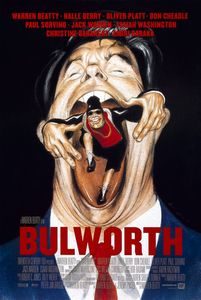
    (On Cable TV, November 2016) I really thought I’d like Bulworth more than I did. As a look in the life of an American politician, it’s not too bad: we get a feel for the trade-offs, the deals, the drudgery of the work. It’s even promising when it becomes obvious that the lead character has decided to give it all up and hires an assassin to take himself out. But then Bulworth decides to become heavily didactic, has its character raps through a few scenes and more or less gives up on any kind of unified tone. It doesn’t work, even despite the good efforts of the performers. Warren Beatty is very good as the titular politician; meanwhile, a young Halle Berry shows up as a young woman that teaches him the errors of his ways. (She gets a very good speech answering “Why do you think there are no more black leaders?”) Bulworth, to its credits, plays with a few daring ideas that remain evergreen (and I write this even despite the crazy electoral circus that was 2016), trying to pass along those ideas within a credible framework. (Witness Oliver Platt, shining as a political operative trying to keep his candidate on track.) But Bulworth ends up shooting itself in the foot a few times, most notably by having Beatty vamp it up by rapping at high-society events, adopting black speech patterns and trying to ingratiate himself in lower society. It’s often more embarrassing than successful, betraying a juvenile intent more than proving its political sophistication. By the end, Bulworth has become a grab bag of intriguing moment and cringe-worthy ones. Beatty the actor does well, but Beatty the director could have used more restraint and another script re-write. But then again, after the results of the 2016 American elections, it may be that our ability to distinguish satire from reality has completely evaporated.

  • Catwoman (2004)

    Catwoman (2004)

    (On TV, December 2015)  Ow!  Catwoman was almost universally panned upon release, which convinced me not to see it in theatres and then proceed to forget all about it.  But it still lurks in the basement-like depths of late-night cable TV channels, ready to pounce on anyone curious enough to have a look.  Yes, it’s just about as bad as you’ve been told: Executed at a time when it was finally possible to distinguish a good comic-book movie from a terrible one, Catwoman now looks, a decade later, like one of the last gasps of the pre-MCU way of making awful movies based on comic book characters.  This Catwoman stands alone, bereft of the DC comics continuity or even the privilege of taking place in Gotham City.  She shares a few traits in common with far better-appreciated media Catwomen (Pfeiffer and Kitt, most notably) but otherwise laboriously goes through yet another boring origin story as if we hadn’t seen enough of them already.  It doesn’t feel like a Catwoman film as much as a very forgettable action movie.  It’s all in the execution, of course, and while director Pitof has an ambitious eye for special effects (some of the sequences are well designed, even if the delivery now look far better in low resolution), he’s not particularly good at telling a story, or even maintaining a sustained tone throughout an entire film.  If you keep hearing about “the basketball scene” from reviewers, it’s because it’s a special scene… best seen than described.  The supernatural mythology of the film is all over the place without a bit of central focus, the plot holes are plentiful, the so-called feminist overtones of the film (Criticism against cosmetics! Female-versus-female showdown!) are petrified by the male-gaze aspect of Catwoman’s strutting and the costume is more puzzling than sexy.  Speaking of which, Halle Berry is just about the only person who emerges from the film with some dignity: She gives her performance some warmth early on, and some energy in the latter half.  Take away her performance and some of the special effects sequences, and Catwoman is barely better than a direct-to-cable action film, with mediocre dialogue, formulaic storytelling and muddled action sequences.  I should have listened to the reviewers and stayed away, even eleven years later.

  • Dark Tide (2012)

    Dark Tide (2012)

    (On Cable TV, June 2014) Sometime, it’s obvious from the beginning that a movie’s not going to get any better. So it is that Dark Tide‘s opening sequence serves as a rote prologue and an eloquent warning: This is a movie about sharks. It’s not a refined effort. It’s not going to be particularly impressive. Halle Berry will bring nothing to the role. And characters will be eaten by sharks. Once this is established, there’s nowhere left for Dark Tide to go despite the remainder of its running time. The plot may move “one year later”, but we know what to expect as two tourists walk aboard her ship and head for the sea in an effort to swim with the sharks. Much of the following hour is spent in false scares, perfunctory character development and minor anticipation as the plot builds itself up toward a pre-ordained third act: By the time the storm starts, night falls, the boat capsizes, and sharks attack, well, we knew it was all leading to this. The only surprise is how badly-shot that ending sequence becomes: A mushy blur of black and white, with occasional flashes of red to tell us that someone is being killed. Director John Stockwell isn’t completely incompetent (there are a few sequences earlier in the movie to suggest that he has at least an idea of what he should be doing) but he completely loses whatever visual grasp he had over the story late in the film, and it’s tempting to simply fast-forward past the noise and the confusion to see who makes it alive to dawn. Berry herself gets a few dramatic bickering scenes with Olivier Martinez (usually a good actor, wasted here) but doesn’t seem to bring anything more to the role than the bikini used on the film’s posters. Dark Tide is really just a tedious and forgettable B-grade thriller, more or less destined to become cable channel filler material. Don’t expect much from it, and if you do there’s always the first few minutes to set you straight.

  • The Call (2013)

    The Call (2013)

    (On Cable TV, December 2013) I wasn’t expecting much from this low-budget serial-killer thriller, and while The Call doesn’t quite escape the confines of its chosen genre, it does have one or two high-concept moments that make its first hour worthwhile.  The chosen focus on 911 responders is novel, and the way the script uses the limits of the caller/responder link to set up a lengthy car chase sequence is the kind of stuff fit to rejoice even the most jaded thriller fan.  Halle Berry and Abigail Breslin are both initially sympathetic as (respectively) the responder and kidnapped caller, while director Brad Anderson seems to be able to wring the most out of his low production budget.  The highlight of The Call has to be the titular call, a lengthy sequence in the middle of the film where the kidnapped victim, stuck in the trunk of a car, dials 911 and tries to piece together clues as to where she is, where she is headed and who her kidnapper may be.  It’s a sequence with twists and turns and clever little moment and sadly it ends well before the film does.  Inevitably (for so are Hollywood thriller written), the character played by the lead actress has to inject herself in the action, go investigate on the ground, find clues that trained investigators have missed, go into a lair without calling for backup, and execute vigilante justice with a heavy side-order of sadism.  The Call would be a far better film without its trite and unpleasant last act –too bad that the screenwriter couldn’t recognize that the script’s best assets would be undermined by a conventional end sequence.  But so it goes with the Hollywood theory of converging premises: No matter how original the set-up, it usually ends up with a female hero facing down a serial killer in a basement. 

  • Cloud Atlas (2012)

    Cloud Atlas (2012)

    (On Cable TV, October 2013) At a time where big-budget filmmaking seems to retreat in familiar narrative structures and a complete lack of daring, Cloud Atlas comes as a welcome break from the usual.  Clocking in at nearly three hours, it features six loosely-linked narratives spanning centuries and several known actors playing different roles in each story.  Heralding the return of the Wachowskis siblings to the big screen after a few quiet years (they co-direct three of the six stories, with Tom Tykwer directing the remainder of the film), Cloud Atlas is big, ambitious and offers things that cinema doesn’t often get to showcase.  It is, in many ways, a singular movie experience, and one that deserves to be contemplated rather than simply liked or disliked.  As an adaptation of David Mitchell’s sprawling novel, it’s an excellent, even audacious re-working: the film’s structure works in ways that the novel couldn’t, and still ends up a fiercely cinematic work.  Most of the actors playing multiple roles seem to have a lot of fun, with particular notice to Tom Hanks (who gets to tweak his usual good-guy persona), Halle Berry (who gets one of her best roles yet as a 1970s journalist), an often-unrecognizable Hugh Grant, as well as gleefully multifaceted Jim Broadbent and Hugo Weaving –who even gets to play both assassin and nurse. (Some roles don’t work as well, such as when actors get to play outside their ethnicity or gender, but that happens.) The six stories interlock in subtle ways, suggesting both reincarnation of personalities and malleability of interpretation once truth becomes fiction.  For all of the good things about Cloud Atlas, it’s almost too easy to forget that this is not an easy or even completely successful film: You have to give it at least 30 minutes for the six stories to earn narrative interest, and there’s a sense that the film is definitely not tight or focused: it often appears to run off on tangents and forced similarities, and certainly will not please anyone looking for solid links between all elements of the picture.  Still, for jaded moviegoers, Cloud Atlas is as close as it gets to a truly new experience within the big-budget framework: it tries many new things, succeeds spectacularly well at some of them and leaves hungry for a bit more.  I could go on, but the film is too big to be adequately described within the constraints of a capsule review.

  • X2 [X-Men 2: X-Men United] (2003)

    X2 [X-Men 2: X-Men United] (2003)

    (In theaters, May 2003) Faster, meaner and, yep, better than the often-tepid original, this is one sequel that assumes everyone’s seen the original and so dispenses with the usual load of dull exposition. The motif of bigotry is still present -and so is the unsettling political subtext-, giving weight to the film. Despite sometimes-unconvincing special effects, those action sequences are indeed spectacular, with particular props going to the opening sequence and a very cool sequence involving iron-enriched blood. The most spectacular part of X2, however, is how it can juggle a cast of a dozen (including three Oscar winners) without too many lapses. Hugh Jackman once again steals the show, endowing Wolverine with the most steadily engrossing presence. Others deliver mixed performances: Halle Berry is better than in the original, but she, like Famke Janssen, looks bored with what she’s given to work with. (And the least said about James Marsden’s Cyclops, the most appropriate.) As summer entertainment, X-Men 2 is a strong entry, even with the rather overlong third act which degenerates in a “sacrifice” that feels contrived. But by the time the credits roll, everyone’s had enough entertainment for their money. Until the third instalment, then…

  • Die Another Day (2002)

    Die Another Day (2002)

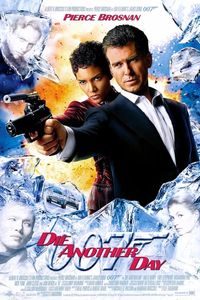
    (In theaters, November 2002) Forty years after Doctor No, James Bond is back with his twentieth movie, and Die Another Day is kind of a half-hearted renewal. In the first hour, we actually see something new: James Bond failing and being captured. Shocking! you say as the suave British spy does things never seen before. He is tortured (with a Madonna song, appropriately enough), exchanged for another prisoner and has to fight his way back in the service. Tons of winks to previous Bond adventures are there for the sharp-eyed viewer, including a further nod to “the original James Bond” for those hardcore Bond fans. The only sour notes come from Halle Berry, whose Jinx has to be one of the worst Bond Girl ever: her line delivery is flat and perfunctory, with the added disadvantage of a crass attitude that make Bond look downright humble. Yikes! The second half of the film isn’t as appealing, given that it simply delivers Yet Another Bond Adventure with the usual trappings, boring action sequences and overlong finale. Jinx is scarcely worth rescuing, the villains are flat, the directing/editing gets more and more incoherent as the film goes along and some truly hideous CGI shots (Bond surfing amongst the icebergs) contaminate the otherwise good visuals. I did like parts of the end sequence, but the rest is just dull, dull, dull… Still, it’s hard not to like Rosamund Pike and the sword-fighting sequence. Add those to the good first hour, and we’ve got a better-than average Bond. Which is all you need, really.

    (Second viewing, Jellyfin streaming, January 2025) Oof; I hadn’t seen Die Another Day in more than two decades and had forgotten almost all of it.  The good news are that it had a lot that I didn’t remember, and the bad news are that I had forgotten just how much of a sub-standard Bond it was. Oh, I don’t dislike all of it — it’s fun, after the dour and brooding Craig era, to see Bond in a good old over-the-top 1990s action movie adventure.  There are fancy gadgets, megalomaniac villains, spy films twists and turns, baby-faced Rosamund Pike looking very cute, and Pierce Brosnan being pretty good in the middle of it all.  The problem is that the rest of the film has severe problems.  Preposterous villain, irritating Bond girl (Halle Berry, wasted), slap-dash CGI sequences, too-frenetic editing, insipid writing and references to the franchise’s history that often feel hammered in.  Also, I don’t like Samantha Bond as Moneypenny.  Revisiting Die Another Day after watching a lot of the other Bond films leads me to reassess my first-viewing opinion — everything right and wrong I’ve noticed back in 2002 still stands, but the result is definitely in the lower tier of the series. Still fun to watch, though.

  • Swordfish (2001)

    Swordfish (2001)

    (In theaters, June 2001) This hits the spot for anyone just looking for a mildly ambitious action film. Starts with a literal bang -a slow-motion explosion shot that will make you cheer in sadistic delight- that’s never fully equaled afterward. The rest of the film is far more ordinary, though there is a fun set-piece by the end featuring an airborne bus. Hugh Jackman and John Travolta do their best with the material they’re given, but it’s Halle Berry’s wonderful topless scene which makes us forget how underwritten her character is. Mix the deficient pacing of Gone In Sixty Seconds and the technological inaccuracy of Hackers and you end up with a pretty good idea of Swordfish‘s tone, down to the criminal underuse of Vinnie Jones by director Dominic Sena. The script is slightly better than most similar thrillers, with a few dangerous hints of intriguing potential. (There are significant flaws, though, including an expected but unexplainable “resurrection” and some annoying mysogynism.) The directing has its moments, but the gratuitously pretentious first scene is typical of Sena’s lack of confidence in his material. Note the R-rating, which gives to the film a slightly harder edge that’s not unpleasant at all. I liked it, but then again I’m a sucker for techno-thrillers, big explosions and topless scenes. Your mileage may vary.

    (Second viewing, On DVD, May 2002) I’m a sucker for techno-thrillers, naked women and action set-pieces, so frankly it’s no surprise if Swordfish holds up well a second time given that it contains all of these three elements. The script will never get confused with a masterpiece, the pacing lags a lot in the middle portion and there are enough nagging logical annoyances to prevent unconditional admiration, but Swordfish delivers the goods and features at least three memorable action scenes. Its premise isn’t completely silly, tired or boring. Hugh Jackman and John Travolta successfully compete in the charisma department. Not enough good things can be said about Halley Berry’s assets. But when you try to cut away all the rationalization, Swordfish is simply a fun film. The DVD isn’t particularly spectacular, but it manages to show that the producers knew what they were doing. Interesting making-of material, an extended discussion of how the ending was re-shaped and an adequately interesting director’s commentary complete the package. Not bad!