Henry Koster

  • Mr. Hobbs Takes a Vacation (1962)

    Mr. Hobbs Takes a Vacation (1962)

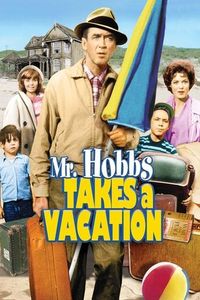
    (On TV, November 2021) As much as I wanted to like Mr. Hobbs Takes a Vacation, there’s so much wasted potential in the milquetoast result that it starts to grate. Of course, that may be an overreaction — the film was obviously built by director Henry Koster to be an innocuous broad-public comedy, and isn’t meant to sustain more elaborate expectations. Still, as a family goes to a beach house for an extended vacation, the film skirts the edge of something more interesting but never gets there. James Stewart remains the film’s best asset as a harried father driven nuts by the entire family vacation (the framing device has him narrate a very funny exasperated letter, his drawl making everything even better — a shame that the finale of the film never quite goes back to it.), and having Maureen O’Hara play the mother is not a bad choice at all. Occasional set-pieces involving a persnickety steam heater, or a steam-filled bathroom, hint at a better film. (And the two references to a father purchasing a Playboy magazine for his son are… surprising.)  But for most of its duration, Mr. Hobbs Takes a Vacation ends up being a curiously tame affair, content to let Stewart run exasperated at everything going wrong during his vacations. It works fine in the way many subsequent family vacations films do — a bit of humiliation comedy, a dash of comic contretemps, and a heaping of traditional values at the trip brings the family back together as one unit. Familiar stuff, perhaps tamer than expected by modern audiences, considering how the envelope has been pushed since then. I can’t, in good conscience, call this a bad movie, but it’s certainly disappointing — although one notes that it led to the somewhat better Take Her, She’s Mine the following year with the same director/star combo.

  • Take Her, She’s Mine (1963)

    Take Her, She’s Mine (1963)

    (On Cable TV, October 2020) By the early 1960s, James Stewart was long past his young premier roles of the 1930s, his everyday men of the 1940s or his attempt to redefine himself in a darker, more rugged persona in the 1950s—he was now fit to portray a stereotypically likable dad dealing with sending his daughter to college. Adapted from a Broadway comedy that was, amazingly enough, based on the experiences of eventually famous writer-director Norah Ephron as a younger girl, Take Her, She’s Mine has Stewart as the kind of dad that everyone would like to have—bumbling and overprotective, but also intensely likable and able to support his daughter (played by iconic teenybopper Sandra Dee) whenever she needs help. The framing device has Stewart’s character explaining an increasingly ludicrous series of embarrassing newspaper articles before we go back in time and see how each one of them came to be. It all plays against a California-based couple sending their daughter to an east-coast college where she is swept up in the burgeoning social protest movements. As a look in the turmoil that was developing within 1960s America, Take Her, She’s Mine is a fun romp—at least in its first two thirds, because the film loses quite a bit of comic steam in the later third as the action moves to Paris and stops being as relatable. Still, Stewart can’t be topped as the well-intentioned, stammering dad who ends up participating in a sit-in against obscenity laws on behalf of his daughter, or tries to muddle through a deficient knowledge of French while tracking down his daughter in quasi-bohemian Paris. (Some of the French is quite good, some of it almost unintelligible.) It’s all good fun, and even the exhausted third act (reportedly a product of studio interference) can’t quite erase the superb period piece humour of the rest of the film as handled by director Henry Koster. Then, of course, you’ve got Stewart in a minor but highly enjoyable role—and sometimes, that’s really all you need.

  • Three Smart Girls (1936)

    Three Smart Girls (1936)

    (On Cable TV, September 2020) Deanna Durbin was a short-lived star—her time at the top of the box office lasted barely more than a decade, after which she retired and apparently lived a long happy life away from the cameras. While brief, her stardom was justified by the mixture of youthful cuteness, singing talent and comic timing she brought to the screen—if you’re thinking about Judy Garland, well, only a bit of fate separated those two from the MGM star-making factory. You can get a glimpse of her talents in her feature film debut Three Smart Girls, as she plays one of three sisters trying to prevent their father from marrying a gold-digging young woman. Frankly, it’s not that good of a film—in trying to demonstrate Durbin’s multiple talents, director Henry Koster is shackled to a script that throws in various elements in a whole that doesn’t come together. The musical numbers seem to stick out, and the comedy is quite generic. And it all fits in 84 minutes! Somehow, it was nominated for the Best Picture Oscar for its year. Still, there are good bits and pieces here—plus Durbin’s performance. As far as star-vehicle comedies of that time go, Three Smart Girls is unobjectionable—although there are better roles in Durbin’s later filmography.